What 2 Days in Cleveland, TN Taught Me About Cherokee History
I came to Cleveland, Tennessee expecting a small-town weekend with a few historic stops, local shops, and good food. What I found instead was a place where Cherokee history kept showing up over and over again — not just at historic sites, but in the land itself, in local agriculture, and in the communities still shaped by that history today.
Cleveland isn’t just a small Tennessee city near Chattanooga or the Ocoee. It’s part of a region deeply shaped by Cherokee history and their forced removal, and spending two days here made me realize how much of that history wasn’t taught to us in schools.
This isn’t a traditional itinerary. It’s the story of what 2 days in Cleveland, TN taught me about Cherokee history, and how that history still shapes the land and community today.
A special thanks to Visit Cleveland, TN for hosting my trip! As always, all opinions are my own.

Where Cleveland’s Cherokee History Comes Into Focus
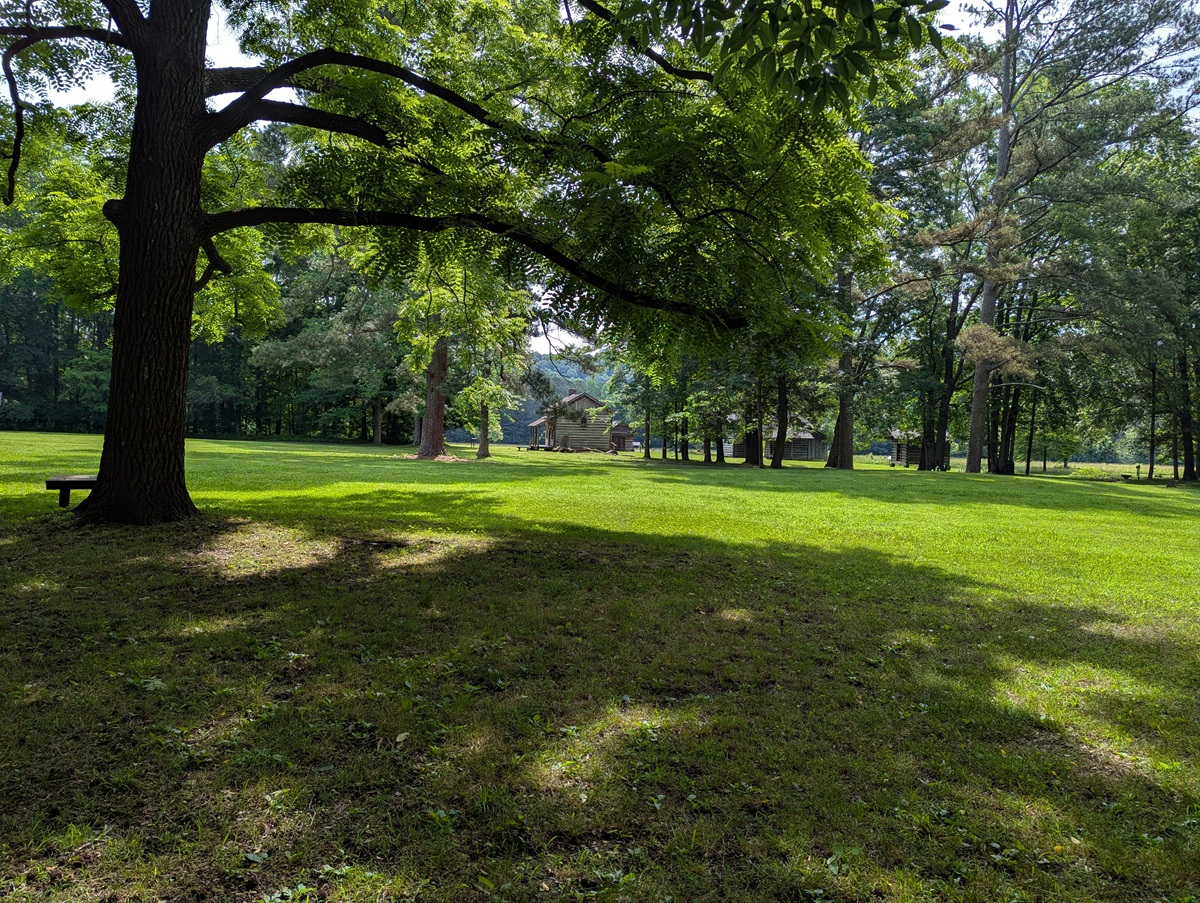
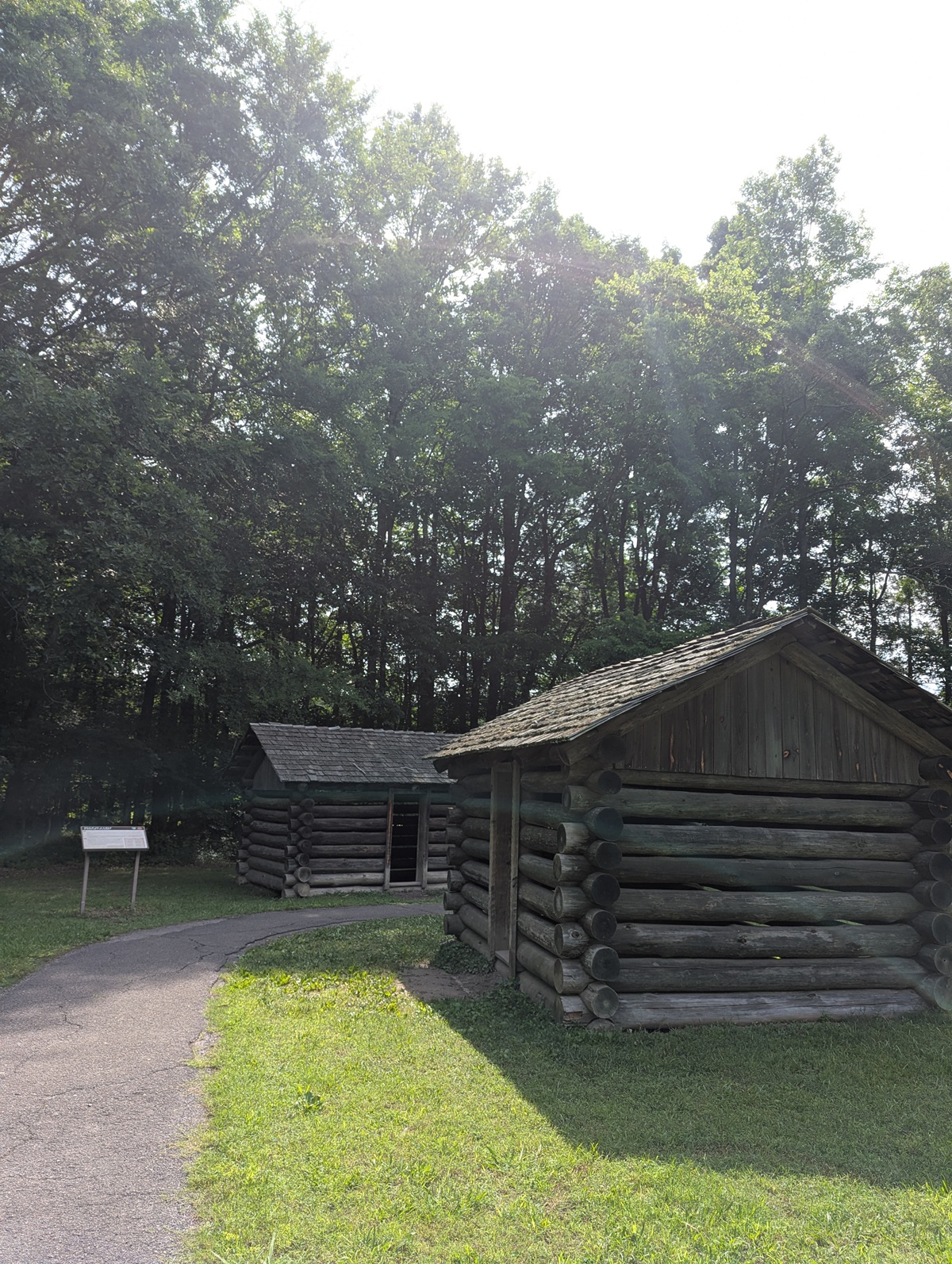
We rolled into Red Clay State Historic Park on a humid spring morning, about a 45-minute drive from Downtown Chattanooga. We stepped off the bus to a view of meadows lined with pine trees and historic wooden buildings in the distance.
Red Clay was the last capital of the Cherokee Nation and is where they held their final council meeting before the Trail of Tears.
In a way, it’s the start of the Trail of Tears. But the harder truth is that removal began at individual homesteads, as Cherokee families were forced from the places they lived.
Our first stop at the park was the interpretive center, where we watched a short video called “We Are Still Here”, highlighting the story of the Council Grounds at Red Clay and the lead-up to the Trail of Tears. Then we walked through their small museum that displays artifacts from this historic site.
We learned about the Cherokee beyond the stereotypes, and found a people who had elected leaders, schools, businesses, agriculture, and vibrant communities.
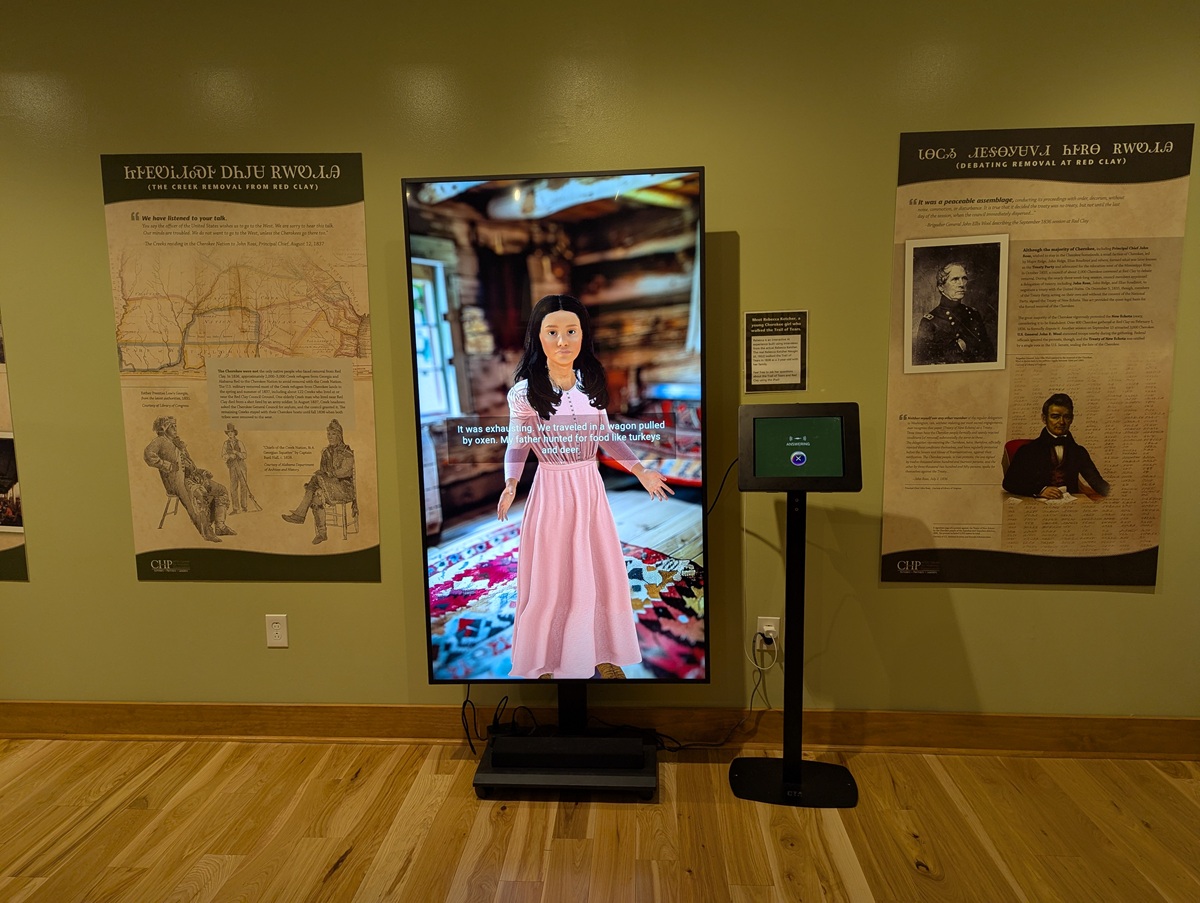
My favorite exhibit is an interactive AI experience where you can talk with Rebecca Ketcher, a young Cherokee girl who walked the Trail of Tears. The experience is created using interviews from the real Rebecca Ketcher. You can ask her questions about her experience, and it’s an incredible way the state park is bringing history to life.
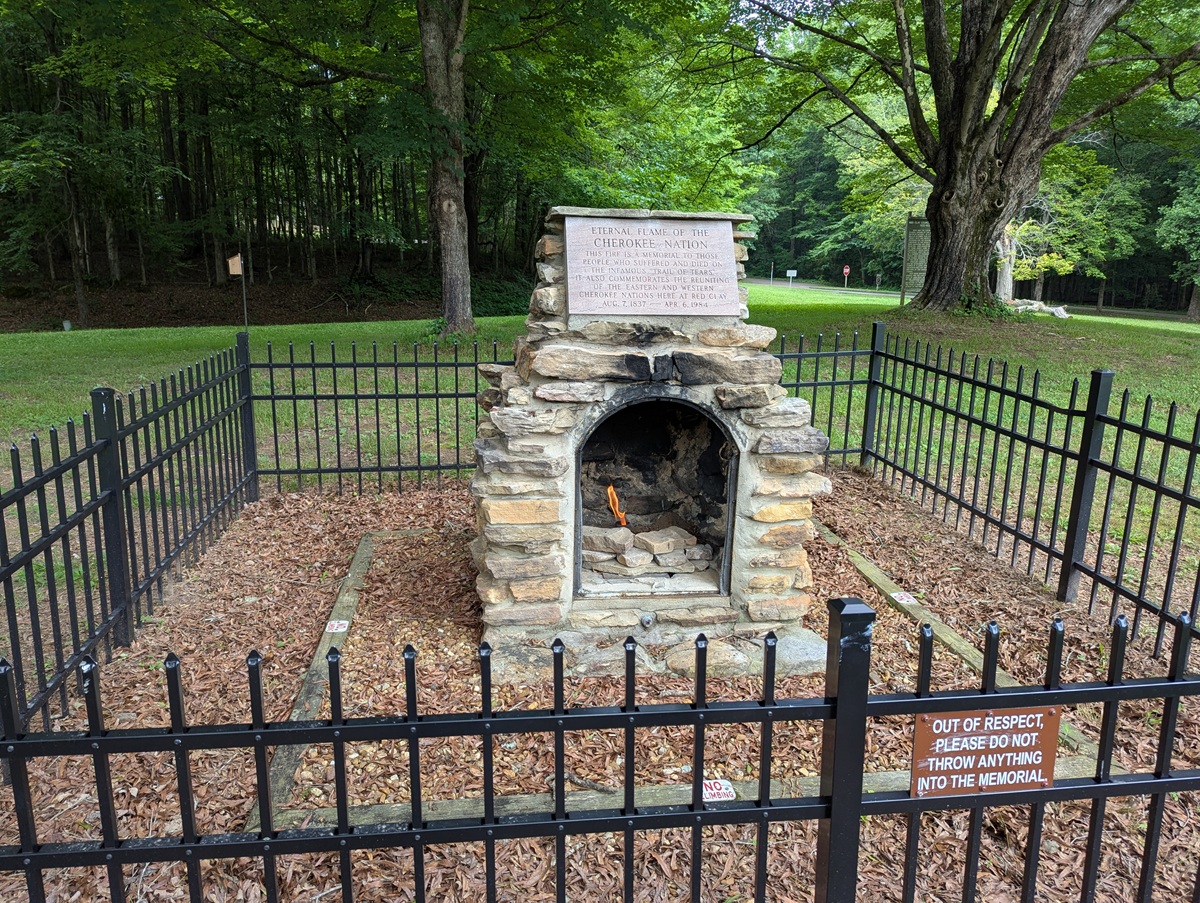
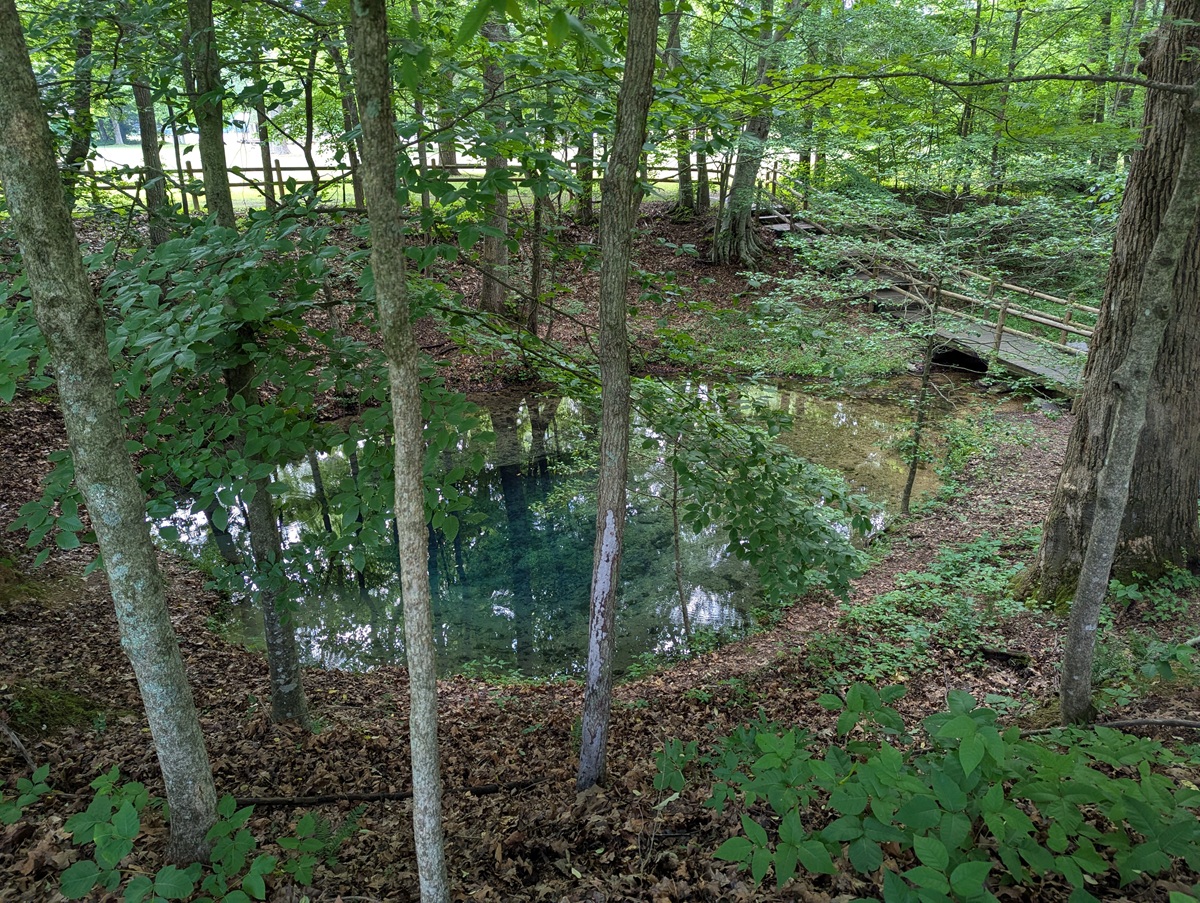
Afterwards, we walked the paved interpretive trail, which took us past the Eternal Flame, a symbol of the enduring spirit of the Cherokee people, and to the sacred Blue Hole Spring, a sacred water source still used by the Cherokee today.
The trail also took us to replica Cherokee structures like Sleeping Huts, a Farm House, the Council House, and a Blacksmith Shop, that demonstrate how the Cherokee lived before they were removed from the land.
Starting our trip at Red Clay gave me the foundation I needed for the rest of the trip. The history I learned here made each of our next stops feel less like separate attractions and more like pieces of the same story.
Red Clay State Historic Park is a slower, reflective stop. Give yourself at least an hour or more if you want to walk the grounds and read through the exhibits.
Red Clay was only the beginning of understanding how this history moves through the region.
The Hardest History Deserves More Than a Quick Stop
Red Clay was a headquarters for the Cherokee Nation, but the small town of Charleston, TN was the US military headquarters for the entire removal operation. This is a history that might have been forgotten if it weren’t for the hard work of the Hiwassee River Heritage Center.
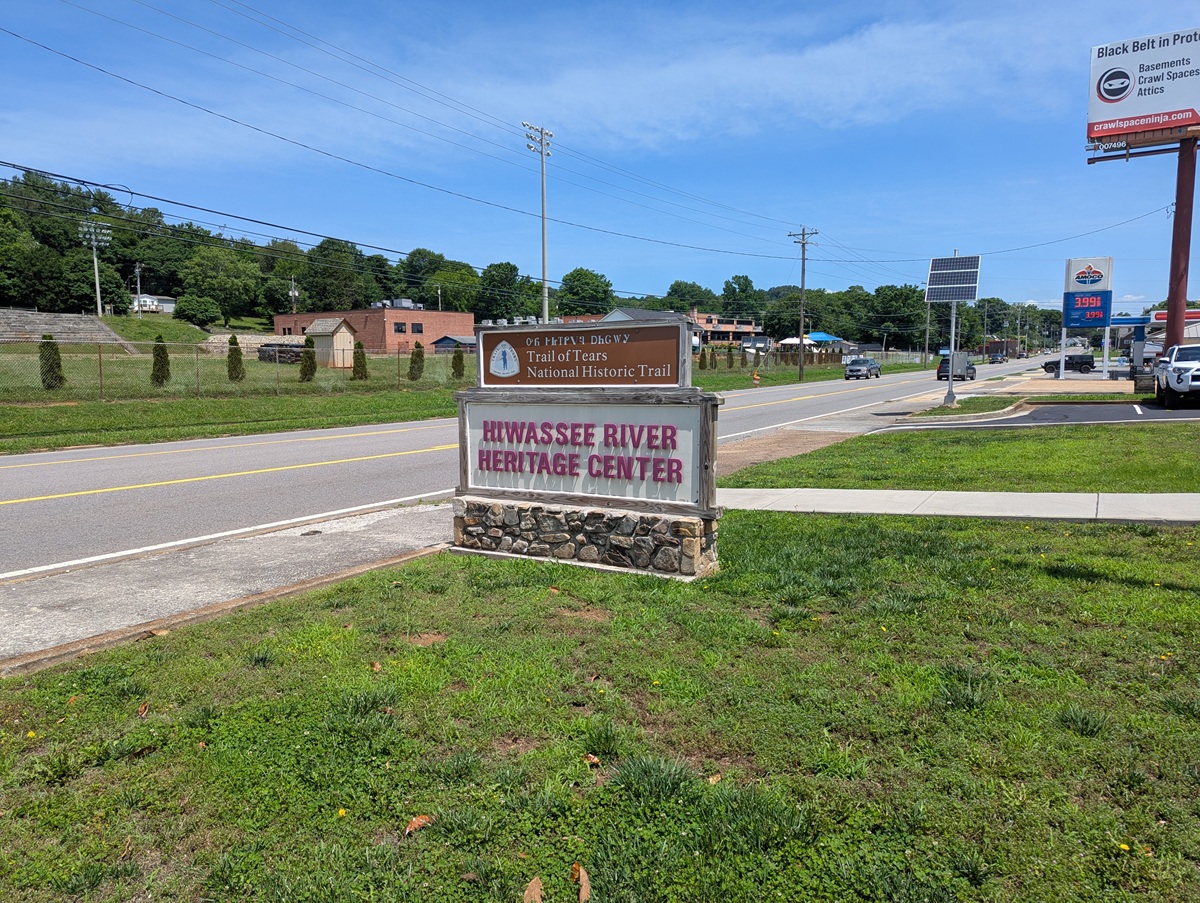
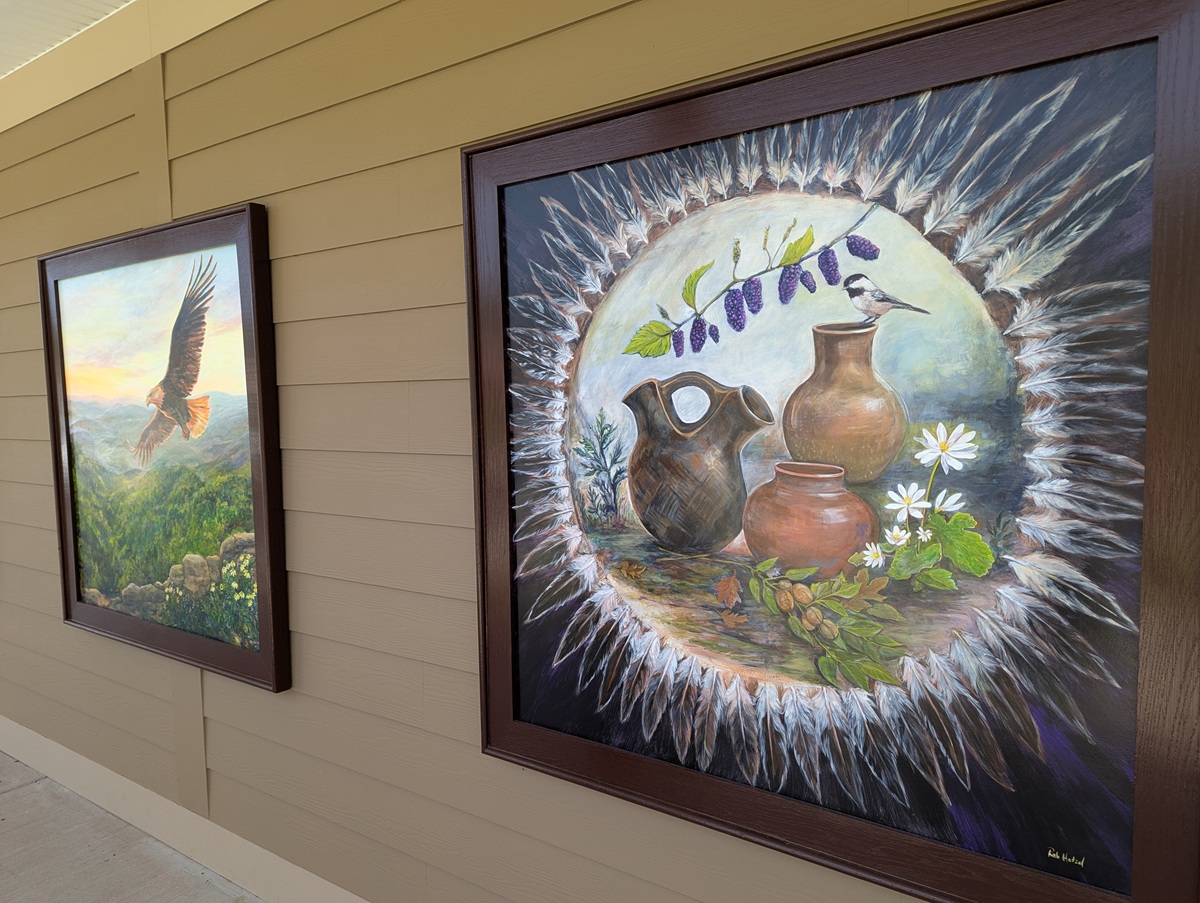
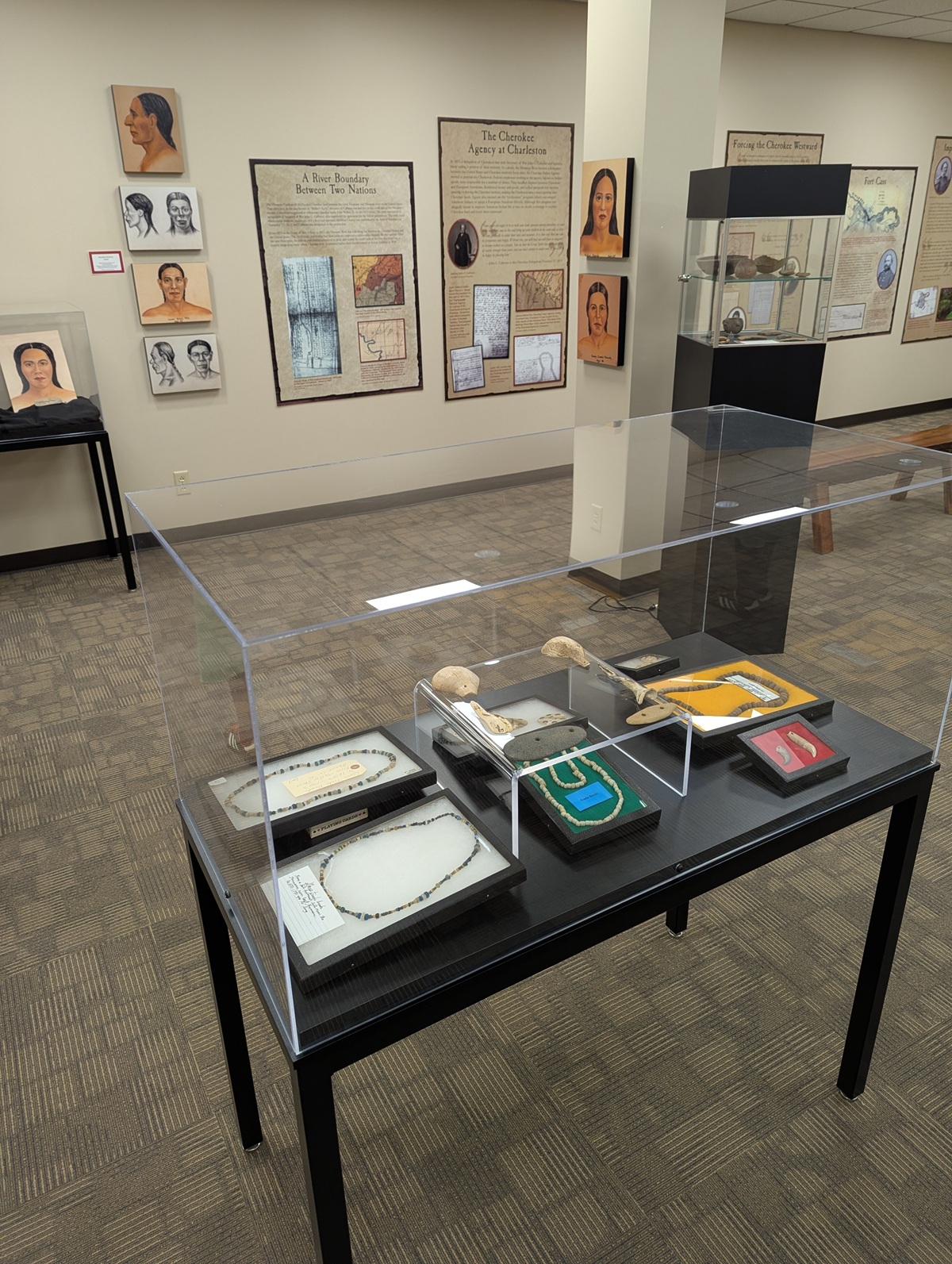
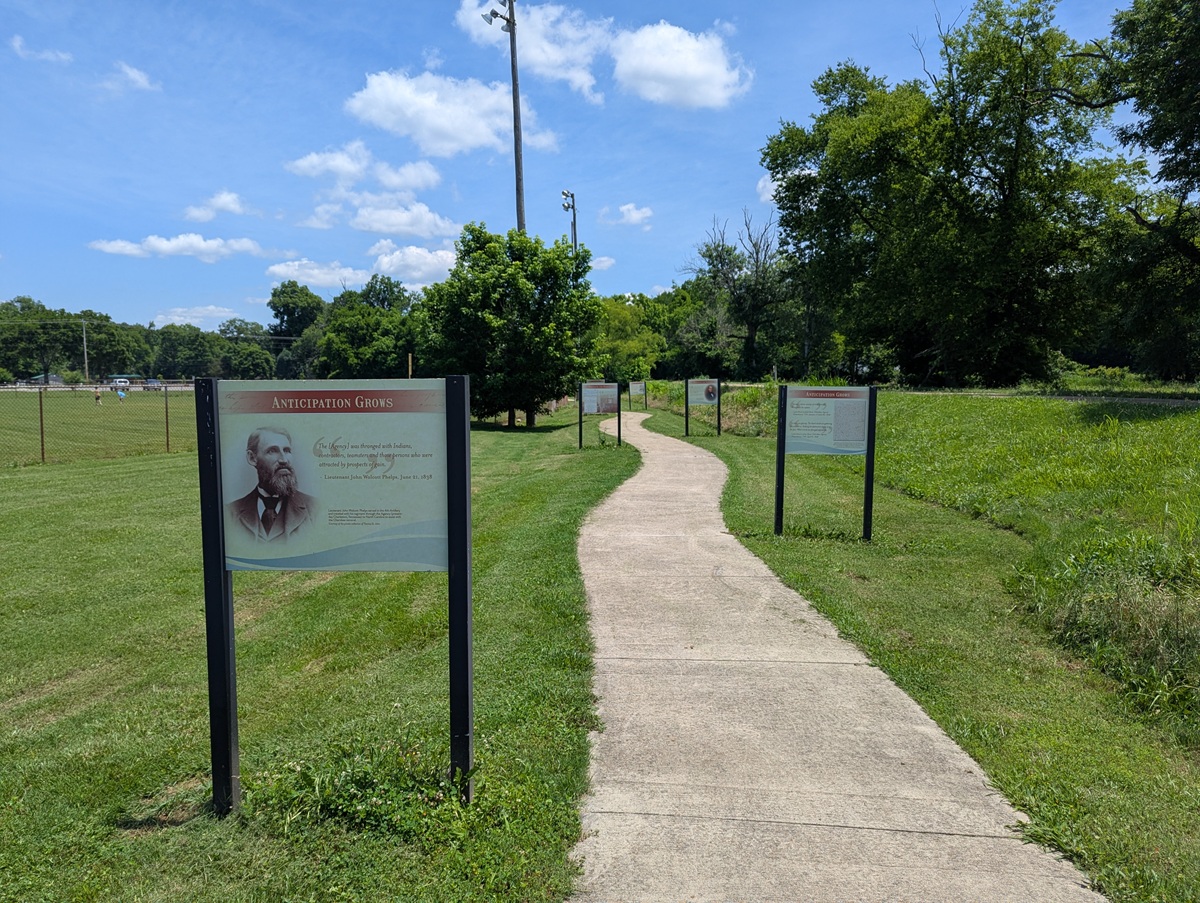
This was the site of Fort Cass, where there was the largest concentration of internment camps holding the Cherokee before their journey west on the Trail of Tears. The small museum at the heritage center details the town’s difficult history.
During our visit, we had the rare opportunity to have lunch with the “Remember the Removal” Bicycle Riders.
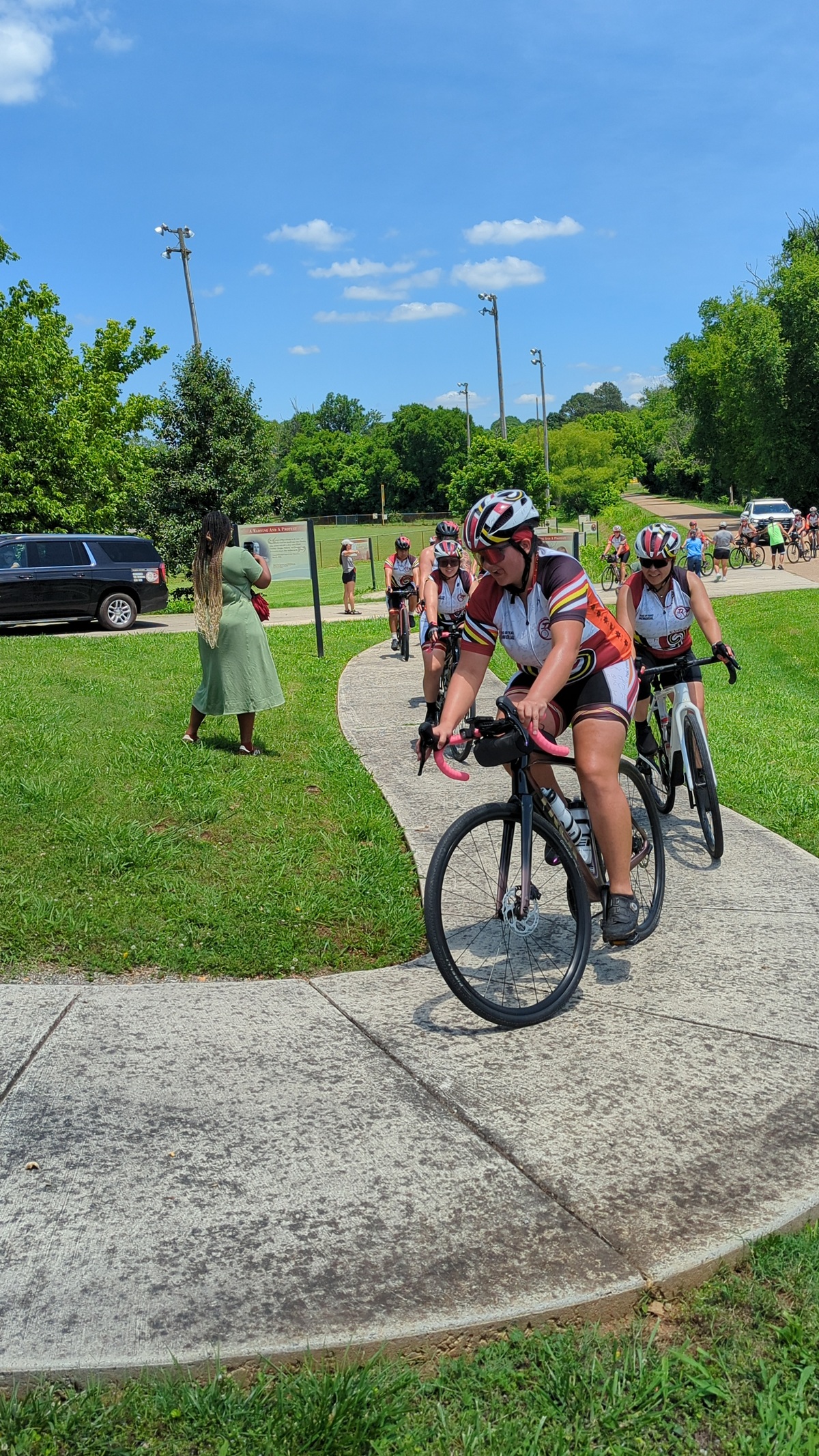
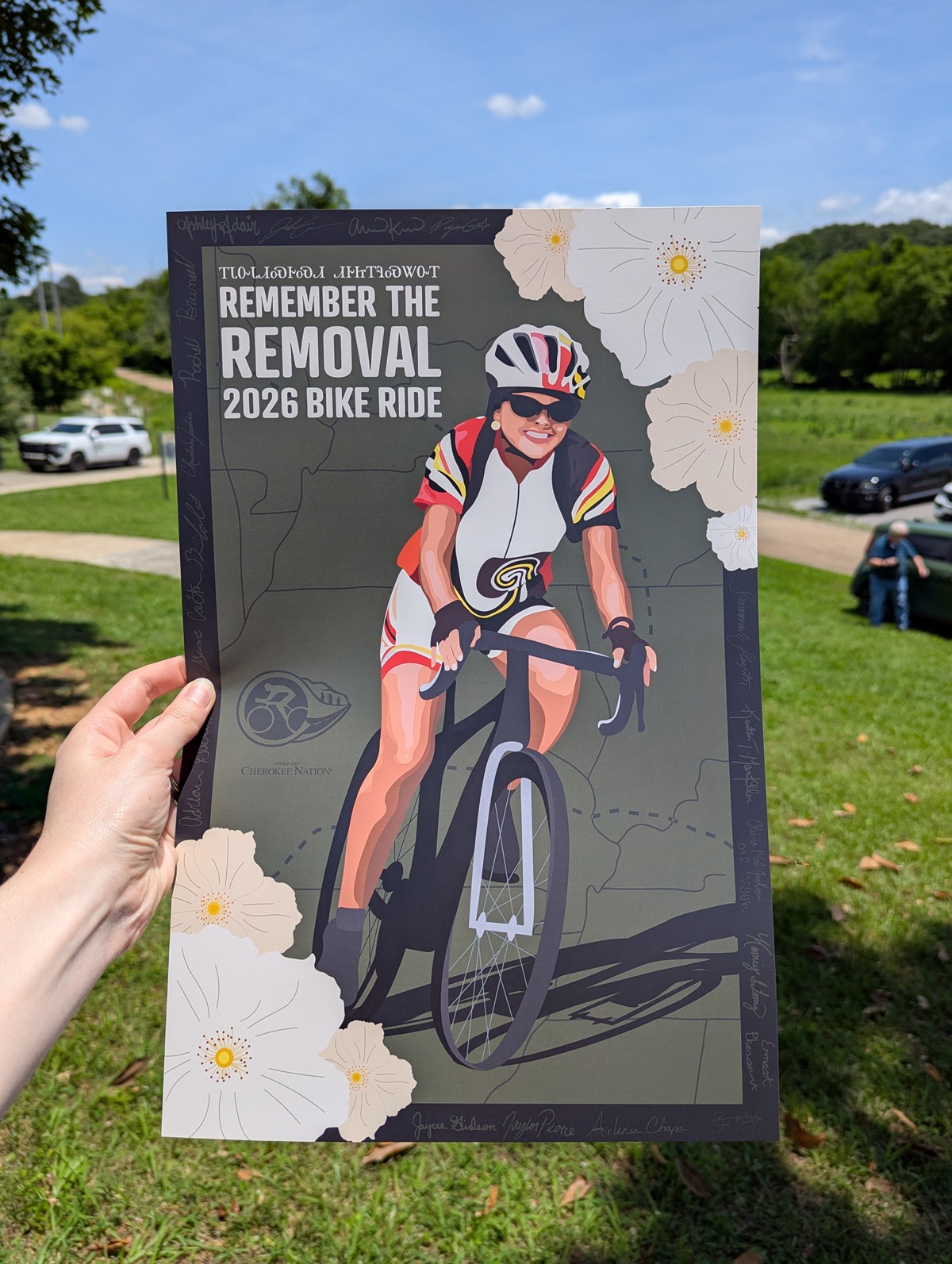
Every year, members of the Cherokee Nation and the Eastern Band of Cherokee Indians join together to bike the entire 950-mile journey of the northern route of the Trail of Tears, honoring the removal of their ancestors.
The cyclists make stops along the route at important historical sites, like Red Clay, the Hiwassee River Heritage Center, and the Cherokee Trail of Tears State Park. Our visit was timed just right for us to share a meal and conversation with the cyclists, learning what inspired them to join the memorial ride and hearing of their training and long days of riding.
As we moved through Cleveland, Charleston, and Bradley County, I began to realize that our route was also following along the northern route of the Trail of Tears.
The Cherokee Trail of Tears State Park is on the riders’ itinerary, and it was on ours as well. Formerly called the Cherokee Removal Memorial Park, this state park is located at the site where detachments of Native Americans waited to cross the Tennessee River on their forced removal.
This is where thousands of families were forced to make the most heartbreaking journey in America’s history.
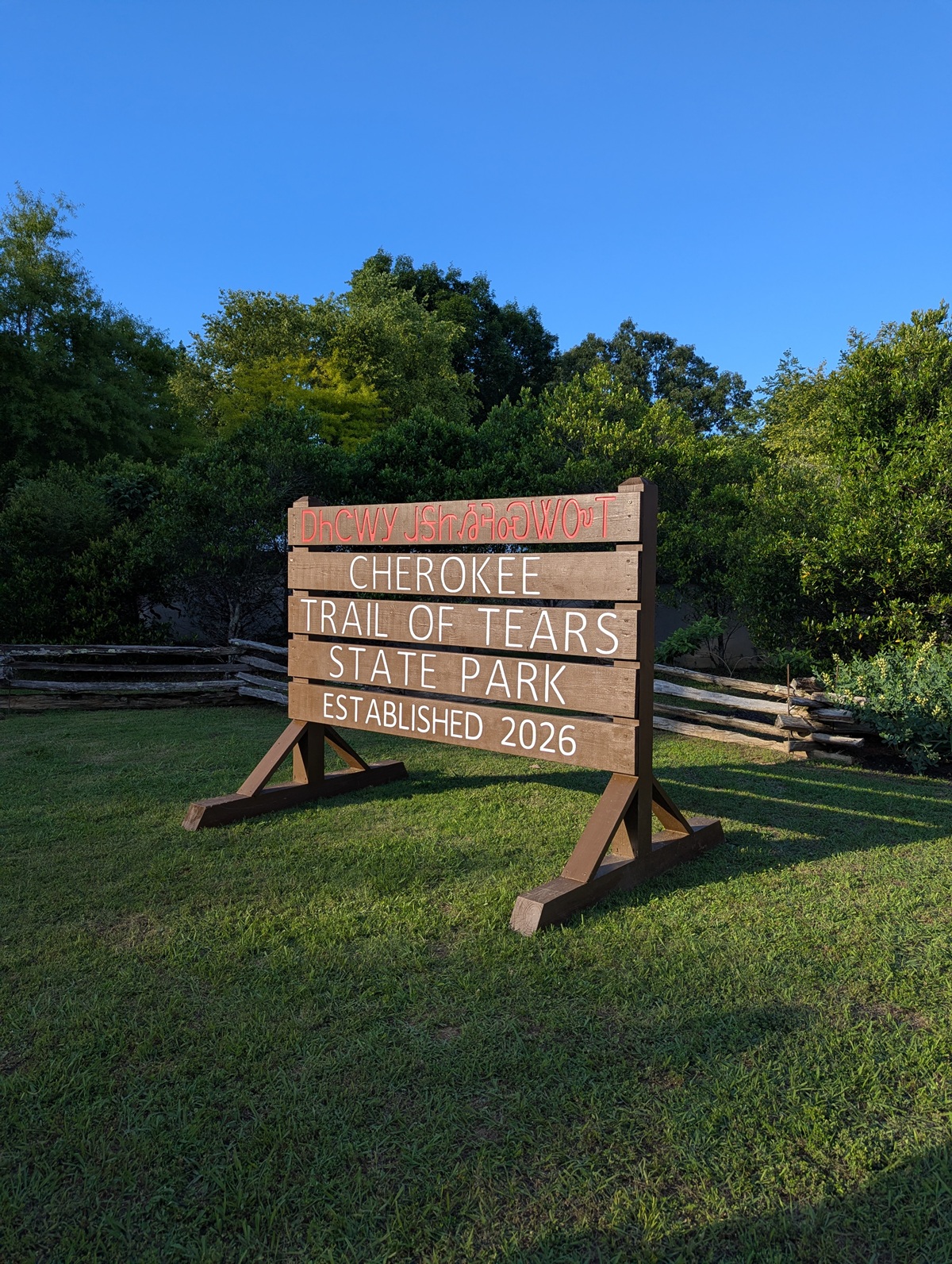
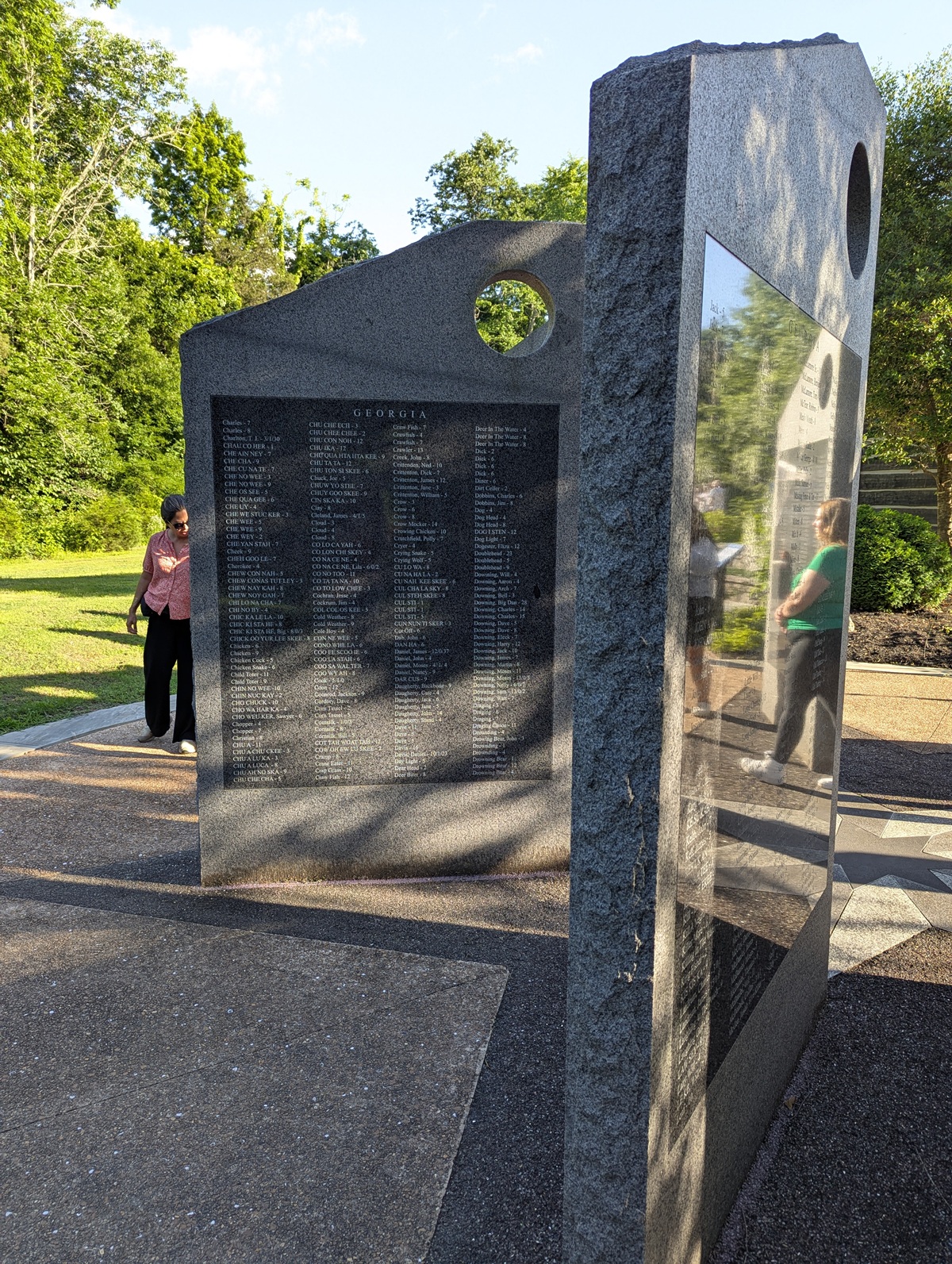
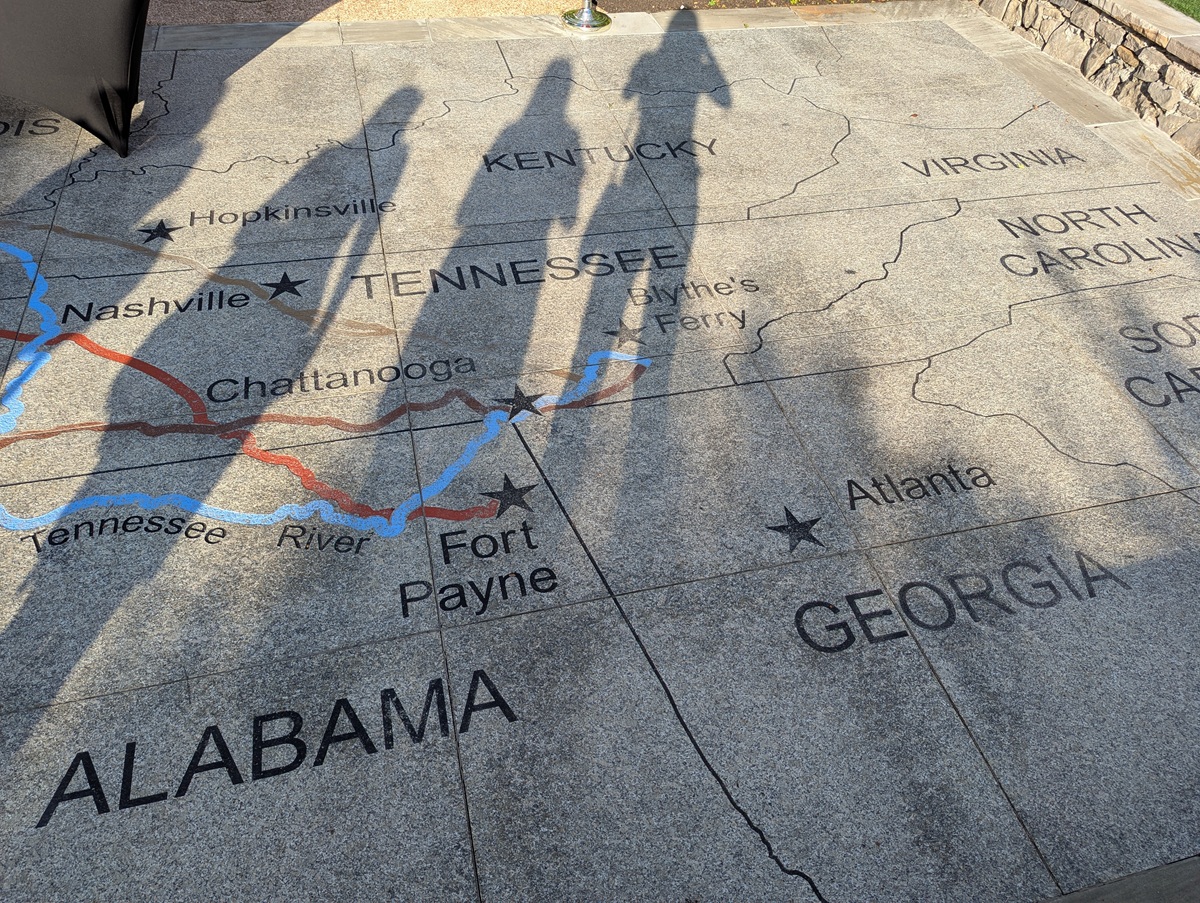
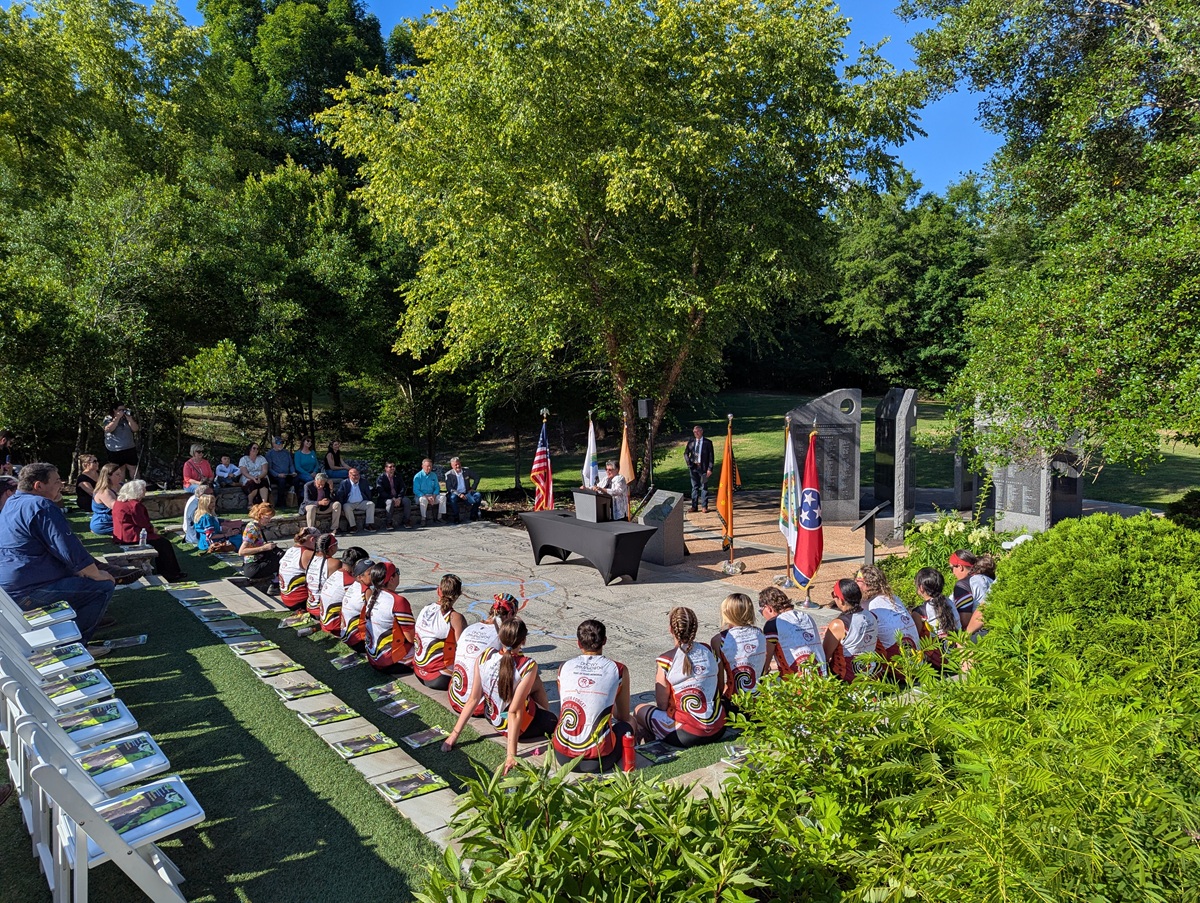
We were at the Cherokee Trail of Tears State Park for another rare occasion — the newly designated state park was being dedicated and officially renamed. The state park was celebrated with speeches and songs from the Cherokee people and dedications from community and state leaders.
And while the appointment of a new state park was a celebratory occasion, the difficult history still remains. An estimated 10,000 Cherokee were forced to cross the river here in 1838 and leave behind their native land.
The main focal point of the park is a Memorial Wall that lists the 2,535 Heads of Household, along with the number of household members, from the 1835 Census of the Cherokee Nation, taken to identify those to be removed along the Trail of Tears.
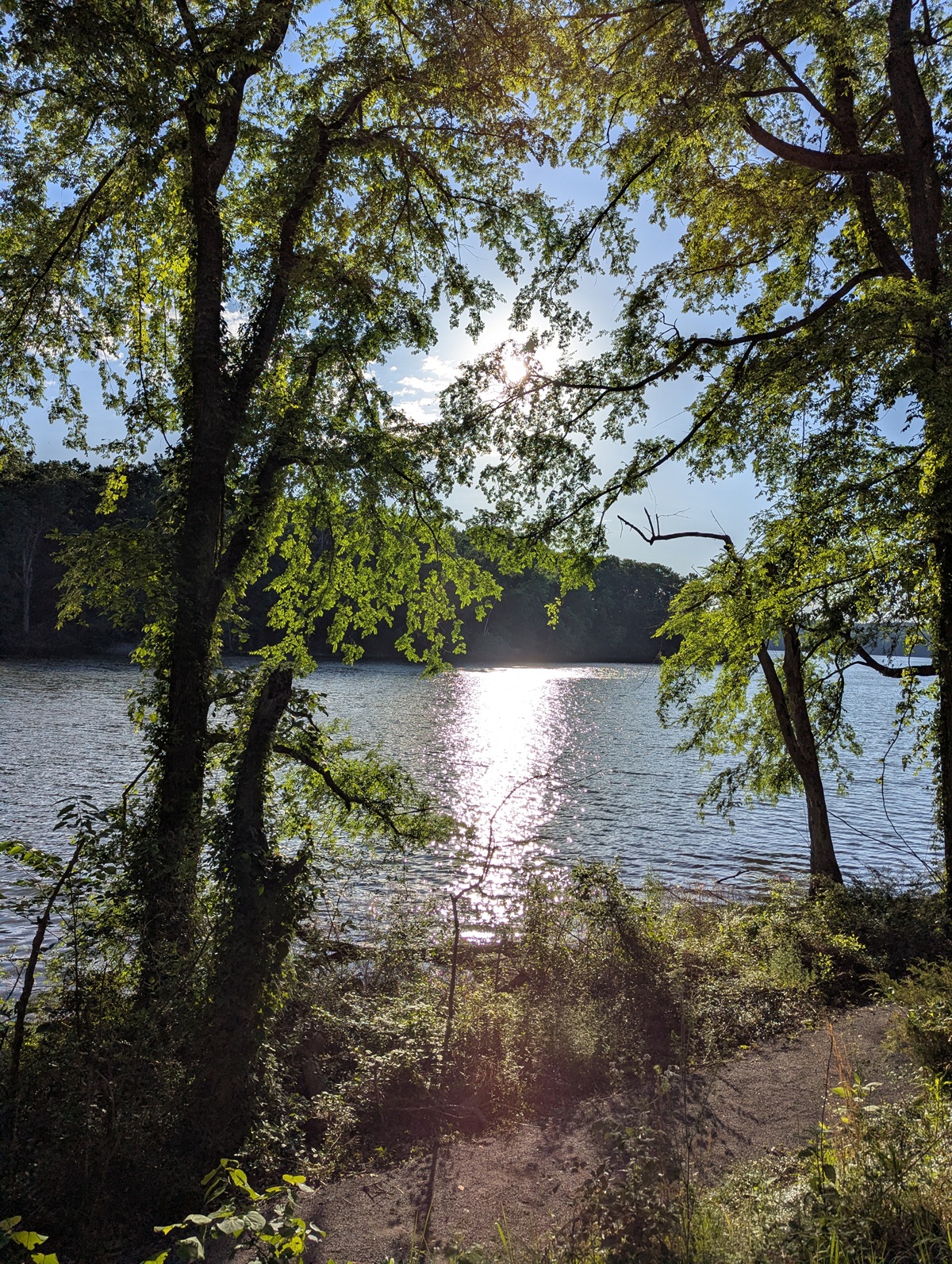
The memorial and river overlook are places for quiet reflection.
As we moved into the more relaxed parts of our trip, we didn’t completely leave the heavy history behind. One thing was very clear: this is a place where the land continues to shape the story.
Agriculture Isn’t a Side Story Here
Cleveland’s agriculture stops gave me another way to understand the same region. The land here continues to shape what people grow, make, sell, and share with their community.

At Loof’n Round Gardens, I learned far more about loofahs than I ever expected to know.
I’d only thought of loofahs as bathroom scrubbers, but here they grow on vines and can be turned into everything from body exfoliators to household cleaning products, tea, seed oil, and salve.
This isn’t your typical farm tour — it’s a small, local business that’s doing something entirely unique.

Morris Vineyard & Winery brought with it some of the most scenic views in Bradley County, with mountains rising beyond the rows of vines. It immediately made me want to sit down and stay a while, with a glass in hand of course.
This family-owned winery makes muscadine and fruit wines, and they also have U-pick grapes, muscadines, and berries in season.
I started with the complimentary tasting, then added a flight so I could try a few more. The White Muscadine, Mountain Falls, Mountain Rouge, Strazberry, and Appleberry were my favorites.
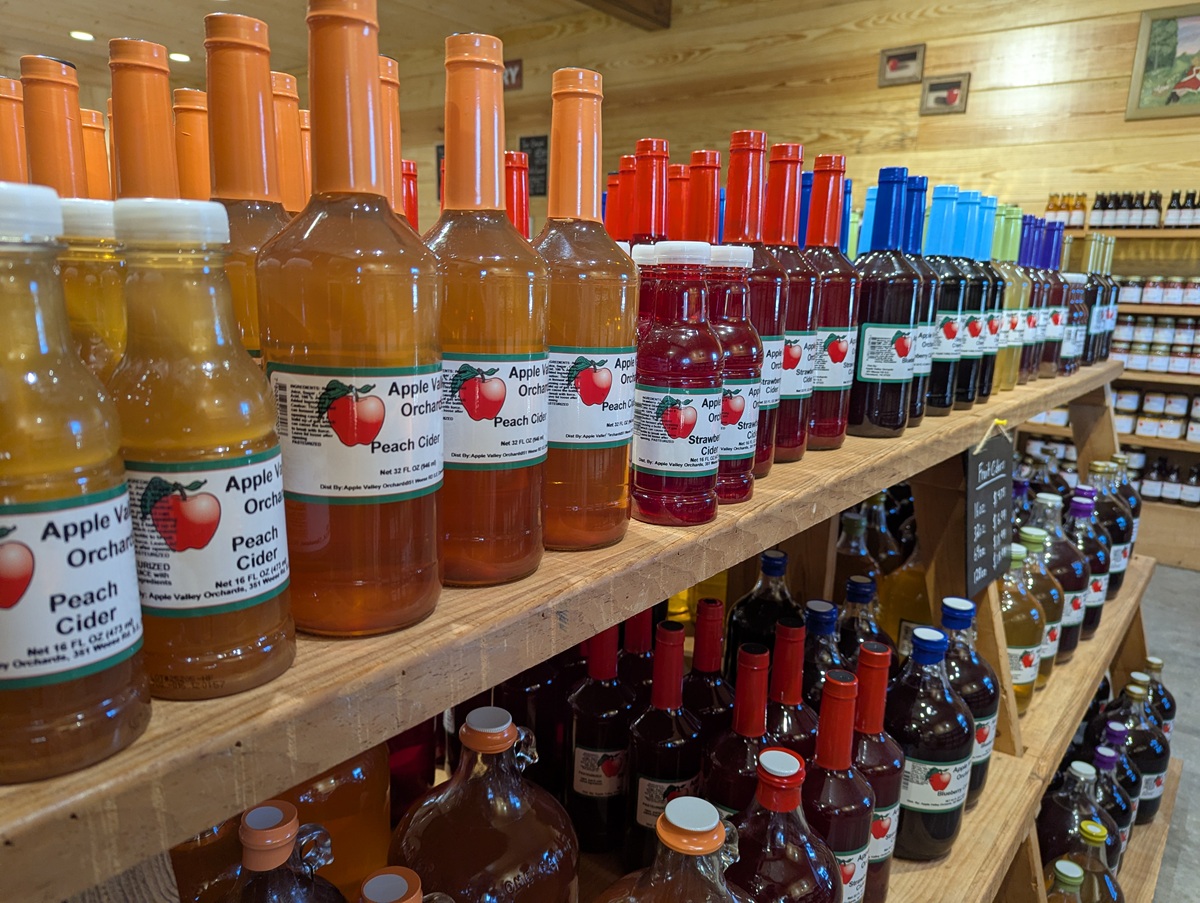
Apple Valley Orchard is a great stop, whether it’s peak fall season or not.
The store and bakery are stocked with seasonal fruits, locally made goat cheese, jams, jellies, and baked goods, while the bakery case has fresh apple cider donuts, apple fritters, and fried pies.
I grabbed an apple cider donut and a small bottle of strawberry cider to go. It’s the perfect morning stop.
Where Cleveland’s Local Side Shows Up
Cleveland’s local community is what makes the city feel alive beyond its historic sites.
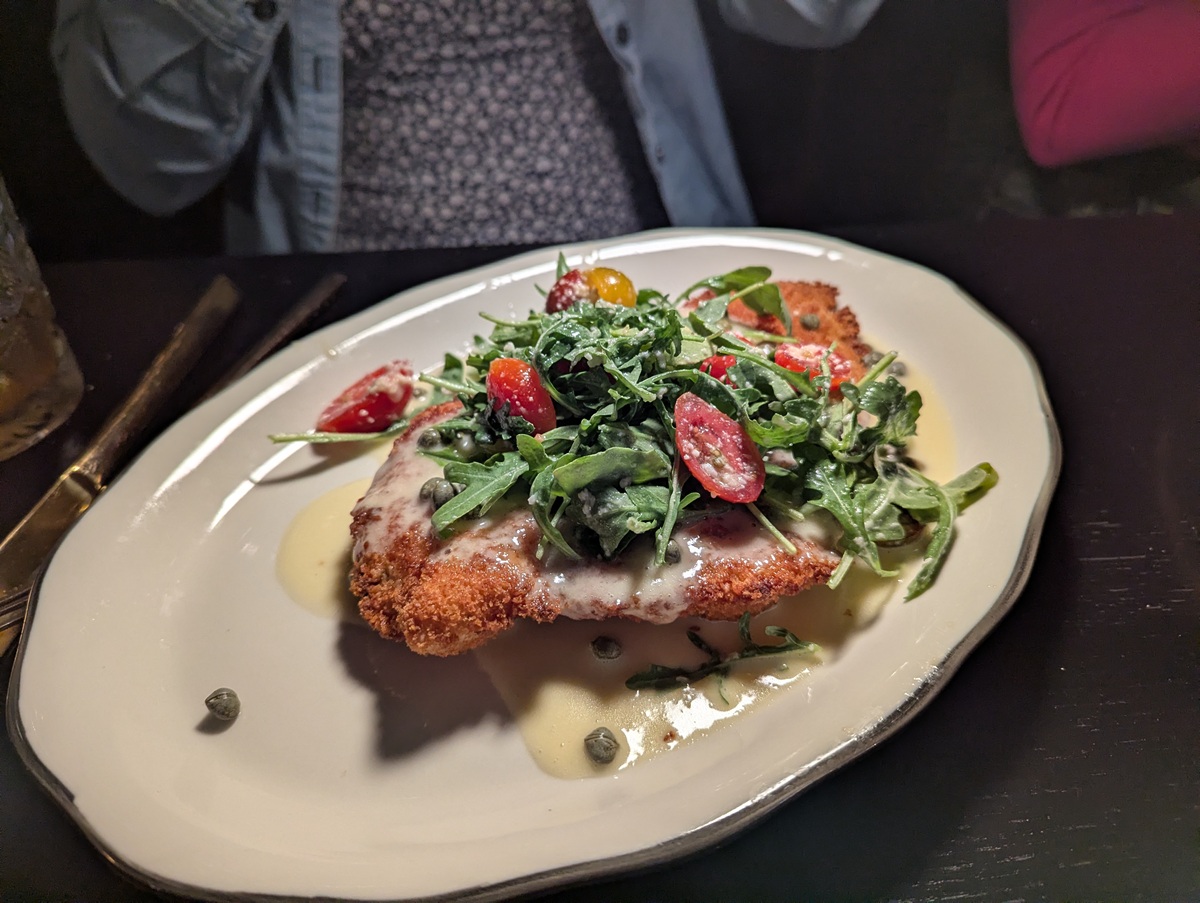
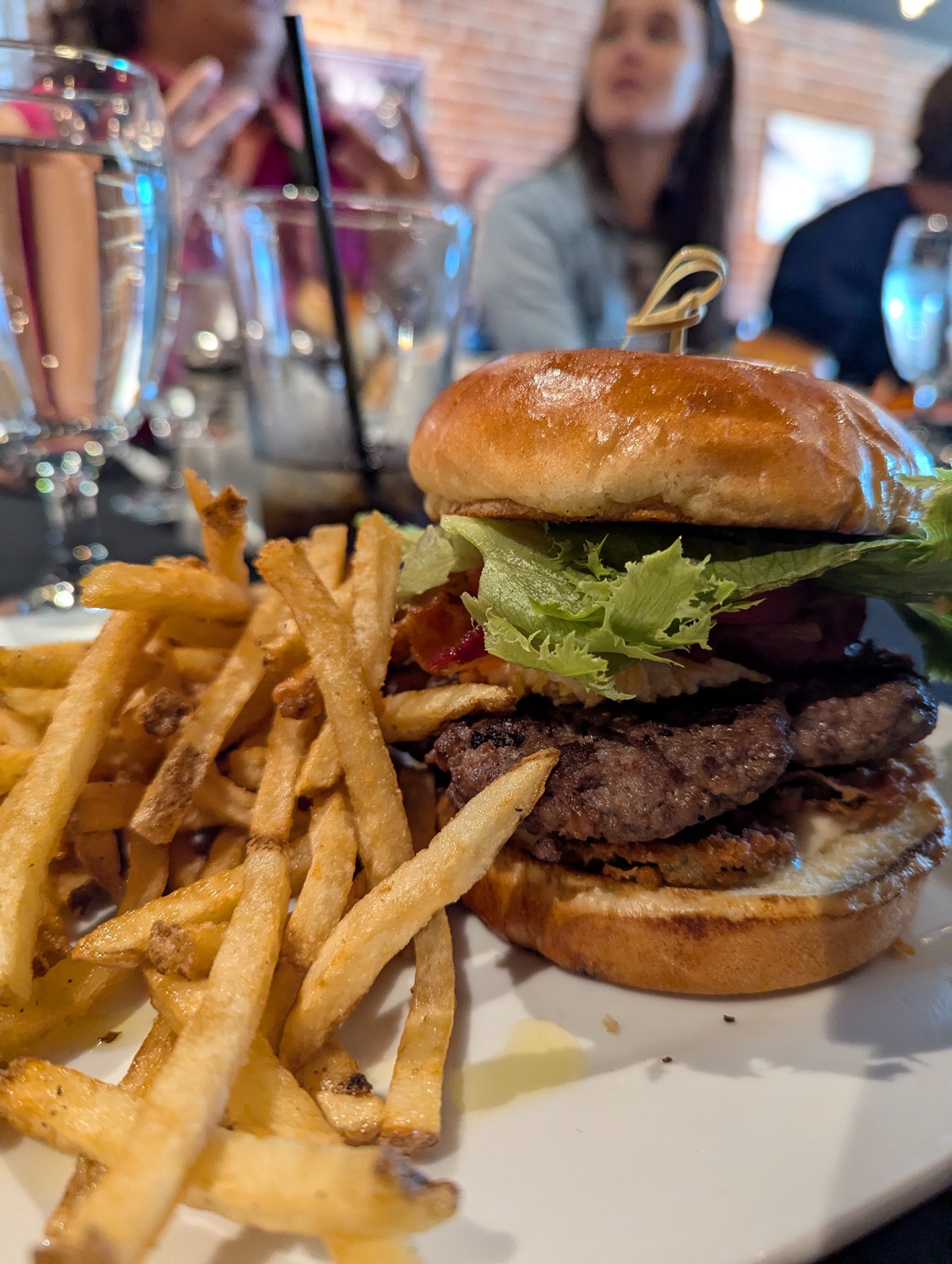
Restaurants like Inman Social and Headrick’s Gourmet Burger Bar bring Cleveland’s food scene to the forefront. Inman Social’s Italian-focused seasonal menu from a two-time James Beard semi-finalist chef isn’t what you might expect to find in a small Tennessee city. For a completely different taste, Headrick’s serves up award-winning Hot Slaw, a dish Cleveland is known for.
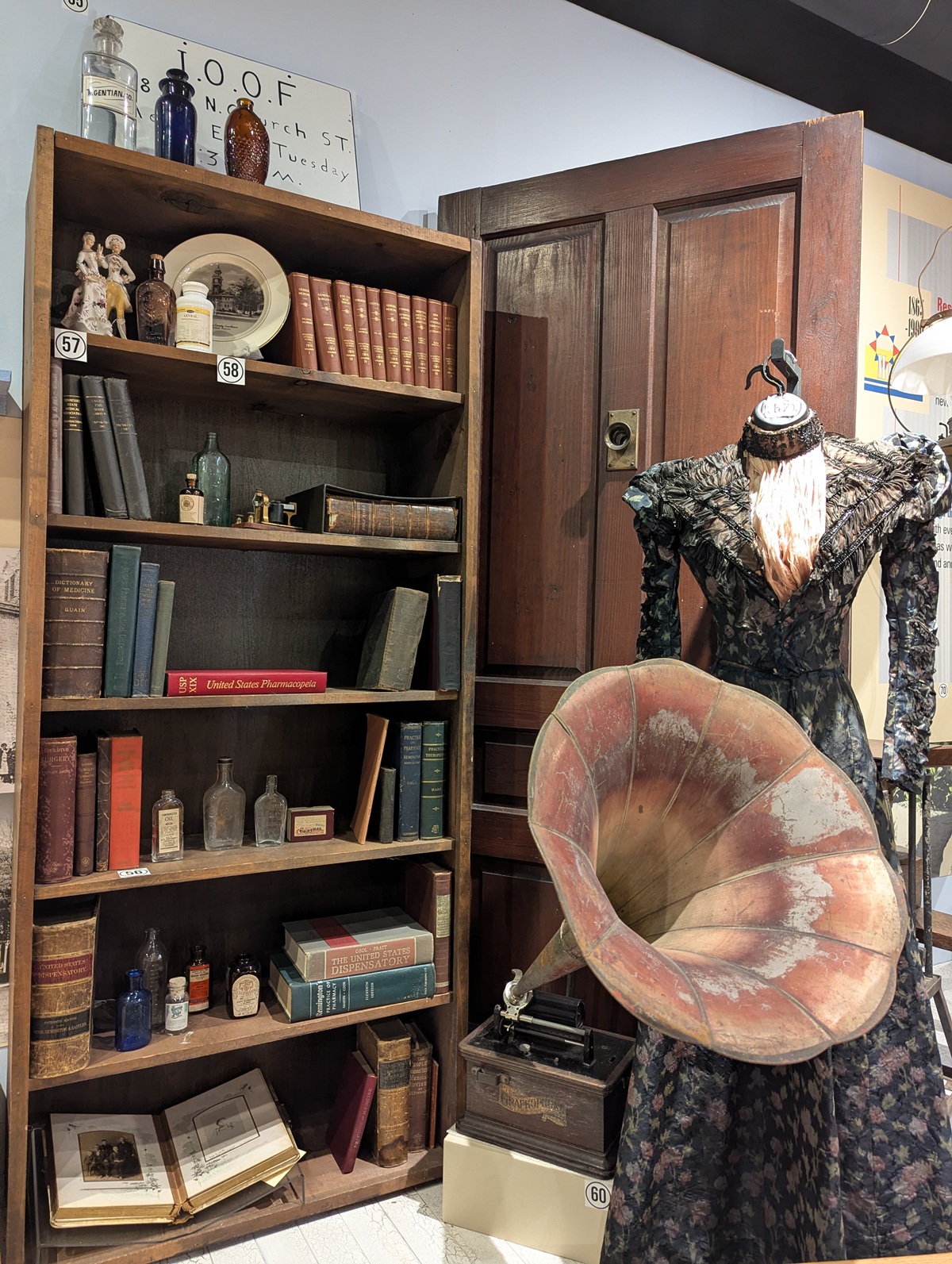

Beyond the major Cherokee history sites, Downtown Cleveland keeps the history alive through places like the History Branch and Archives of the Cleveland Bradley County Library and the Museum and Cultural Center at 5ive Points. We followed up our weekend of history with a visit to the library’s History Branch, which has a great genealogy program and local history collection. The Museum and Cultural Center gave us a look at Cleveland’s more modern history in addition to its Cherokee history.
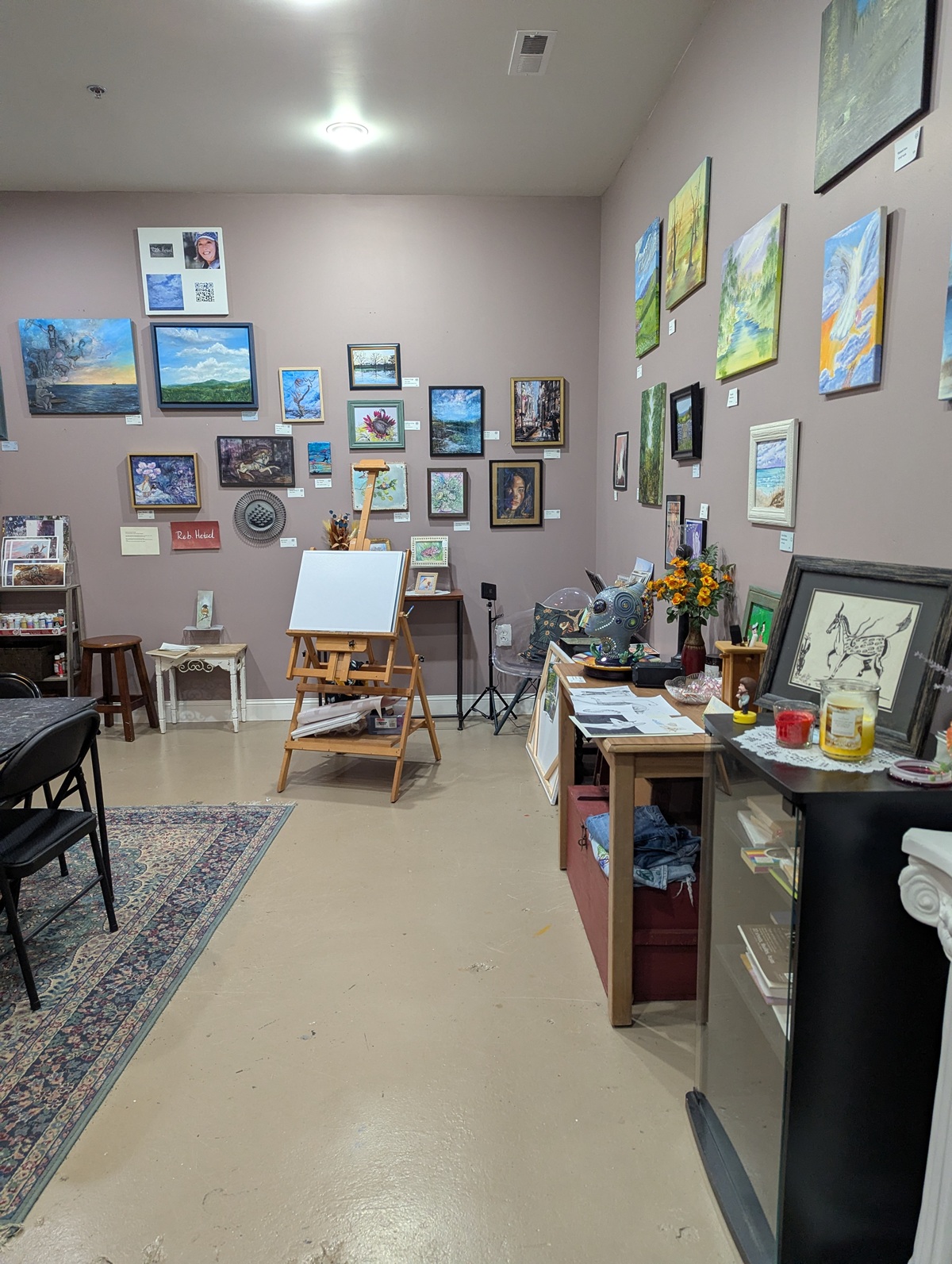

The ArtHouse Project and Grit & Grace Market showed me the more creative side of Cleveland. The ArtHouse Project is a local artist and makers space that hosts open studios, classes, workshops, shows, and small events, giving visitors a look at the creative community active in the city now. Grit & Grace Market, located inside the Old Woolen Mill, is part antique store and part local goods market, with around 100 vendors selling gifts, clothing, handmade jewelry, vintage finds, and locally made products. It’s also a good place to pick up Loof’n Round Gardens products if you don’t make it out to the garden itself!
By the end of the trip, these stops helped balance the heavier parts of the itinerary.
Cleveland’s Cherokee history was the heart of the trip, and it was a history I wish I had learned more about a long time ago, but the city’s restaurants, artists, and local businesses gave me a better sense of Cleveland as it exists now. This city continues to honor the indigenous communities that lived on this land before us.
A Thoughtful 2-Day Cleveland, Tennessee Itinerary
Want to discover Cleveland’s Cherokee history for yourself? Follow my exact itinerary:
Day 1: Cherokee history, agriculture, and reflection
- Morning: Red Clay State Historic Park
- Late morning: Loof’n Round Gardens
- Midday: Hiwassee River Heritage Center
- Afternoon: Morris Vineyard & Winery
- Late afternoon: Cherokee Removal Memorial Park
- Evening: Dinner at Inman Social
- Overnight: Holiday Inn Express & Suites Cleveland Northwest
Day 2: Orchards, archives, downtown, and local makers
- Morning: Apple Valley Orchard
- Late morning: History Branch and Archives of the Cleveland Bradley County Library
- Midday: Museum and Cultural Center at 5ive Points
- Lunch: Headrick’s Gourmet Burger Bar
- Afternoon: Arthouse Project, Grit & Grace Market, and First Bloom
2 Days in Cleveland, TN Map
Ready to explore all of Cleveland, Tennessee’s Cherokee history and local agriculture? Use the map below to find each activity.
I hope you have a great time exploring Bradley County’s historical sites!
Where to Stay in Cleveland, TN
- Where I Stayed: Holiday Inn Express & Suites Cleveland Northwest by IHG
- Top Hotel: Hampton Inn Cleveland TN
- Great Value: La Quinta Inn & Suites by Wyndham Cleveland TN
Holiday Inn Express & Suites Cleveland Northwest

During my weekend in Cleveland, TN, I stayed at the Holiday Inn Express & Suites Cleveland Northwest. This hotel has a great location just off I-75, so it’s an easy drive to all the attractions in Cleveland and throughout Bradley County.
My room was large, the bed was comfortable, and I appreciated having a free breakfast to keep me fueled for a day of exploring.
Book your stay at the Holiday Inn Express & Suites Cleveland Northwest here.
More Southeast Tennessee Adventures
Find more fun things to do in this part of Tennessee in my posts below:
- 12 Interesting Things to Do in Cleveland, TN
- Where to Eat in Cleveland, Tennessee for Local Flavor
- 8 Incredibly Fun Things To Do in Chattanooga, TN
- 3 Restaurants to Try in Chattanooga, TN
- How to Spend One Day in Chattanooga, TN
- Ultimate Guide: Perfect Girls’ Weekend in Chattanooga, TN
- 10 Spookiest Chattanooga Ghost Tours
- The Lost Sea: America’s Largest Underground Lake in Tennessee
Ready to visit Cleveland, TN? Plan your trip with these tips.
- Book Your Flight: Find the cheapest flights using Skyscanner, my favorite flight search engine.
- Find Accommodation: You can find top hotels in Cleveland using Booking.com.
- Start Packing: Make sure you’ve packed everything you need with my packing list resources.
Cheers!
Paige

Have you explored these Cherokee historical sites in Cleveland, TN? Let me know in the comments!