
4 Days in Kyoto: The Perfect Itinerary for First-Timers
The hardest part of planning a first trip to Kyoto is figuring out how to fit in all the highlights without overwhelming your schedule. Luckily, 4 days gives you enough time to see the city’s major temples and landmarks and add in a few unique experiences, without feeling rushed.
We spent an incredible 4 days in Kyoto and had plenty of time for the city’s major sights, hands-on cultural experiences, delicious meals, and even an overnight stay at a traditional onsen ryokan.
If you’re planning your first visit, this Kyoto itinerary balances classic sightseeing with experiences you won’t be able to shut up about (hello, luxury onsen ryokan!). There’s enough built into each day to keep things interesting, as well as plenty of downtime for relaxing in the public baths.

4 Days in Kyoto Itinerary Overview
This 4-day itinerary starts with your arrival in Kyoto and ends with an overnight stay in Ogoto Onsen, only about 20 minutes from Kyoto Station. Most visitors to Kyoto come by train from Tokyo, which is what we did. It’s very easy to get to Kyoto on the Shinkansen.

Ultimate Japan 11 Day Itinerary: Tokyo & Kyoto
Your Japan vacation — planned for you.
Don’t spend any more time stressing about planning your perfect vacation to Tokyo and Kyoto. Get this done-for-you, fully planned itinerary!
Detailed Kyoto 4 Day Itinerary
Day 1: Arrive in Kyoto and Explore Arashiyama After Dark
After spending a week exploring Tokyo, we took the Shinkansen (bullet train) to Kyoto Station. Most people visit Kyoto after visiting Tokyo, so this is the most common way to get here.
If you only plan on visiting Kyoto for your Japan trip, you might consider flying into Kansai International Airport (KIX), which serves Kyoto and Osaka and has mostly connections to Asian cities and a few connections to North America, Europe, Australia, and the Middle East. There is then a 1 hour and 15 minute JR Haruka Kansai Airport Express train to Kyoto Station.
Once in Kyoto, we stopped by the Hotel Kuu to drop off our luggage before exploring more since we were too early for check-in.
Going to Japan for the first time?
Download my FREE First-Time Japan Travel Checklist to plan smarter, avoid common mistakes, and feel confident before you land.
Lunch at NEW Taihou
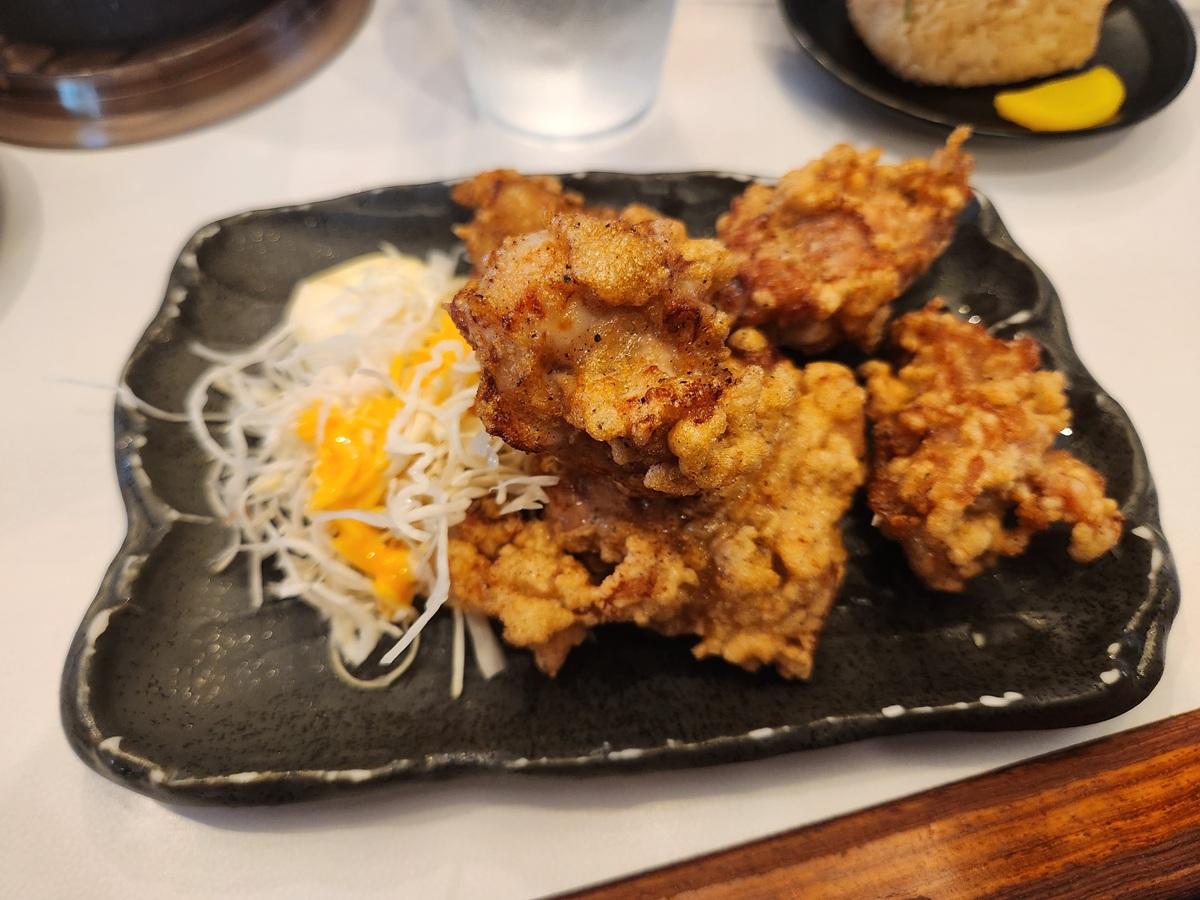
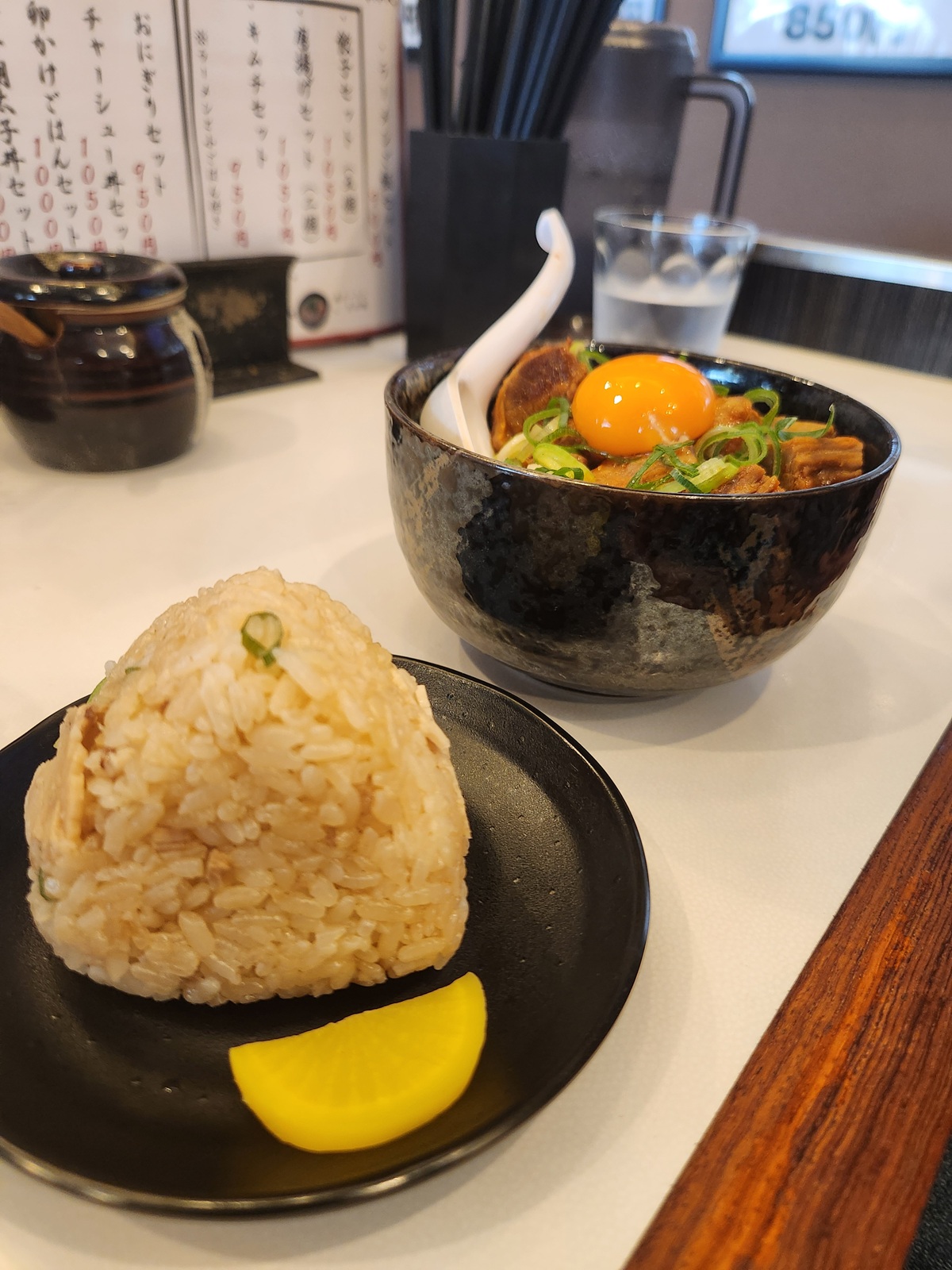
We’d arrived in Kyoto just in time for lunch. So after dropping off our luggage, we walked a little ways down the street to NEW Taihou, a small 11-seat restaurant that’s popular for its ramen.
Kevin and I had the Suji-don (beef rice bowl), onigiri (rice balls), and the chicken nanban. Others in our group enjoyed the ramen, aburasoba, dumplings, and chicken kuraage.
It was one of my favorite restaurants in Kyoto and the perfect first meal in the city!
Visit Higashi Hongan-ji Temple
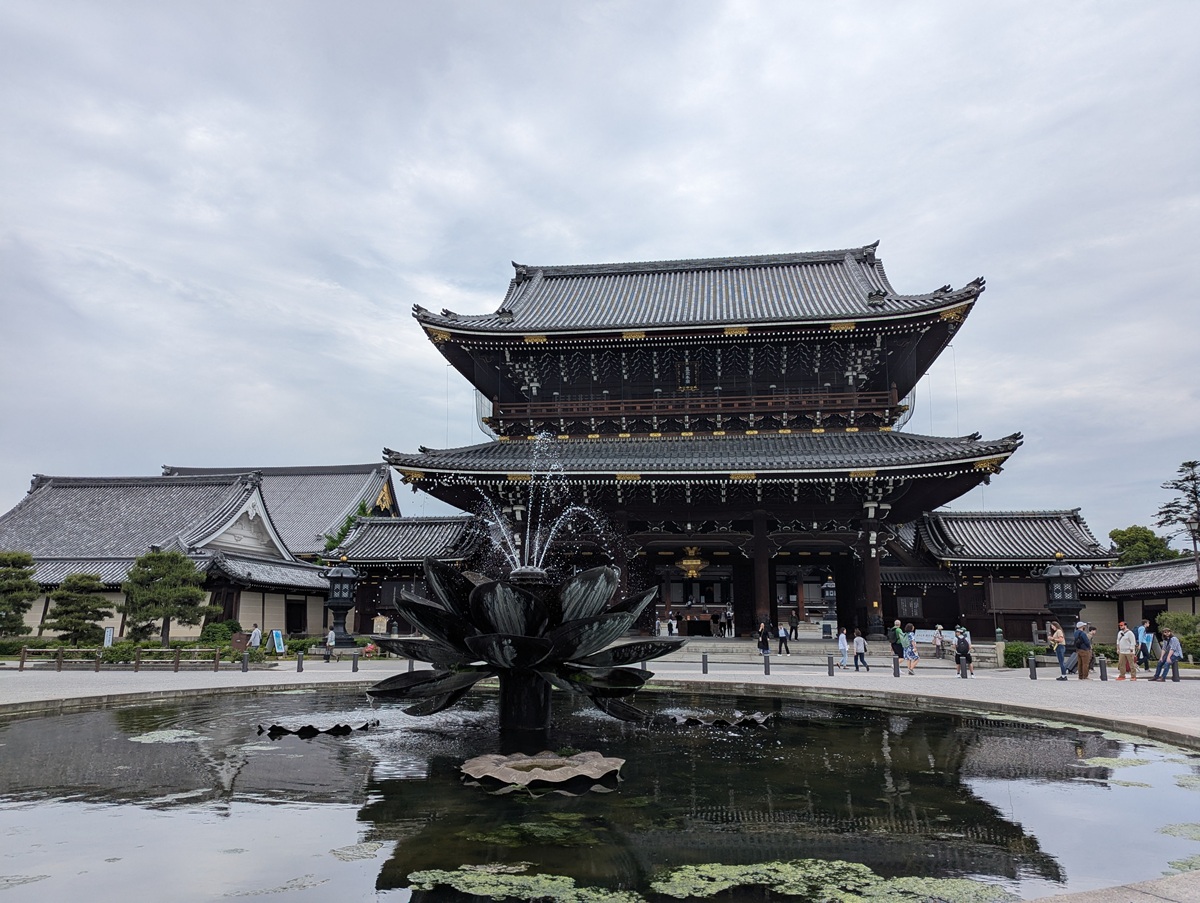
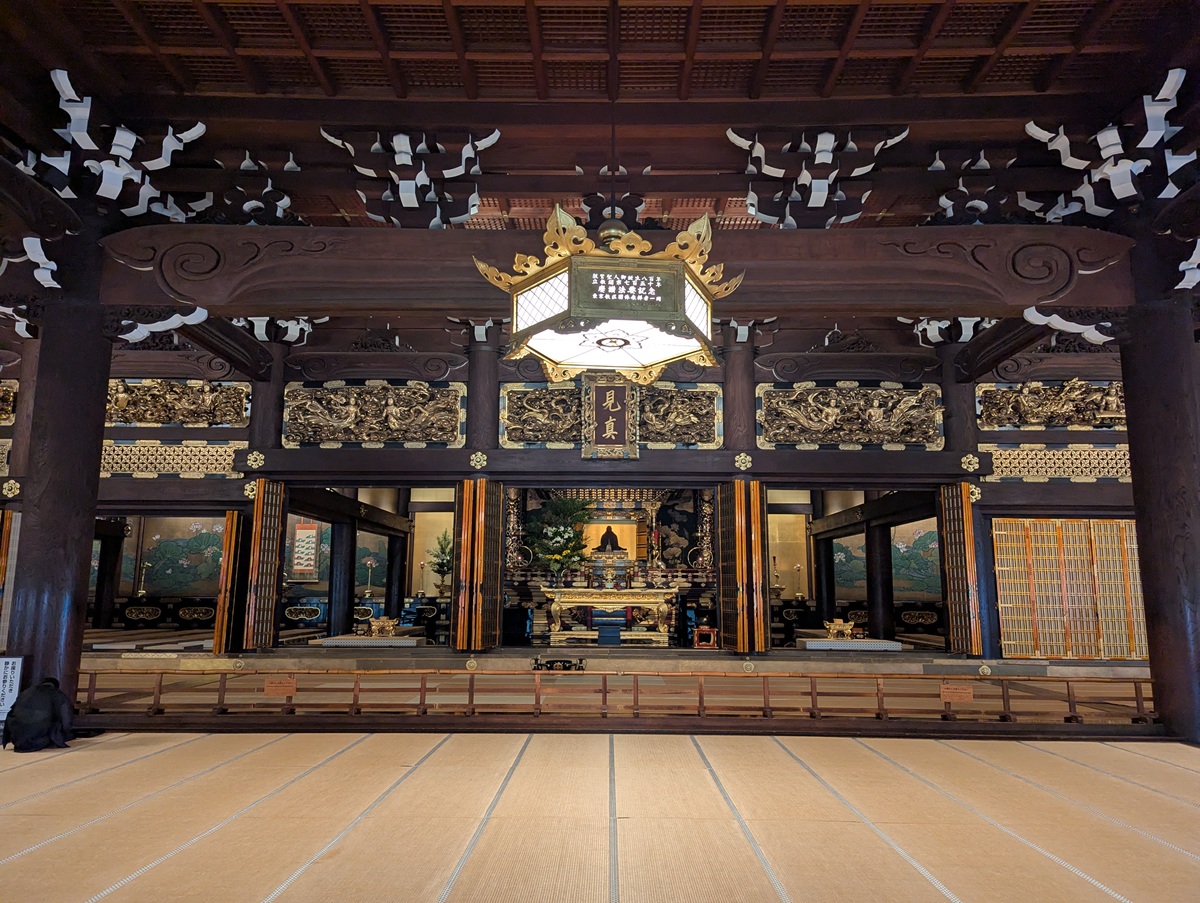
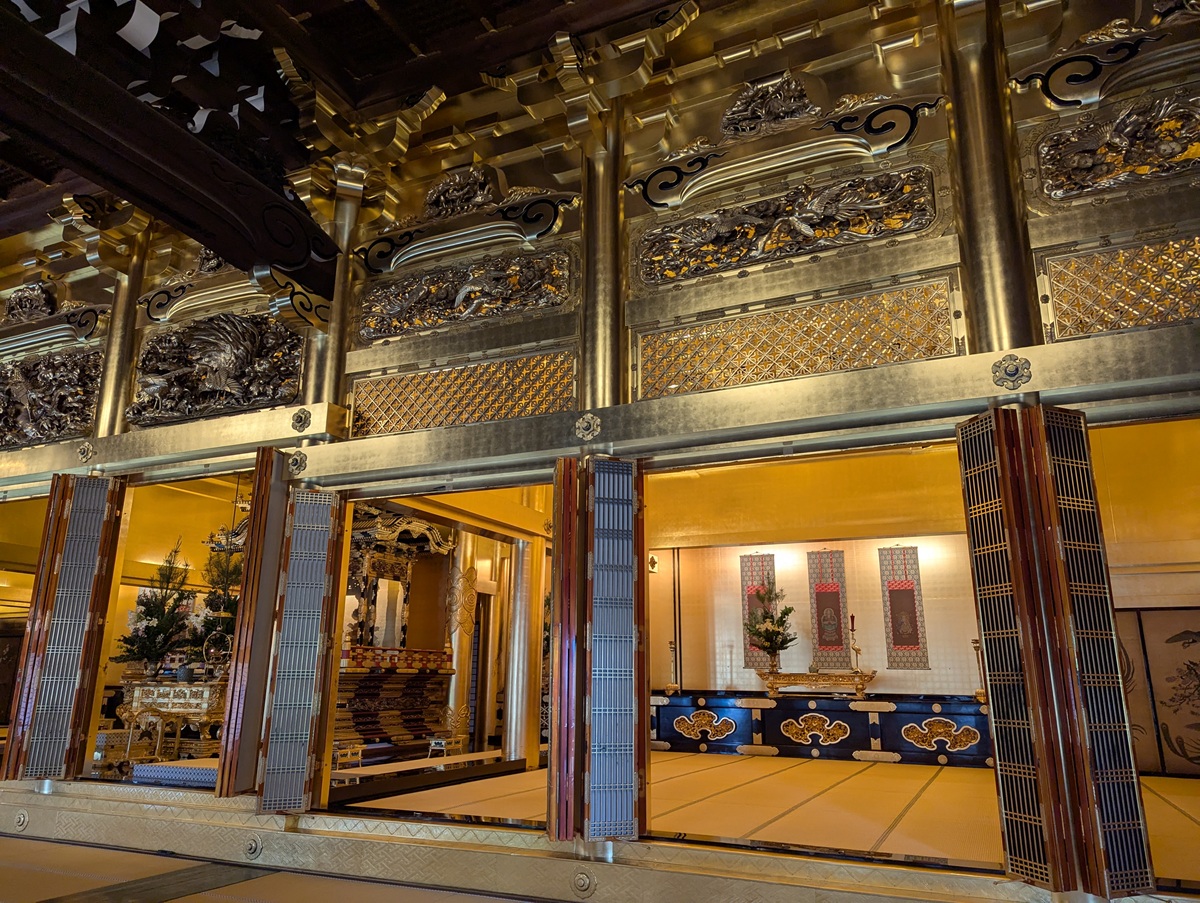
Once we were fueled up for the day, we could do a little sightseeing. We started with Higashi Hongan-ji Temple, a Buddhist temple that’s conveniently located just across the street from our hotel.
We took our shoes off to enter the temple buildings and explore. Be sure to put your shoes in a plastic bag to carry with you; a lot of people left their shoes by the entrance, but then they had to walk through the entire temple complex to get their shoes again.
This temple has beautifully gilded halls with gold leaf motifs. The Founder’s Hall is one of the largest wooden structures in the world at 249 feet long, 190 feet wide, and 125 feet high.
Be sure to walk through all the buildings, all the way to the Gallery and Audiovisual Hall, which many people miss, that has a permanent exhibit on the life of Shinran (founder of the Jōdo Shinshū school of Japanese Buddhism) and rotating special exhibitions.
Check In at Hotel Kuu Kyoto

It was finally time to check into our hotel, Hotel Kuu Kyoto.
When looking for a hotel, I noticed that Kyoto hotels were definitely a lot bigger than Tokyo hotels, and I was so excited about how many of them actually had king-sized beds. As a tall person in Japan, a bigger bed is much appreciated.
The hotel also has a breakfast buffet, which was super convenient in the mornings. And something else I was really excited about was their public baths!
Book your stay at Hotel Kuu Kyoto here.
Try the Public Baths at Hotel Kuu Kyoto

Once we were checked in and settled, we spent the rest of our afternoon checking out the public baths at Hotel Kuu.
They have two public baths, separated by gender. The facilities are assigned male or female each day, and it switches every day. The large bath has a sauna, cold-water bath, hot bath, and outdoor bath. The small bath is just a hot bath with the showers and changing room.
At a Japanese onsen, you bathe completely naked. You’ll shower off in the public shower before enjoying the baths. Here’s a full guide to onsen etiquette (the hotel also provides an illustrated guide).
The smaller bath is nice when you’re the only one in there. When there are more people, it can be loud and less relaxing. But it’s also just the one hot tub, and you get hot pretty quickly, so no one really spends too long in the small facility.
The large bath is really where it’s at. Every time I went in there, it was busy but didn’t feel crowded. The outdoor bath is really nice, especially when the air is cooler.
Have tattoos? Typically, tattoos in an onsen are a no-no, but modern times are changing that. Hotel Kuu Kyoto allows tattoos in the public baths. You don’t have to cover them up.
Dinner at Saganoya
After relaxing in the baths, we ventured back out for dinner. We made our way to the Saga-Arashiyama area because out evening activity was that direction.
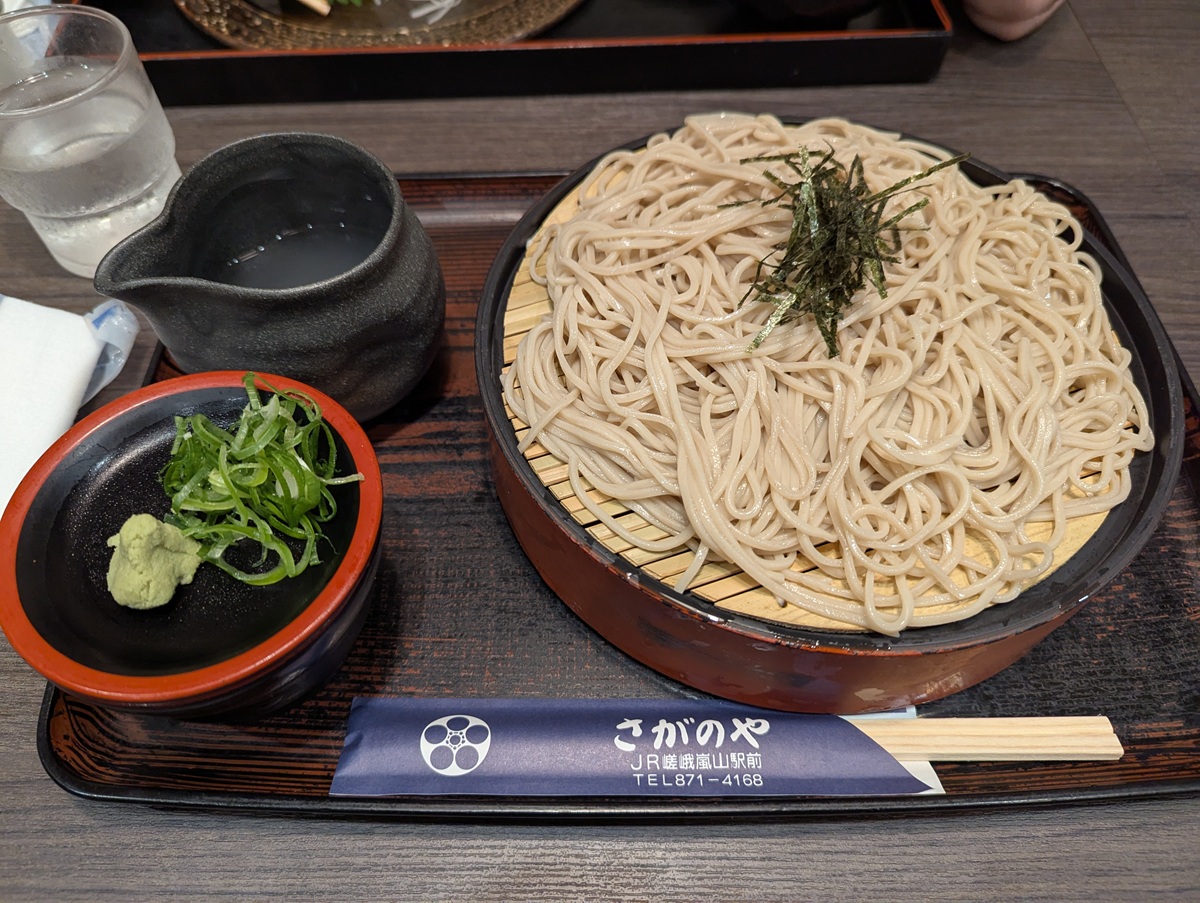
Just outside of the train station, we found Saganoya. This restaurant has a bunch of different options, which is great when you’re traveling in a group like we were.
We tried a variety of items, like zaru soba (a cold noodle dish), sashimi meal, tuna bowl, special egg bowl, tempura shrimp, and a tempura shrimp bowl.
Take the Arashiyama Bamboo Forest Ghost Tour
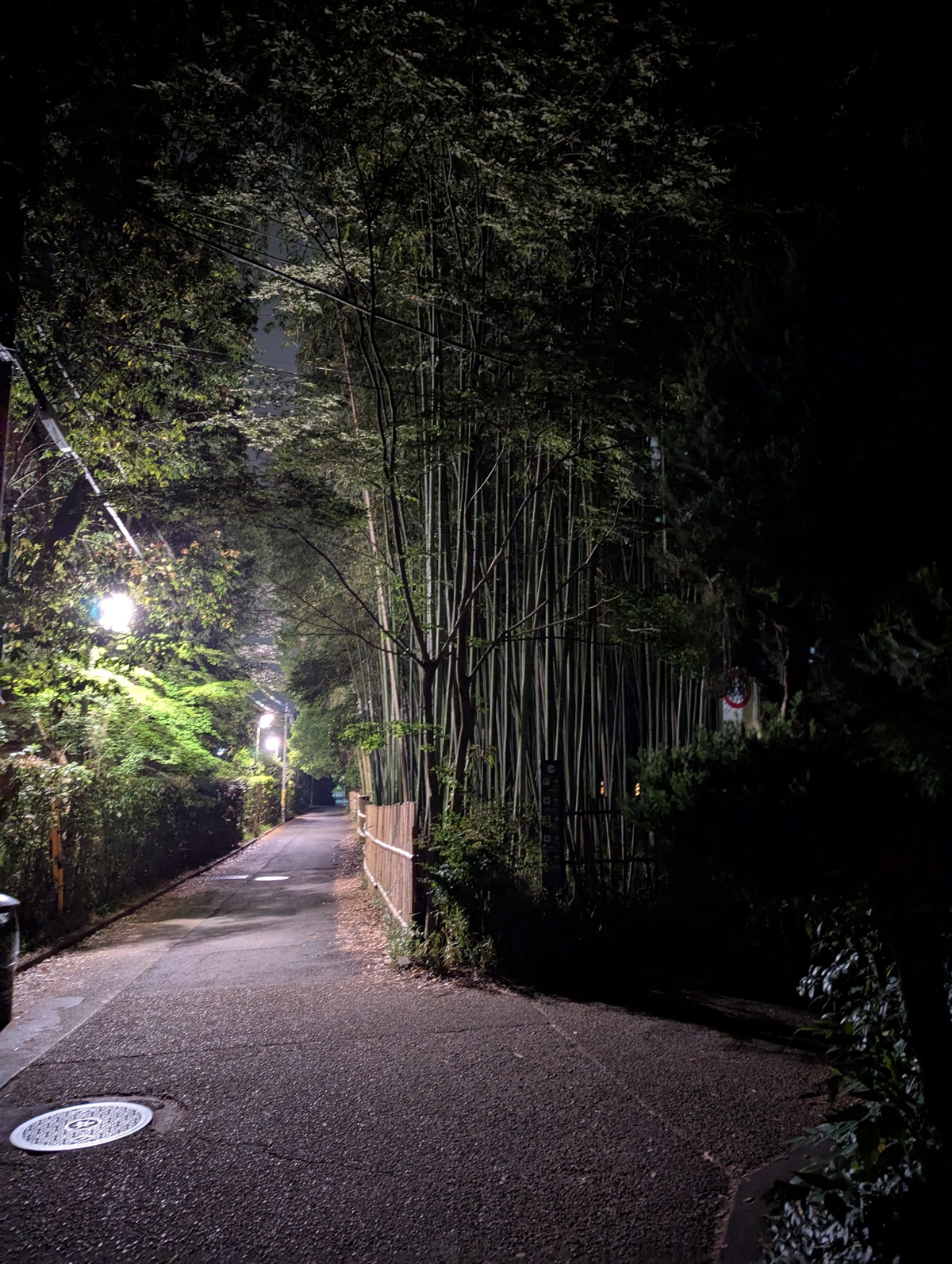
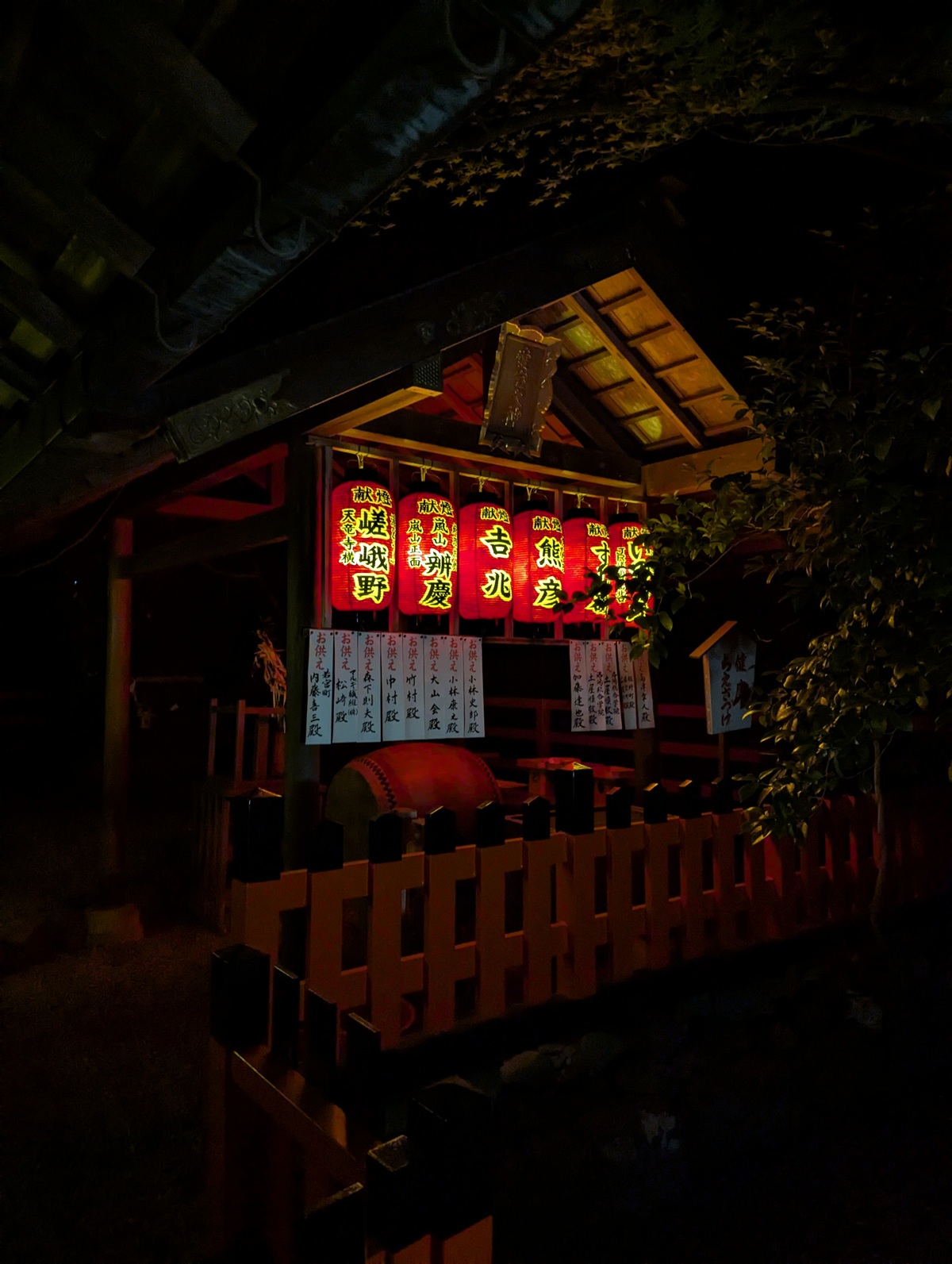
After dark, Saga-Arashiyama pretty much becomes a ghost town. During the day, it’s a popular spot for the Arashiyama Bamboo Forest and the Arashiyama Monkey Park Iwatayama, but in the evening there is almost nobody around.
Which was perfect for our evening activity: a ghost tour of the Arashiyama Forest.
The tour took us from the train station, through the empty streets, past cemeteries and deserted playgrounds, over haunted railroad tracks, and finally into the Bamboo Grove. There was hardly anyone else on the streets as we walked around listening to stories of Kyoto’s haunted spots and Japanese legends.
At the end, you get to walk through the Arashiyama Bamboo Grove, in the night, in the dark, all on your own. (You can walk down in pairs if you want. I made Kevin go with me because I’m susceptible to bad dreams, so if I went alone, I wouldn’t be sleeping, which meant he wouldn’t be sleeping.)
I take a lot of ghost tours, and I don’t normally get spooked. But something about the seclusion of this one (and maybe the fact that every Japanese ghost is out to kill you, not just scare you) in the darkened bamboo did give me chills. You can read my full review of our ghost tour here.
Book your Arashiyama Bamboo Forest Ghost Tour here.
Day 2: Make Ramen and Explore Historic Gion
On our second day in Kyoto, we took it pretty easy in the morning, sleeping in after a long travel day before. Later in the day, we explored mainly in the historic Gion district, learned how to make ramen, visited a temple, and met a geisha.
Take a Ramen Noodle-Making Class
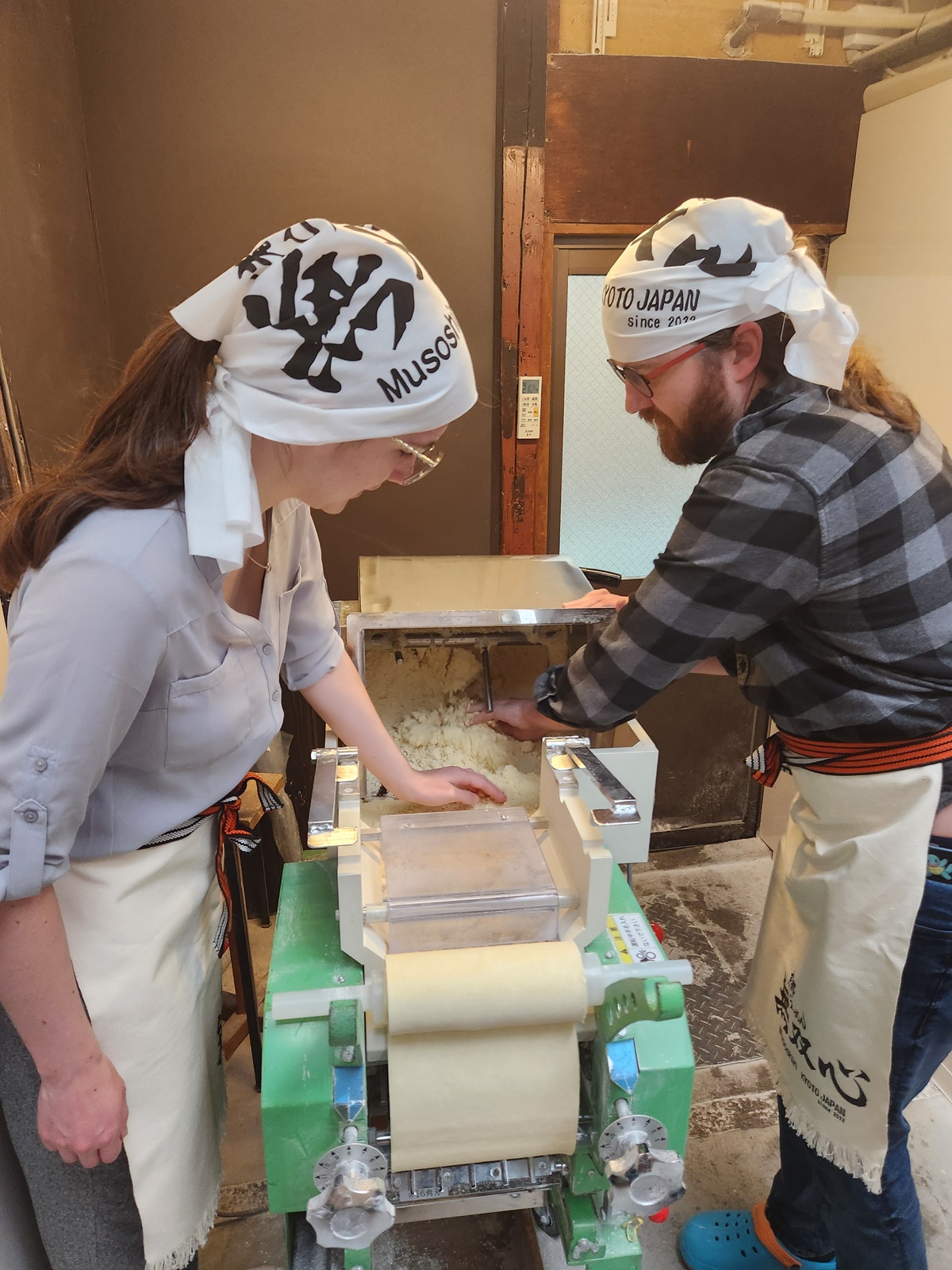
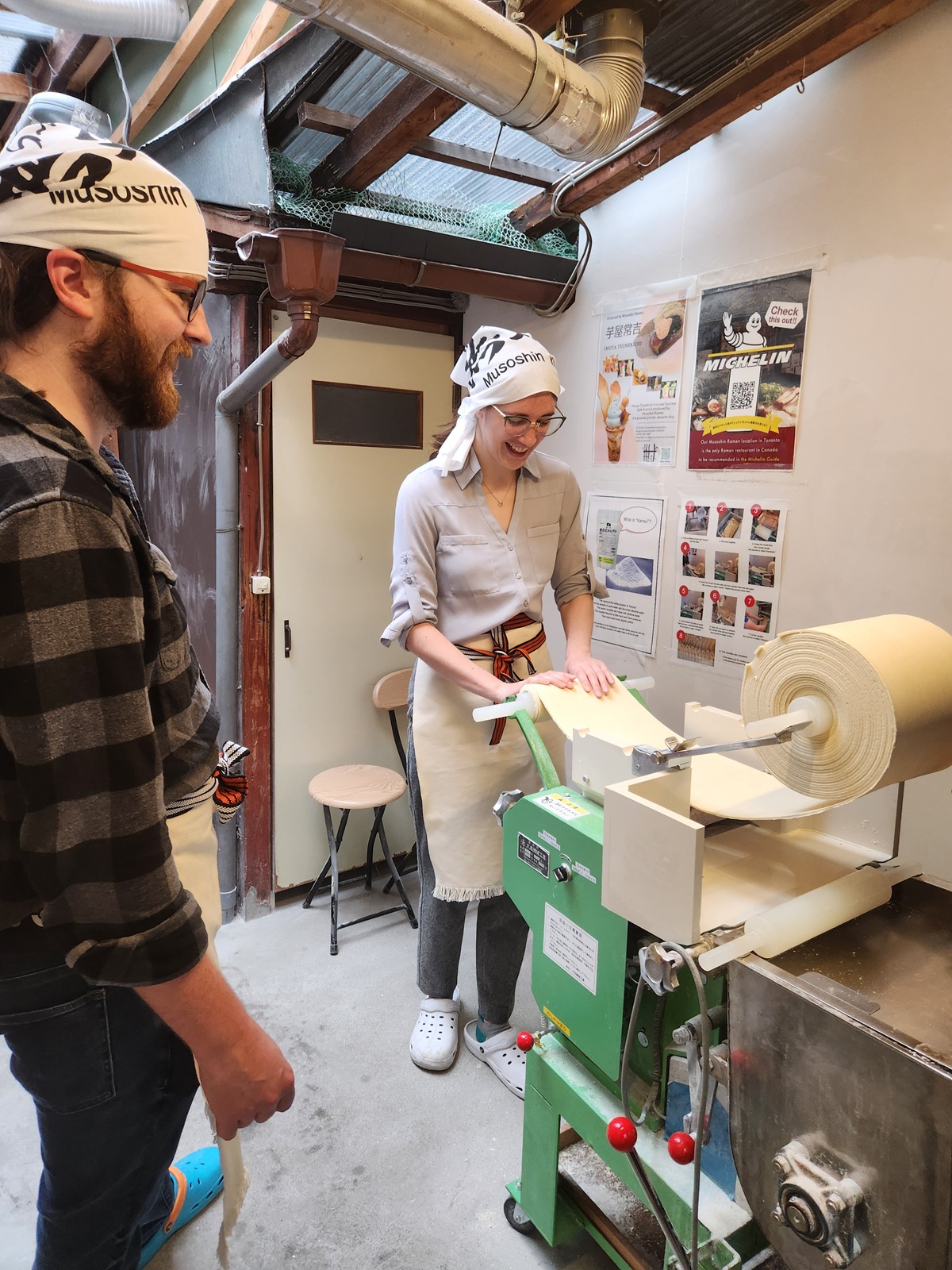
Kevin and I set out in the morning just before lunch for a ramen noodle-making class at the highly-rated restaurant Musoshin in Gion. This experience was one of the best activities we did in Kyoto!
We used a professional ramen machine to make sheets of dough and cut them to the right length. We repeated these steps multiples times, so both of us got a chance to try each step.
This was a really fun hands-on experience that’s pretty unique to Kyoto. You can read my full review of our ramen noodle class here.
The experience also included a bowl of ramen in the restaurant for lunch, so that’s where we headed after.
Book your Kyoto Ramen Noodle Making Class here.
Lunch at Musoshin Gion
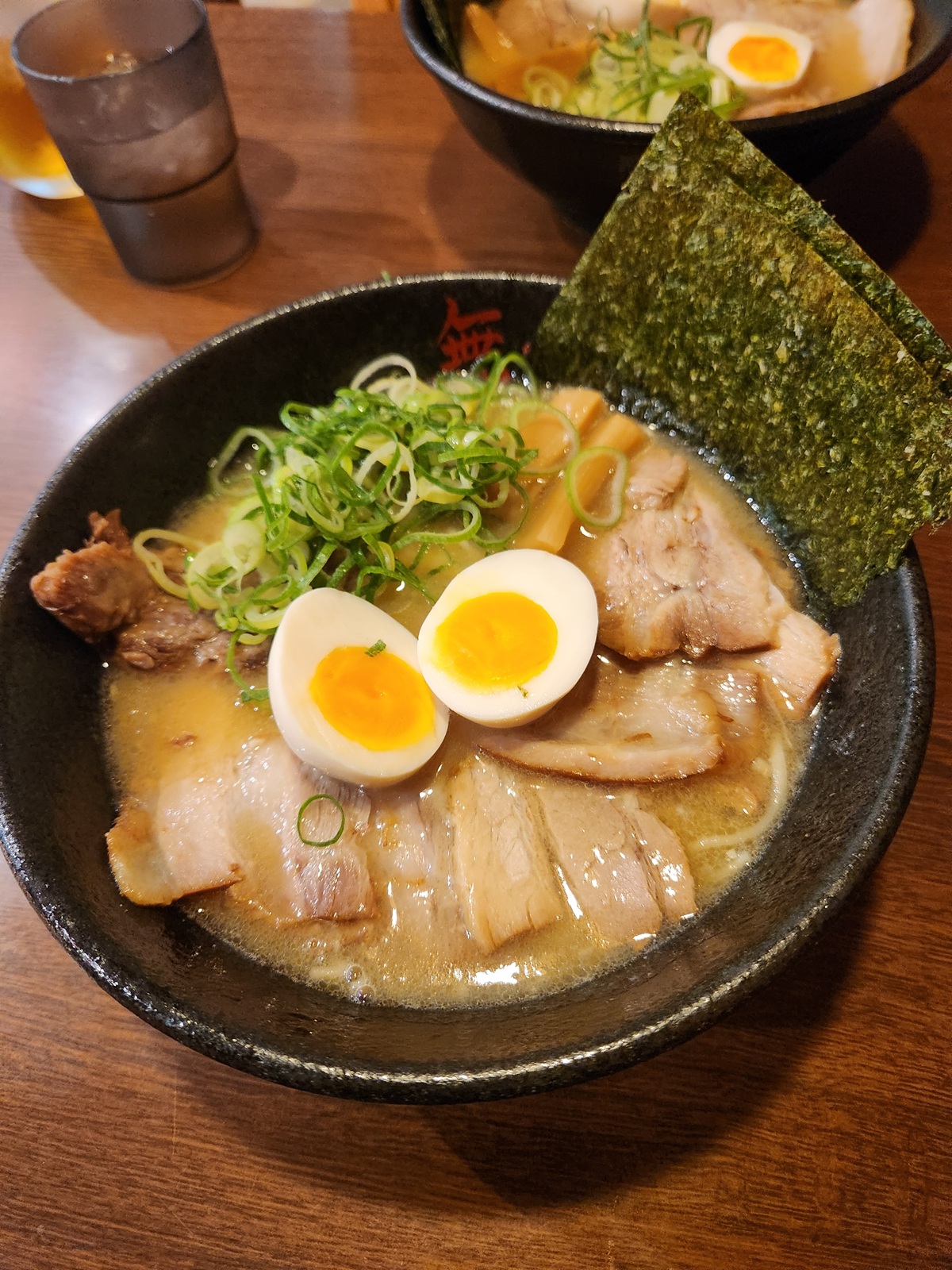
Musoshin Gion is a delicious ramen shop where you can enjoy fresh homemade ramen noodles (whether you participated in the ramen noodle making class or not).
It’s also a rare ramen shop where you can get fully vegetarian and vegan ramen (not just a vegetable option that’s still in a meat-based broth).
We had their Special Musoshin ramen with all of the toppings. We also had a side of their fried chicken, and umeshu (plum wine) to drink.
Walk Through Sannenzaka

After lunch, we made our way up Sannenzaka, one of Kyoto’s most famous pedestrian shopping streets.
The sloping stone street is lined with traditional wooden buildings housing souvenir shops, cafés, and stores selling ceramics, sweets, tea, and other locally made goods. I found an adorable teddy bear made from kimono fabric here, which became one of my favorite souvenirs from the trip.
Sannenzaka gets crowded during the day, and the walk is fully uphill toward Kiyomizu-dera. We took it easy and slow after a morning of ramen.
Visit Kiyomizu-dera Temple
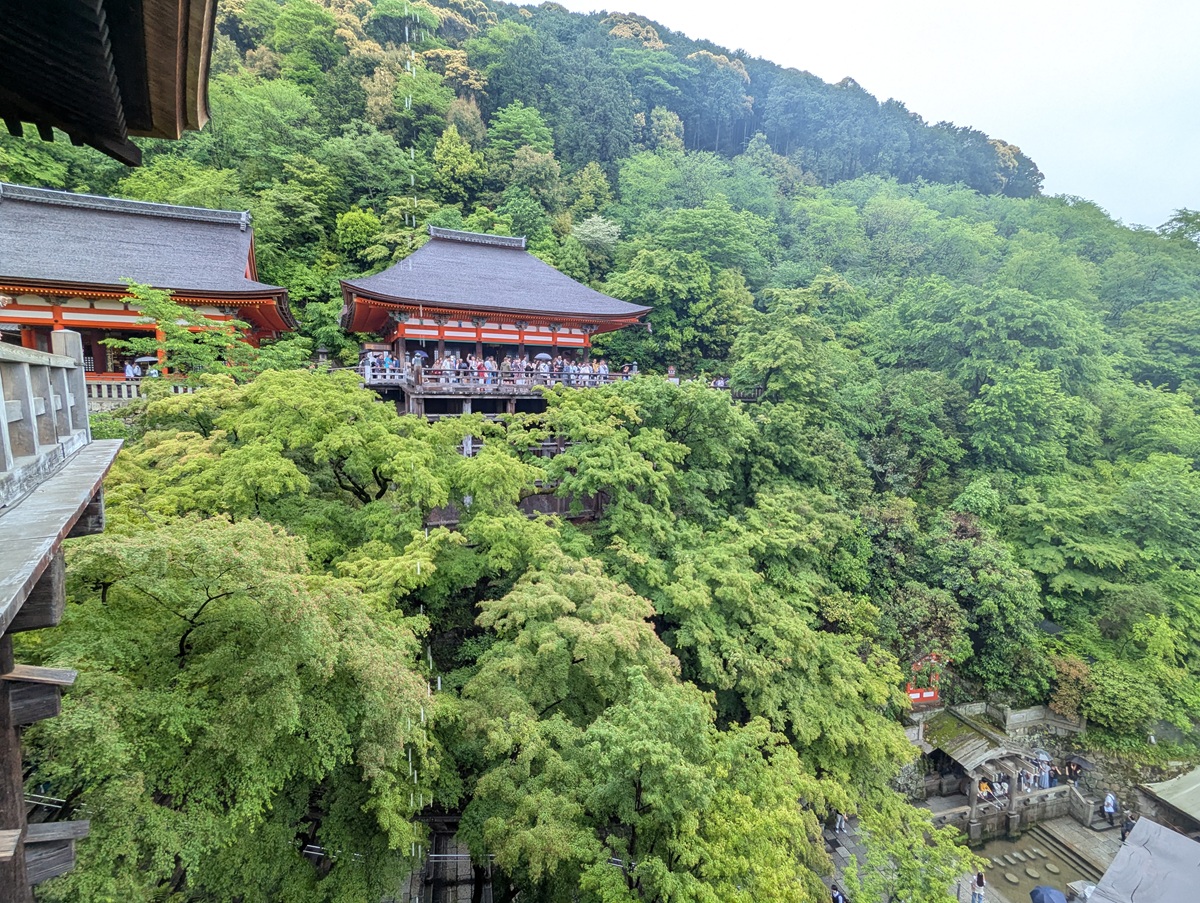
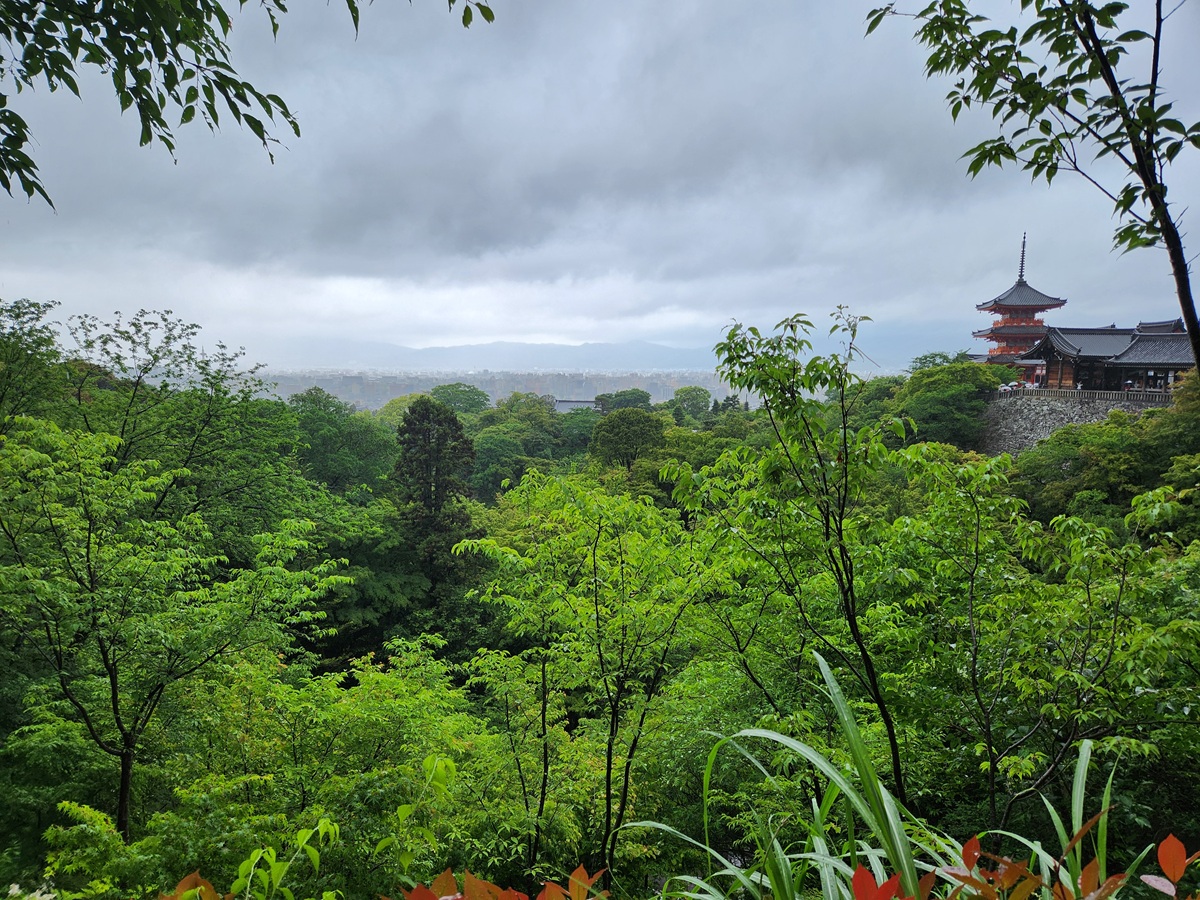
At the end of Sannenzaka is Kiyomizu-dera Temple, a Buddhist temple dedicated to Kannon, the deity of mercy and compassion, that sits halfway up Mt. Otowa.
We walked through the entire mountainside temple complex, from the main Nio mon gate to te west Sai-mon gate that’s known for its sunset views. At the the main Hon do hall, we got incredible views of the pagoda peeking through the trees. At Okuno-in Hall, we could fully take in the incredible wooden structure that holds up Hon do and see views of Kyoto below.
Rest and Use the Public Baths at Hotel Kuu Kyoto

After a long walk up and down the mountain, we were ready for an afternoon break. We went back to Hotel Kuu to soak at the public baths.
Since the baths switch genders each day, we were able to experience a different bath than our soak the day before. And of course everyone agreed that the large bath is the superior bath.
Grab a Light Dinner at FamilyMart
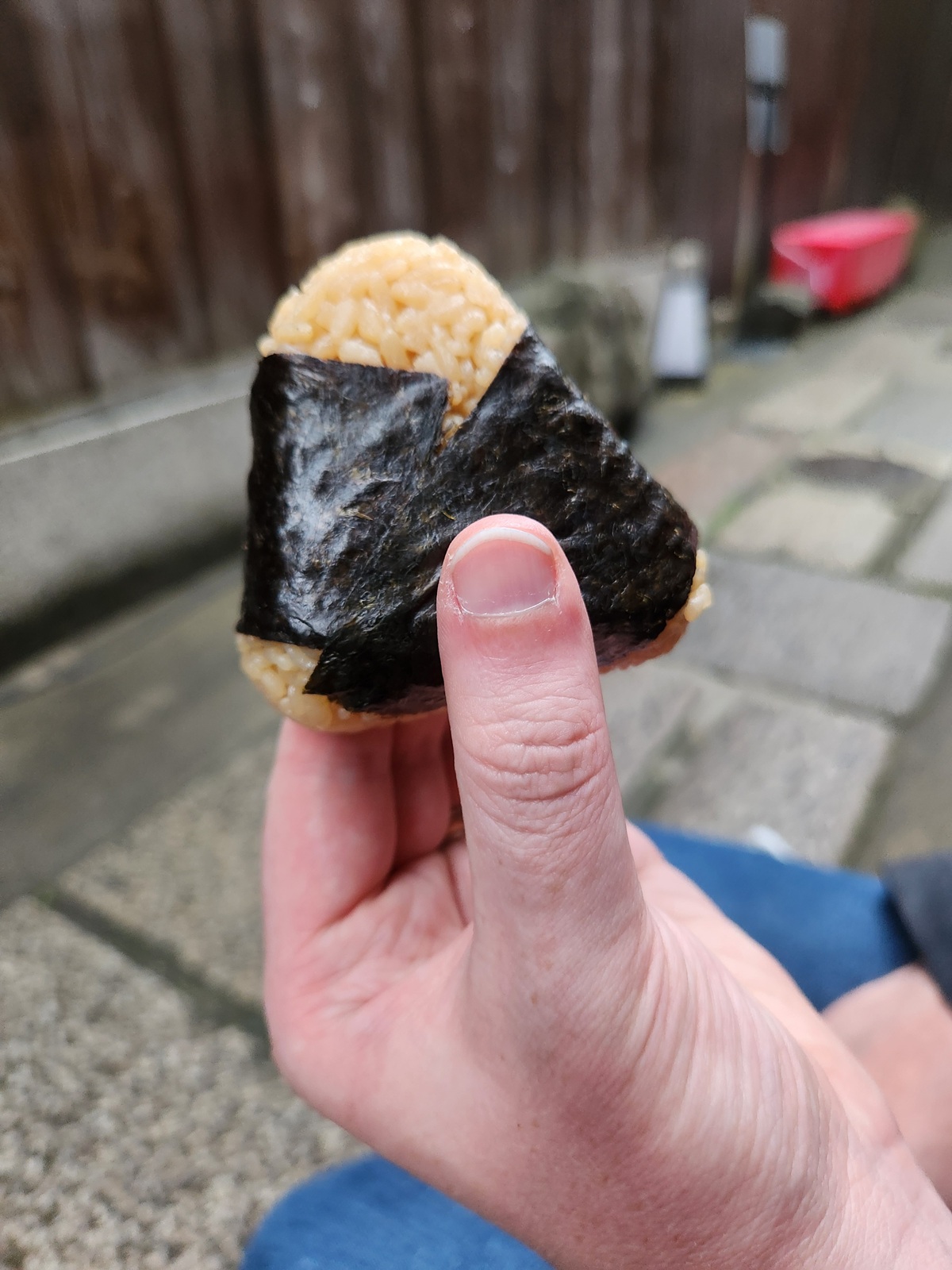
Since we’d had such a filling lunch of ramen, we were in the mood for something on the lighters side for dinner. Plus, we had an evening activity that we didn’t want to miss. So we went for a quick konbini meal from a convenience store.
FamilyMart is a popular Japanese convenience store known for its delicious and convenient ready-to-eat food options.
The Fami-Chiki is a cult favorite (boneless fried chicken that’s hot and ready to eat). I was a big fan of their egg sandwich. We also got a pork onigiri and their famous melon bread.
This was an easy dinner to grab and eat in the hotel before heading out to our evening geisha show.
Attend a Maiko or Geisha Show

A geisha or maiko show is a popular Kyoto experience. And there are a ton of different options: Doing just a show/meet-and-greet is typically the cheapest option. There are also show + Gion tour options, which give a good background on geishas and the geisha district before the show. And the most expensive option is a dinner with a geisha, some which also include a walking tour.
We chose the simple show and meet-and-greet where we got to meet a Maiko (apprentice geisha).
The experience was led by an English-speaking guide who explained the significance of the Maiko’s kimono and dance. We were treated to a short dance performance. Then we were able to ask the Maiko questions in a Q&A session.
Kevin even got to play a traditional drinking game (ozashiki asobi) with the Maiko; the game they played is a reflex game called Konpira Fune Fune, and Kevin did really well! (Of course, the Maiko still won; she’s the experience one, after all!)
We were able to take pictures with the Maiko. They do ask you to not share any photos or videos online that show the geisha’s face, but you’re allowed to take them for personal use.
You can read my full review of our geisha experience here.
Book your Geisha show and experience in Kyoto here.
Day 3: Fushimi Inari, Nanzen-ji, Nijō Castle, and Kyoto Tower
On our third day in Kyoto, we were up early to make it to some popular Kyoto spots before the crowds. It was too early for the hotel’s breakfast, so I recommend grabbing a konbini breakfast from 7-Eleven or FamilyMart before starting the day.
Hike Fushimi Inari Shrine & Senbon Torii (One Thousand Torii Gates)

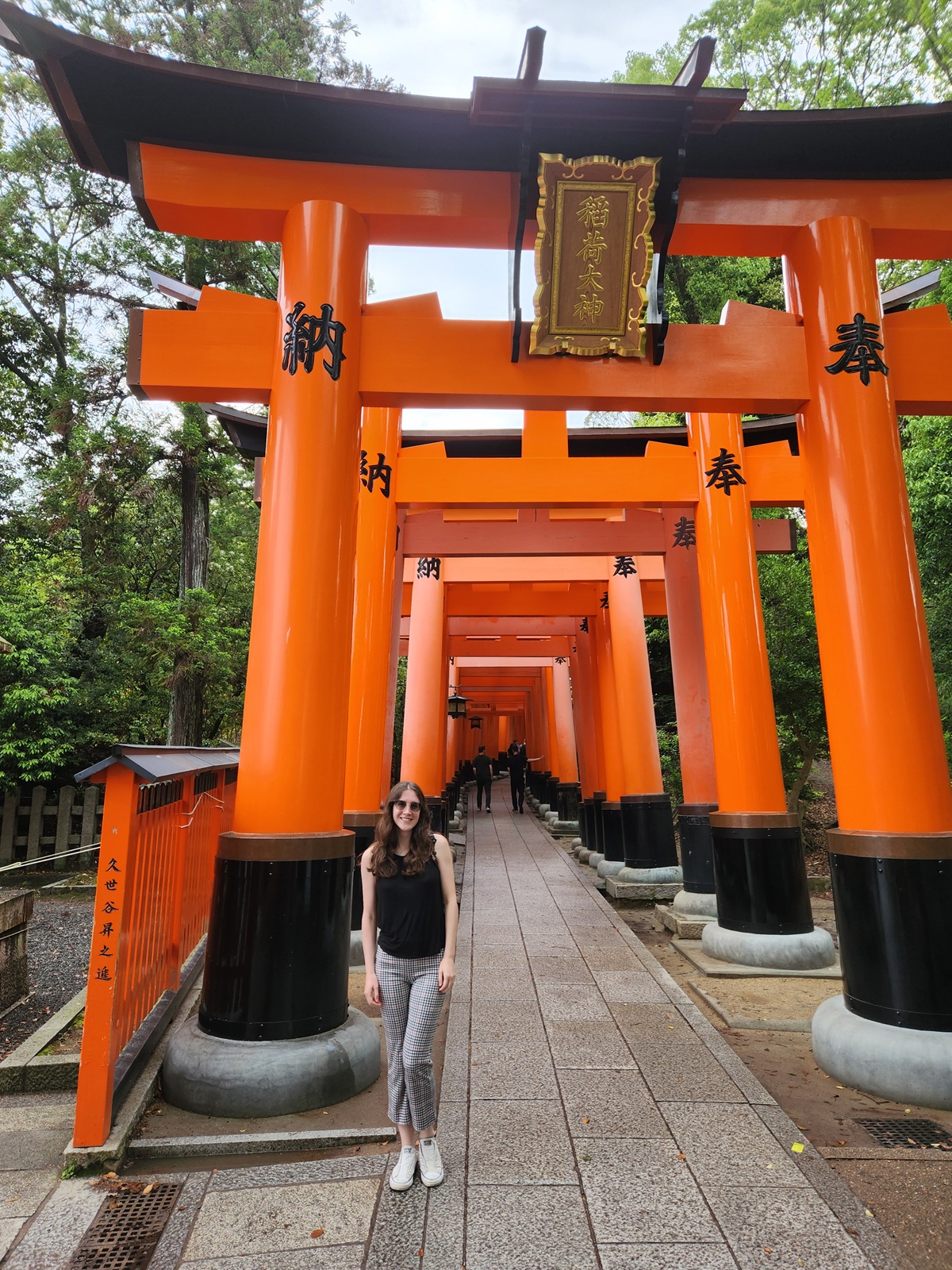
If you wait too long, you’ll be hiking Fushimi Inari with the crowds. So we got there early around 6:15 a.m. to beat the crowds.
Fushimi Inari Shrine is an important Shinto shrine and is famous for its thousands of torii gates straddling the trails. Senbon Torii (“one thousand torii gates”) is the Instagrammable draw of the Fushimi Inari Shrine. Two rows of the orange torii gates create a tunnel for your hike up the mountain.
The full hike took us about 1 hour and 45 minutes. The first 30 minutes to halfway up the mountain is typically the most crowded portion of the hike. Past that, the torii gates start to thin out and so do the crowds.
Most people don’t take the circular route to the summit, but I recommend it. There are a bunch of side paths to explore to smaller shrines. There’s no view from the top, but it’s less crowded and the shrines are interesting.
The stalls that line the hike start to open around 9 a.m., and you can shop the local restaurants, sweets, and souvenirs. But around 9 a.m. and 10 a.m. is also when it really starts to get crowded, so it’s best to head out around then.
Explore Nanzen-ji Temple
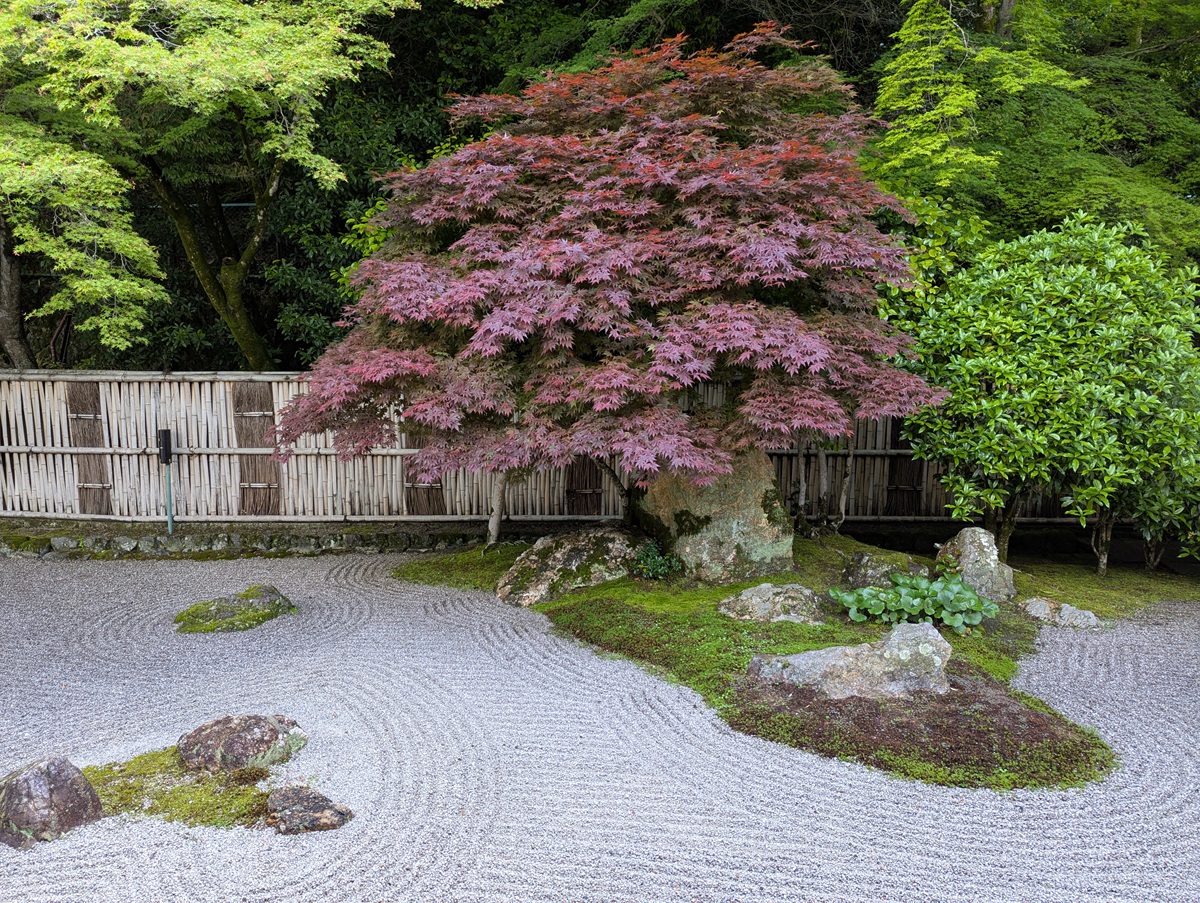
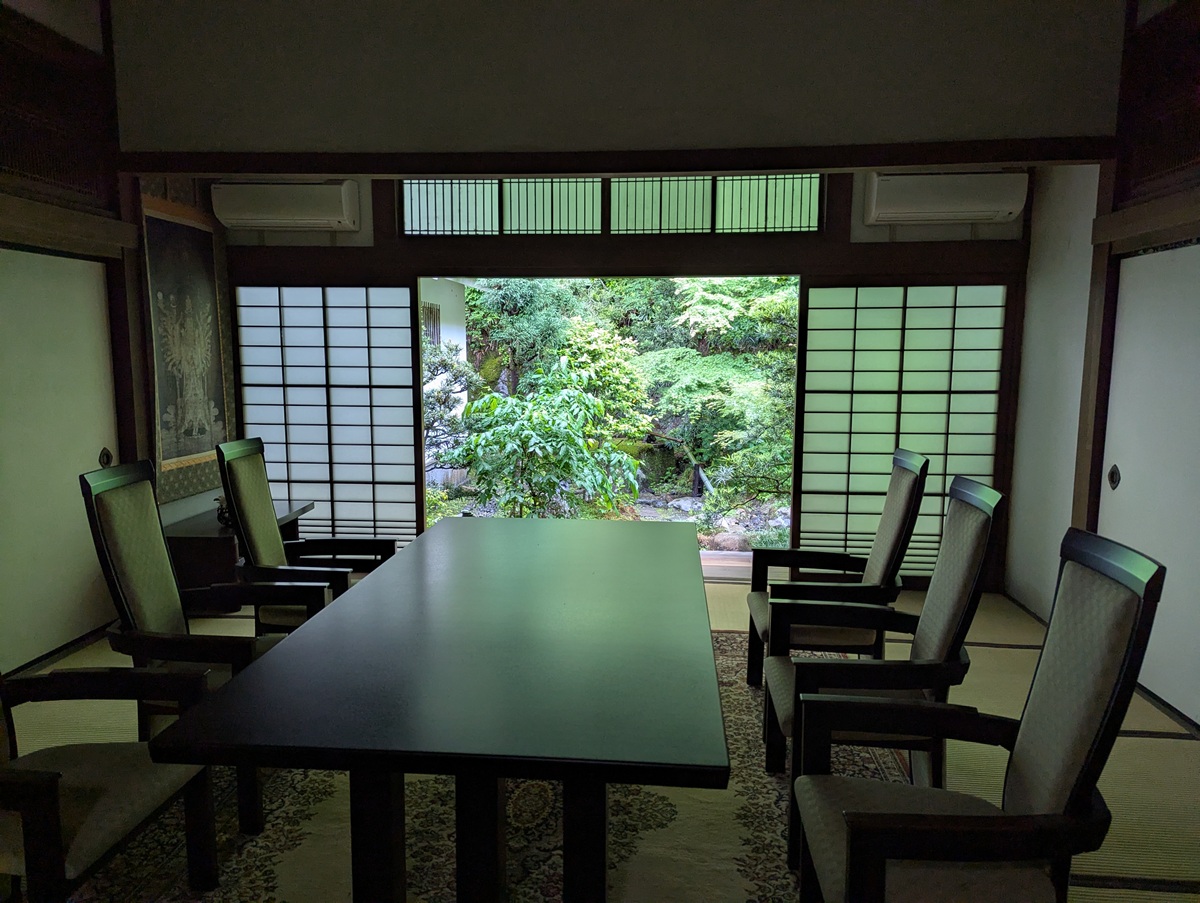
We made our way to Nanzen-ji Temple, a Zen Buddhist temple that dates back to 1291. There are a few different things to do here, some that are free and some that have a fee.
The Nanzen-ji Aqueduct that carries irrigation water from the Lake Biwa Canal through the temple grounds to Kyoto City is free to visit. And you can walk around the lower level of the Sanmon main temple gate for free.
A visit to the top of the Sanmon, a visit to the Hōjō abbot’s quarters, and a visit to the Nanzen-in Temple garden each require a separate fee.
I recommend at least doing the Hōjō to see the beautiful golden screen paintings inside as well as the zen rock garden.
Lunch at Musashi Sushi
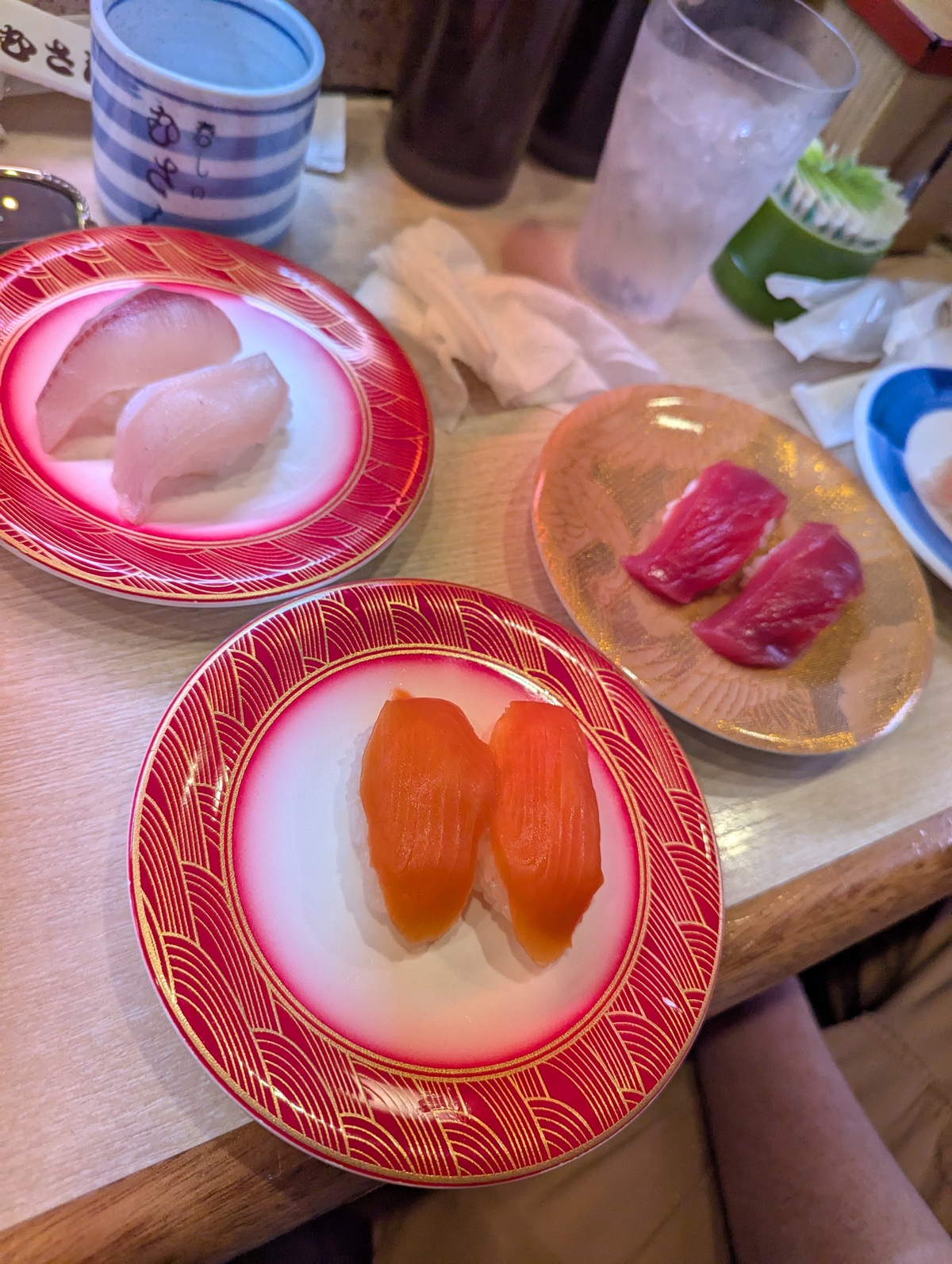
For lunch, we went to Musashi Sushi, a conveyor belt sushi restaurant for nigiri, maki, and some rolls.
I love the conveyor belt sushi model because you can try a variety of things without fear of paying for a whole meal you don’t like.
Some highlights include their variety of tuna, sakura (raw horse meat), hamo oshizushi (a conger eel pressed sushi that’s a Kyoto specialty), mackerel, yellowtail, and salmon. When sushi you want to try comes by, you just grab it off the conveyor belt.
Visit Nijō Castle
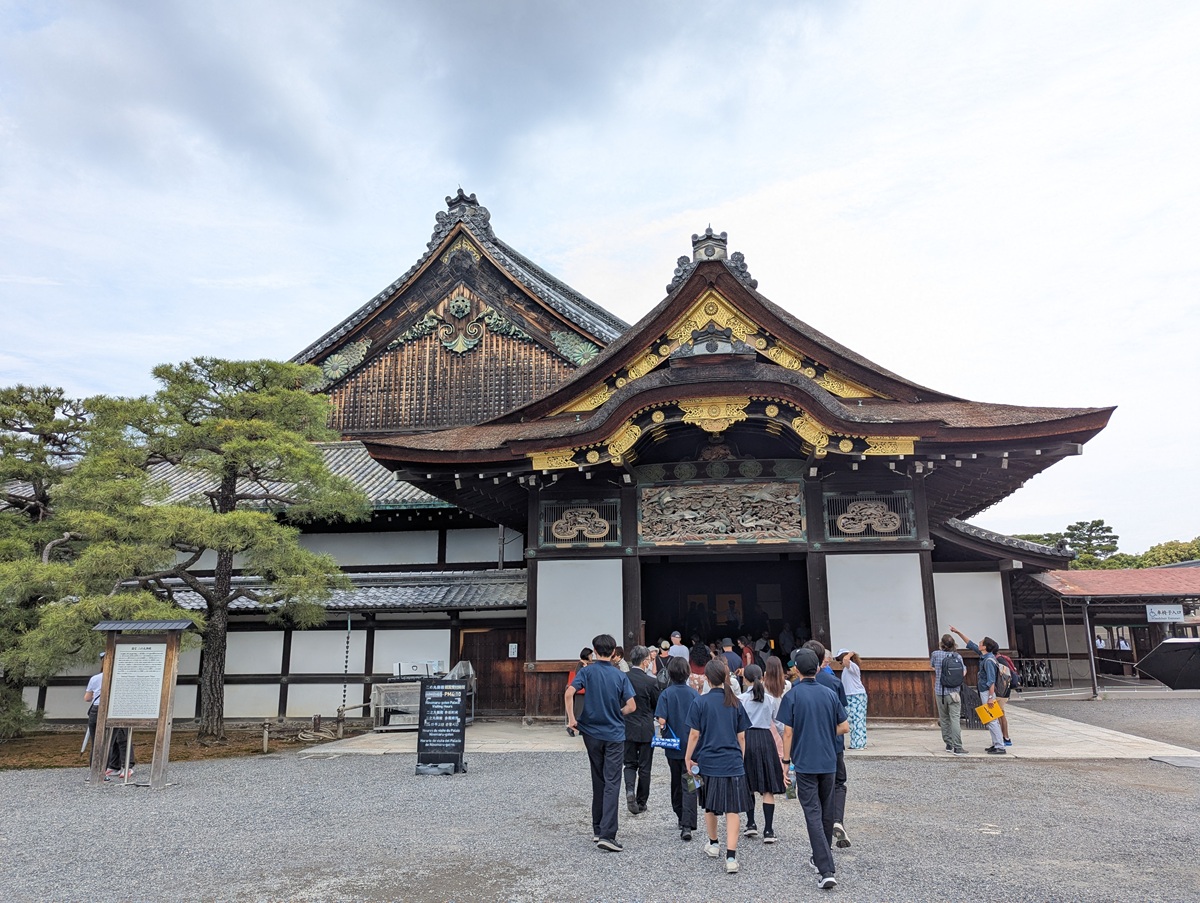
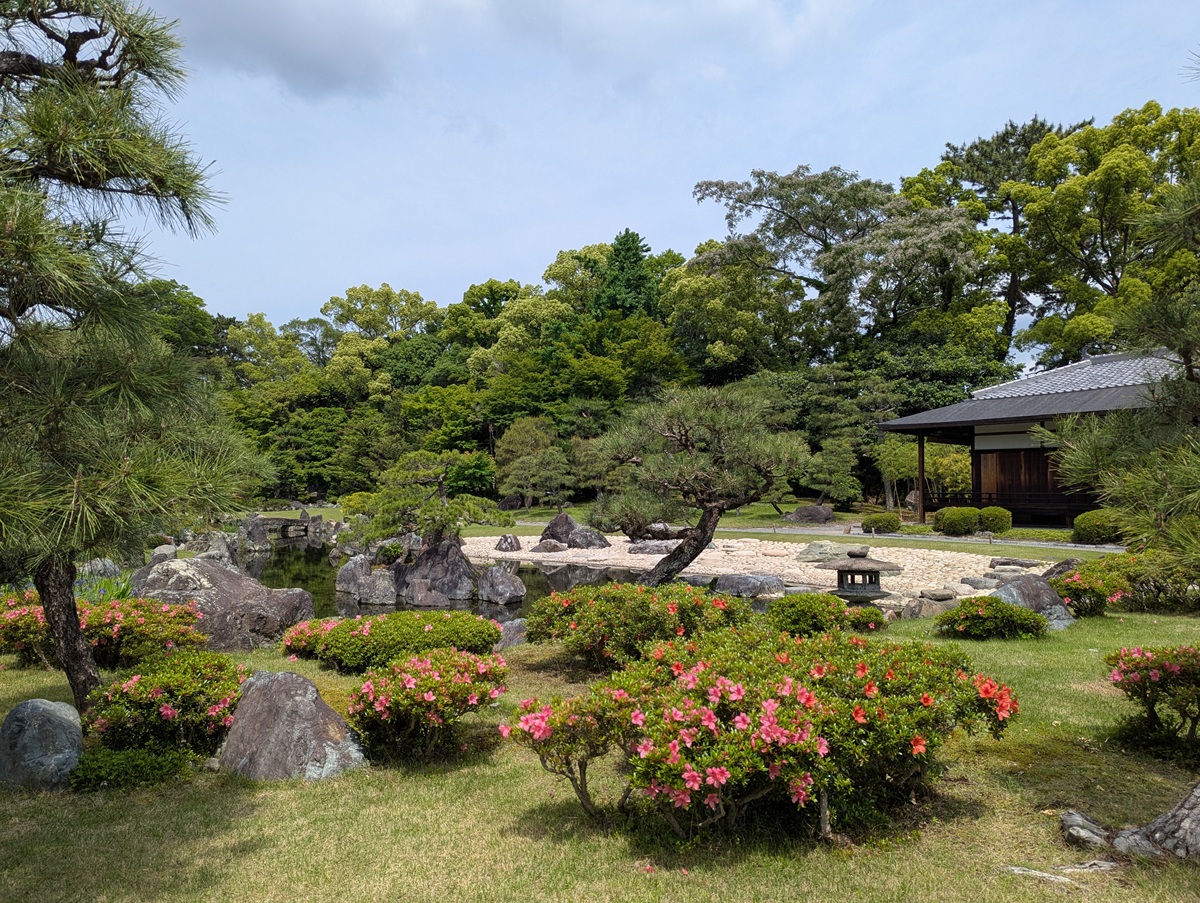
After lunch, we visited Nijō Castle. This castle was built in 1626 and still has two moats, the Ninomaru-goten Palace, the ruins of the Honmaru-goten Palace, and several beautiful gardens across its 68 acres.
There is a separate admission for the castle grounds, the Ninomaru-goten Palace, the Honmaru-goten Palace (advanced reservations required), and the Painting Gallery.
We did the castle grounds admission + Ninomaru-goten Palace.
The Ninomaru-goten Palace is a beautiful string of buildings in the shoin-zukuri architectural style. It was the Kyoto residence of the shōgun, so all the decorations were elaborate and highlighted in gold leaf in order to impress visitors.
As you walk the castle grounds, make sure to also visit the Honmaru Garden where you’ll find the base of the keep tower, which you can climb and get a nice view of the castle complex.
Rest and Use the Public Baths at Hotel Kuu Kyoto

After waking up so early in the morning, a hotel break is definitely in order.
The afternoon is a good time to take another plunge in the public baths at Hotel Kuu, rest, and relax after a morning of climbing mountains, visiting temples, and conquering castles.
See the Sunset from Nidec Kyoto Tower

I’m a big fan of seeing the city from every vantage point; so far we’ve seen Kyoto from Kiyomizu-dera Temple, Fushimi Inari Shrine, and Nijō Castle.
If you’re a big fan of views like me, then I recommend adding in the observation deck at Nidec Kyoto Tower.
If possible, try to schedule your visit around sunset so you can see the mountains and city in the daylight, then watch as the city begins to light up. Check the sunset time for your visit and aim to get to Kyoto Tower about 30 minutes beforehand.
Book your Nidec Kyoto Tower tickets here.
Dinner at Katsukura

For dinner, head to Katsukura at Kyoto Station for tonkatsu, Japanese breaded pork cutlets served with rice, shredded cabbage, miso soup, and sauce you grind and mix at the table.
Depending on the time of sunset when you visit, you can put Katsukura before or after Kyoto Tower and still have plenty of time to enjoy both the dinner and the views.
Day 4: Shop in Kyoto and Stay at an Onsen Ryokan
Our fourth and final day in Kyoto was pretty unique in that we spent an easy morning shopping and then set out for an onsen ryokan stay on the outskirts of the city. Because we had to check out of our hotel so we could move to the ryokan, we went ahead and checked out early before starting our day and left our luggage at the Hotel Kuu before heading out in the morning.
Explore Teramachi and Shinkyogoku Shopping Streets

We took our morning pretty easy with some shopping on Teramachi and Shinkyogoku, two covered shopping arcades at the heart of Kyoto’s main shopping district.
Teramachi has a lot of art galleries, bookshops, and clothing stores. Shinkyogoku has a lot more souvenir shops. Both streets offer restaurants, trendy shops, and a pedestrian friendly place to hang out.
Visit Pokémon Center Kyoto

If you’re traveling with a Pokémon fan in tow, the Pokémon Center Kyoto is an easy nearby shop where you can find all kinds of Pokemon goodies, from plushies to accessories to cards to dishware to toys.
We picked up some of the PokéBears for me and some Eevie goodies for Kevin.
Have Lunch in Downtown Kyoto

We kept lunch nearby in downtown Kyoto. We went to a McDonald’s because trying familiar fast-food chains abroad is always a fun little experiment, and the Japanese menu includes several items you won’t find in the US.
We ordered the Chicken Fillet-O and a Cheese Cheese Double Cheeseburger. Other Japanese McDonald’s options include the Teriyaki McBurger, Egg Cheese Burger, and edamame corn as a side.
For a more local meal, choose one of the restaurants in my Kyoto dining guide. Just keep lunch fairly close to downtown or Kyoto Station so you can pick up your luggage and catch the train to Ogoto Onsen.
Take the Train to Ogoto Onsen

After lunch, we took the train to Ogoto Onsen. This area is a popular hot springs area that’s easily accessible from Kyoto.
It only takes about 20 minutes from Kyoto Station to Ogotoonsen Station, and the Biwako Ryokusuitei (where we were staying) has a free shuttle that picked us up from the train station.
Check In at Biwako Ryokusuitei
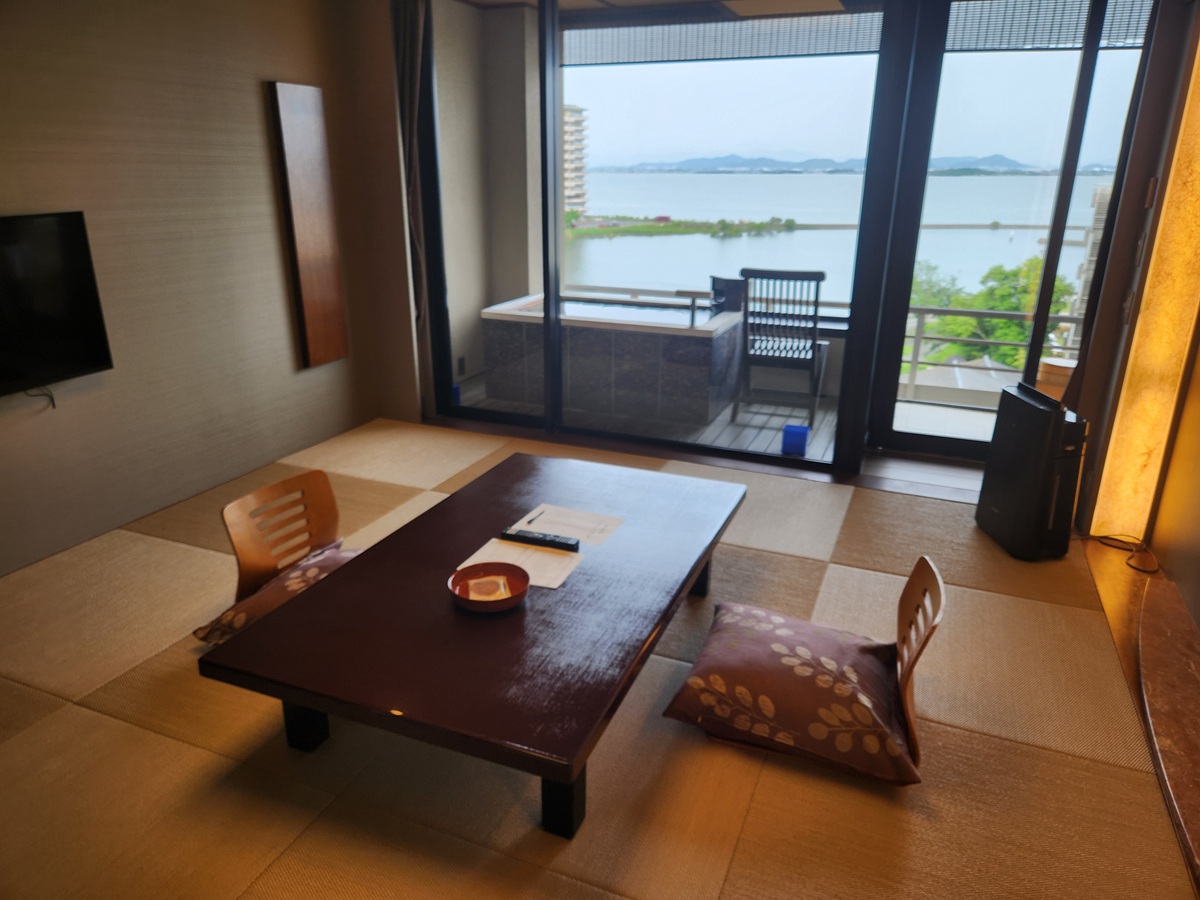
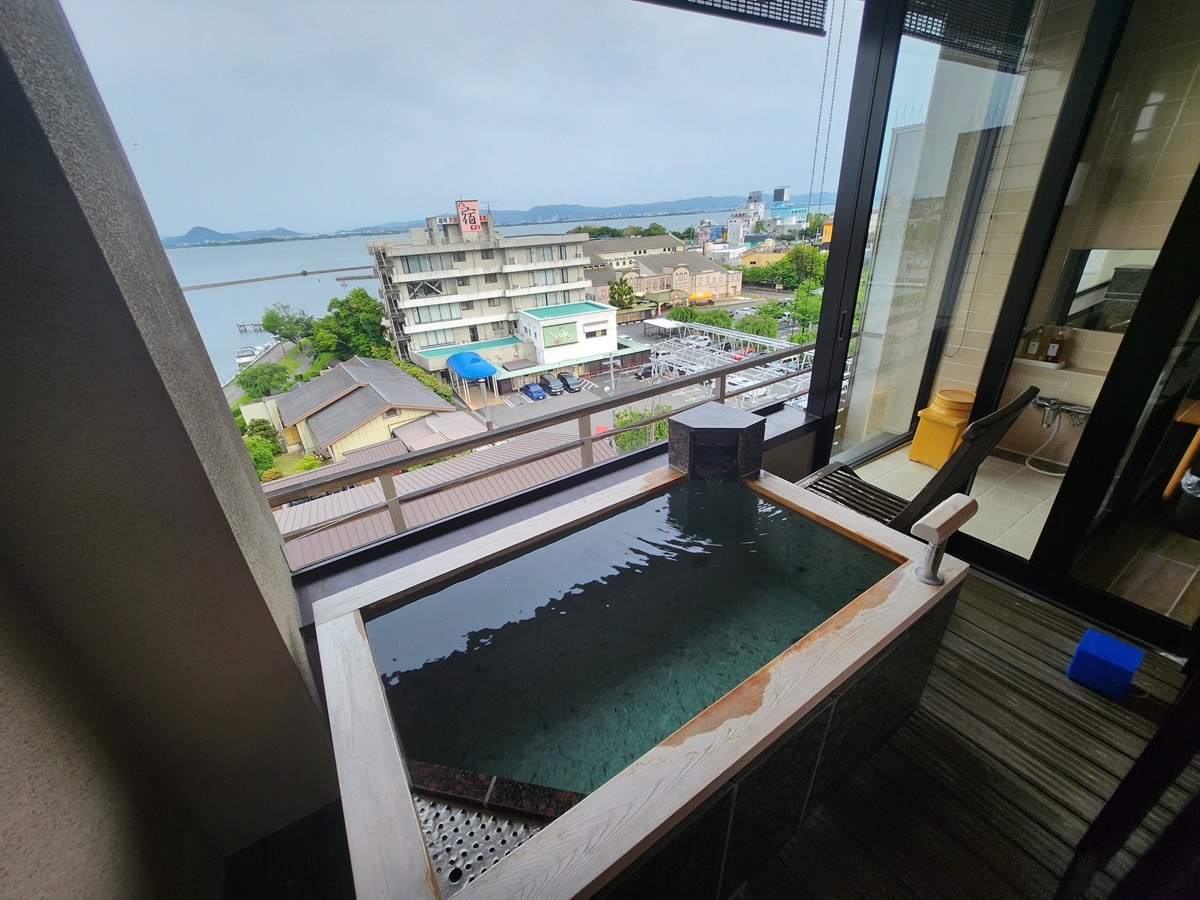
Biwako Ryokusuitei feels like a world away from Kyoto, even though it’s really only a 20 minute train ride.
This beautiful resort hotel on Lake Biwako has incredible lake views, traditional Japanese-style rooms, public indoor/outdoor hot-spring baths, and rooms with private balcony open-air baths.
Kevin and I stayed in a standard Japanese-style rooms with an open-air bath and spectacular views of the lake. The room had tatami mats with a seating area with low tables and cushions. At night, they came in the room and swapped out the table for our two futons.
The room had a TV, free Wi-Fi, a mini fridge, and Yukata robes for us to wear around the property. The open-air bath was fed by the hot springs. The shower was also glass-enclosed and facing out by the balcony.
Others in our group stayed in a suite-style Japanese room and a Western-style room, they they have a variety here.
Book your stay at Biwako Ryokusuitei here.
Enjoy the Lakeside Happy Hour

Once we were settled into our room, we changed into our Yukata provided by the hotel and headed downstairs to their lakeside deck and garden for happy hour.
The hotel sets out complimentary wine, juice, snacks, and ice cream, and the lake views are beautiful and relaxing. The happy hour was a little extra perk we had no idea was included, and it was such a nice surprise that made the resort stay even more luxurious.
Have Dinner at Kaze no Ne

After enjoying the happy hour, we went to dinner at one of the hotel’s many restaurants. Our reservation was at Kaze no Ne with a semi-private dining experience separated by roller screens.
The 5-course meal we had here was absolutely delicious, and we had so much fun with it because they only provided a Japanese menu so we didn’t know what we were eating most of the time!
The meal started with a sort of aperitif and appetizer, followed by sashimi, then there was some sort of fish with everything still intact, followed by the main course of Omi beef shabu-shabu (a Japanese hot pot dish with sliced meat), and finally a variety of desserts and hot green tea.
Relax in the Public Baths

After dinner, we went to check out the public baths. These baths are separated by gender.
The women’s bath has a large indoor bath, an outdoor multi-section open-air bath, a plunge pool that’s a more moderate temperature, a cold plunge pool, and a barrel sauna. I enjoyed the outdoor bath the best here, but I also started to enjoy a dip in the cold plunge.
The men’s bath has a similar set up, plus they have reclining chairs that sit in the outdoor bath. And I must say, I’m pretty jealous because I love a lounge chair that sits in the water.
This was a great way to end 4 days of sightseeing!
Have tattoos? Biwako Ryokusuitei caters to a more local crowd, so they’re a little more traditional about tattoos than our last hotel. The hotel can provide you with skin-colored stickers to cover your tattoos. They’re about the size of a hand, so if you have a lot of tattoos these may not cover them. You can also try to visit when the baths are empty; the TV in your room tells you about the traffic in the baths, but it wasn’t super accurate.
End the Night in Your Private Open-Air Bath

Since our room had the private bath, we went back to our room to enjoy the privacy of our balcony.
The open-air baths in the rooms are automatically fed with hot spring water, so you can use it whenever. The temperature is already set at a comfortable hot, but if it needs adjusted you can call the front desk.
When we returned to our room, they had already laid out our futons, so we were ready to head straight to bed after our bath.
In the morning, you can take the same shuttle back to the train station, take the same train back to Kyoto Station, and then you’re free to move on to your next destination, whether that’s the airport to fly home or to Tokyo or another city.
Book your stay at Biwako Ryokusuitei here.
Optional: Swap the Ogoto Onsen Stay for a Day Trip to Osaka

If the onsen ryokan isn’t your vibe, you can swap the Ogoto Onsen stay for a full day in Osaka, which is about 30-45 minutes from Kyoto by train. Osaka has a much bigger, brighter energy that feels more Tokyo than Kyoto, so it can be a good contrast if you’re worn out on temples and shrines.
Here are a few options for an Osaka day trip:
- Osaka Castle: I loved Osaka Castle for the city views. There’s a museum inside the main tower as well, and a large park surrounding it that’s great for people-watching.
- Dōtonbori: Dōtonbori is Osaka’s most recognizable scenes. This is a great place to explore in the afternoon and evening where giant illuminated signs tower over the canal, and the street food stalls, restaurants, and bars are buzzing with activity. Look for the Glico running man, the giant crab, and the other iconic oversized signs.
- Dinner in Osaka: Stay in Dōtonbori for dinner so you can experience the area after dark. Osaka is known for casual comfort foods like okonomiyaki and takoyaki, or you can book a food tour to find local spots beyond the busiest tourist restaurants.
- Universal Studios Japan: Theme park fans can skip the city sightseeing and spend the entire day at Universal Studios Japan instead. This needs a full day, especially if you want to visit Super Nintendo World and the Wizarding World of Harry Potter, so I wouldn’t try to combine it with Osaka Castle or Dōtonbori.
Even if you want just half a day in Osaka, it can be a fun add to your itinerary.
Where to Stay During This Kyoto Itinerary
This itinerary includes 3 nights in central Kyoto followed by 1 night at an onsen resort near Lake Biwa. You’ll have a convenient base for sightseeing, then a slower final night with relaxing hot springs and lake views.
Hotel Kuu Kyoto
Hotel Kuu Kyoto is a convenient base for exploring Kyoto. It sits directly across from Higashi Hongan-ji Temple and within easy reach of Kyoto Station. Our room had a spacious king-sized bed, free Wi-Fi, a mini fridge, and more space than we had in Tokyo. We also added the breakfast buffet each morning, and the hotel offers a free one-way shuttle to several major sights.
The public baths were one of the main reasons I enjoyed staying here. The men’s and women’s facilities switch each day between a smaller bath and a larger bath with a sauna, cold-water bath, hot bath, and outdoor bath.
Book your stay at Hotel Kuu Kyoto here.
Biwako Ryokusuitei
Biwako Ryokusuitei is an onsen resort on Lake Biwa, about 20 minutes from Kyoto Station by train. We stayed in a Japanese-style room with tatami mats, low tables, floor cushions, yukata robes, and a private open-air bath overlooking the lake. In the evening, the staff replaced the table with futons for sleeping.
The stay also included a lakeside happy hour, a semi-private multi-course dinner, indoor and outdoor public baths, a barrel sauna, cold plunge pools, footbaths, and lounge spaces. The private balcony bath was the highlight and gave us a quiet place to end the night.
Book your stay at Biwako Ryokusuitei here.
How to Get Around Kyoto
Kyoto has an extensive public transportation system, and this itinerary uses a mix of trains, buses, and walking. Trains are usually the easiest option for longer distances, especially for Fushimi Inari, Arashiyama, and the trip to Ogoto Onsen. Buses are useful for attractions that are farther from train stations, though they can be slower when traffic is heavy.
You’ll still do a lot of walking between temples, shopping streets, train stations, and restaurants. Comfortable shoes are a must, especially on the days that include Fushimi Inari, Sannenzaka, Kiyomizu-dera, Nanzen-ji, and Nijō Castle.
I’ve grouped the stops in this itinerary by neighborhood as much as possible, which cuts down on unnecessary backtracking. It also gives you more time at each attraction instead of spending the day crossing Kyoto from one side to the other.
How Much Walking to Expect
This Kyoto itinerary includes several long walking days. You’ll hike to the summit of Fushimi Inari, climb Sannenzaka to Kiyomizu-dera, and cover large temple grounds and the 68-acre Nijō Castle complex.
Wear comfortable walking shoes and expect plenty of stairs, hills, and uneven paths. The hotel breaks and public bath time into the itinerary give your feet a much-needed chance to recover.
4-Day Kyoto Itinerary Map
Ready to follow this 4-day Kyoto itinerary? Use the map below to find all the locations listed in this post.
I hope you have an amazing 4 days in Kyoto that make you want to come back for more!
FAQs About Spending 4 Days in Kyoto
Is 4 days in Kyoto enough?
4 days is enough for a first trip to Kyoto. You can see major sights like Fushimi Inari, Kiyomizu-dera, Nanzen-ji, and Nijō Castle while still making time for food experiences, shopping, and a traditional onsen stay.
Is 4 days too long in Kyoto?
4 days is not too long in Kyoto. The city has enough temples, neighborhoods, museums, food experiences, and nearby excursions to fill a much longer trip. 4 days gives you time to explore without packing every day from morning to night.
Can you visit Osaka during a 4-day Kyoto trip?
Yes, Osaka is an easy day trip from Kyoto and can be reached in about 30–45 minutes, depending on the train route and where you start. You can fit in a visit to Osaka Castle and Dōtonbori, or devote the entire day to Universal Studios Japan.
Is Ogoto Onsen part of Kyoto?
Ogoto Onsen is not in Kyoto. It is in Otsu, Shiga Prefecture, on the western shore of Lake Biwa. However, it is one of the closest hot-spring areas to Kyoto and is only about 20 minutes from Kyoto Station by train.
Do you need a Kyoto Transportation Pass?
You do not need a transportation pass for this itinerary. An IC card is the simplest option because you can tap it on most trains, subways, and buses and pay for each trip individually.

Ultimate Japan 11 Day Itinerary: Tokyo & Kyoto
Your Japan vacation — planned for you.
Don’t spend any more time stressing about planning your perfect vacation to Tokyo and Kyoto. Get this done-for-you, fully planned itinerary!
Top Kyoto Tours
- Kyoto Luxury Sake, Whisky, and Cocktail Tour
- Perfect Kyoto 1-Day Bus Tour
- Fushimi Inari Hidden Hiking Tour
- Kyoto Night Foodie Tour
Where to Stay in Kyoto
- Where We Stayed (Kyoto): Hotel KUU Kyoto
- Where We Stayed (Ogoto Onsen): Biwako Ryokusuitei
- Top Hotel: MIMARU SUITES Kyoto Shijo
- Great Value: Hotel Tou Nishinotoin Kyoto
- Unique Stay: Seikoro Ryokan
More Japan Travel Guides
Plan your perfect Japan trip with the help of these posts:
- 19 Fun Things to Do in Kyoto, Japan
- 4 Delicious Restaurants in Kyoto, Japan
- Kyoto Ramen Noodle-Making Class Review: Is It Worth It?
- Kyoto Bamboo Forest Ghost Tour Review: Is It Worth It?
- I Booked a Geisha Experience in Kyoto — Here’s How It Went
- 11 Days in Japan: Tokyo & Kyoto Itinerary for First-Timers
- 26 Fun Things to Do in Tokyo, Japan
- 15 Delicious Restaurants in Tokyo, Japan
- We Took a Hidden Gem Food Tour in Tokyo: This is What Surprised Us
- Shiba Park Hotel Review: Library Hotel in Tokyo
- La’gent Hotel Shinjuku Kabukicho Review: Tokyo Hotel for Couples
- Where to Stay in Tokyo for First-Timers: My Honest Guide to the Best Neighborhoods and Hotels
- 14 Free Things to Do in Tokyo, Japan on a Budget
- TokyoTreat Review: Is It Worth It?
- 10 Terrifying Haunted Castles Around the World You Can Visit
- 13 Abandoned Places Around the World You Can Visit
Ready to visit Kyoto, Japan? Plan your trip with these tips.
- Book your flight: Find the cheapest flights using Skyscanner, my favorite flight search engine.
- Find accommodation: You can find top hotels in Kyoto using Booking.com
- Pack for your vacation: Make sure you’ve packed everything you need by checking out my packing list resources.
Cheers!
Paige

Did you find this 4-day Kyoto itinerary useful? Let me know in the comments!


