
Kyoto Ramen Noodle-Making Class Review: Is It Worth It?
We ate a lot of ramen in Kyoto, but learning how to make the noodles ourselves was one of the most fun activities of our trip. If you’re looking for a hands-on food experience during your Kyoto trip, then you’ll love this class.
There are plenty of cooking classes in Kyoto, but this ramen noodle-making class stood out to us because we love ramen, and I particularly love a good noodle. Kevin and I got an intimate noodle-making experience using a professional noodle machine, we both got plenty of hands-on time, and we finished with a delicious bowl of ramen at Musoshin.
If you’re wondering whether this Kyoto ramen noodle-making class is worth it, here’s what the experience includes (and what it doesn’t), and why it’s the perfect break from temples and sightseeing.

Kyoto Ramen Noodle-Making Class Overview
- Small-group, hands-on ramen noodle-making class
- Use a professional noodle machine
- Beginner-friendly instruction
- Ramen lunch and drink included
- Convenient location in Kyoto’s Gion district

What Is the Kyoto Ramen Noodle-Making Class?
Kyoto is full of cooking classes, and a ramen making experience is one of the most popular. We took this Kyoto Ramen Noodle-Making Class that takes place at Musoshin in Kyoto’s historic Gion district.
This is a small, hands-on class focused specifically on making fresh ramen noodles using the same type of professional noodle machine used by the restaurant. You won’t make the broth, toppings, or an entire bowl of ramen from scratch. Instead, the instructors walk you through preparing, flattening, and cutting the noodle dough.
The noodles need time to rest before they can be served, so you won’t eat the batch you make during class. Someone dining at Musoshin the next day may get to enjoy your handiwork instead.
After the class, you’ll head to the restaurant for a bowl of ramen (likely with noodles made by the previous day’s class!) and a drink, both of which are included with the experience.
Check Prices and Availability!
What Happens During the Ramen Noodle-Making Class?
The class walks you through the noodle-making process step by step, from preparing the dough for the machine to rolling it into thin sheets and cutting it into ramen noodles. The group is small, so everyone gets time to use the equipment and repeat the main steps instead of standing back and watching.
Here’s what the experience looks like from start to finish.

Ultimate Japan 11 Day Itinerary: Tokyo & Kyoto
Your Japan vacation — planned for you.
Don’t spend any more time stressing about planning your perfect vacation to Tokyo and Kyoto. Get this done-for-you, fully planned itinerary!
Getting Ready for the Class

We selected the late-morning class time, so this was our first activity of the day and made for a really fun start.
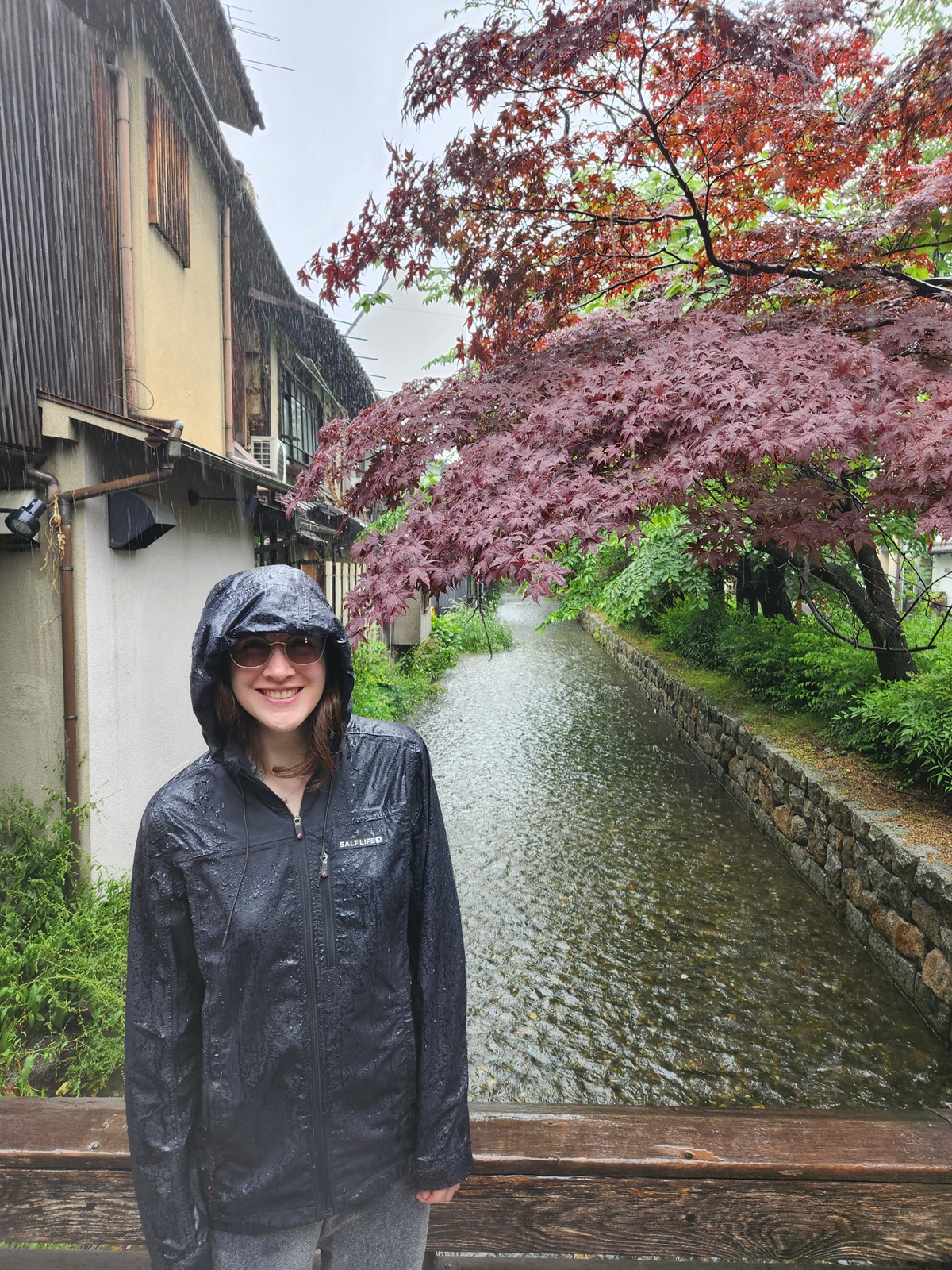
Kevin and I made our way to Gion on a rainy day to meet our instructors at the highly-rated restaurant Musoshin. But the experience wasn’t actually at the restaurant, but instead was at a kitchen around the corner. So we were led through the wet streets of Kyoto to a small, intimate space detached from the restaurant.
Here, we changed into Crocs, donned our apron and tenugui, met our second instructor, and washed up for making noodles. Before we got started, though, we went ahead and put in our orders for our ramen lunch that’s included in the experience.
The experience isn’t listed as a private experience, but it was only me and Kevin taking part, so maybe they try to keep each booking to only one party. The space was certainly small, and the listing says it can only accommodate up to 6 participants.
Making and Cutting the Noodles
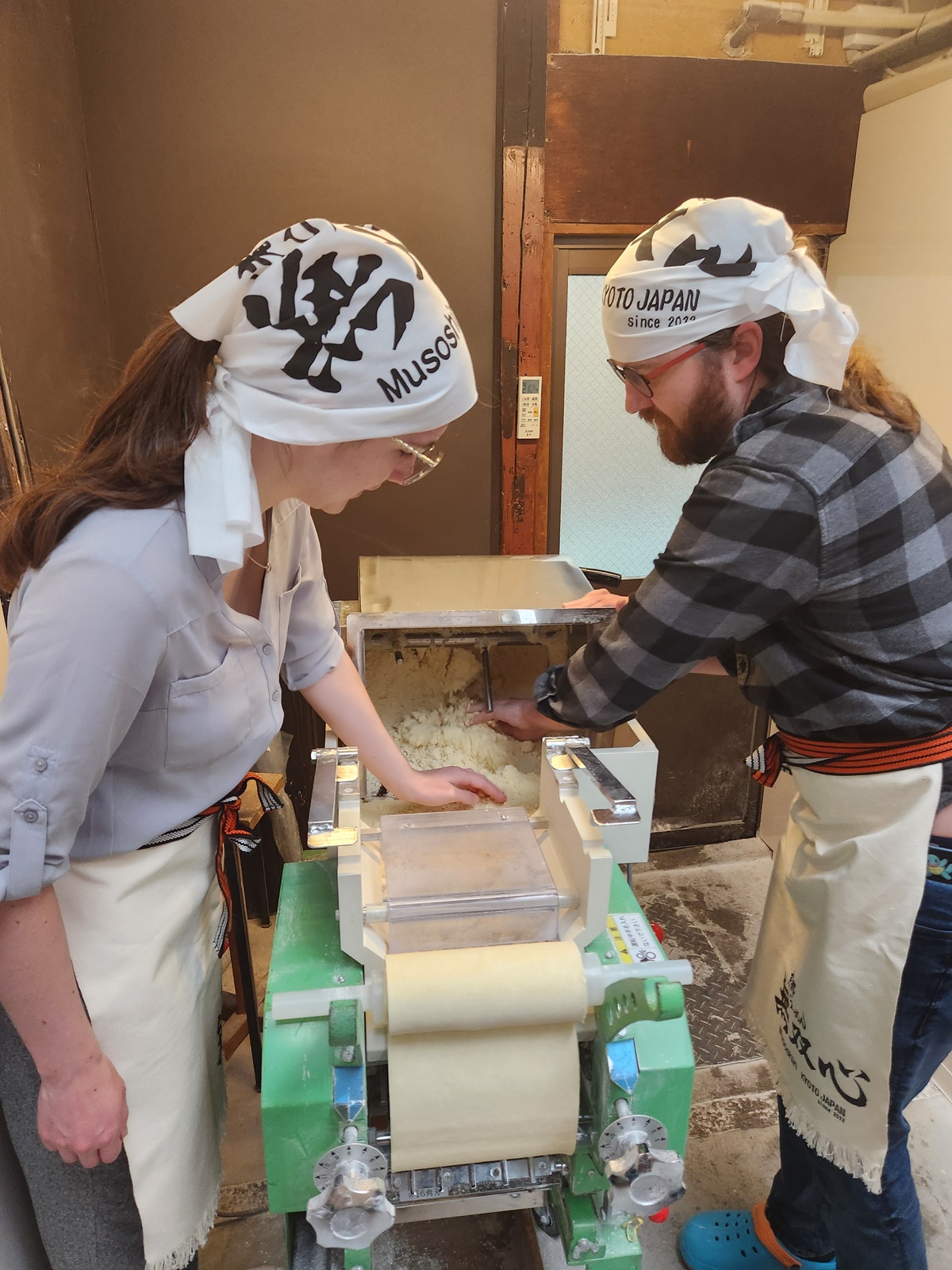
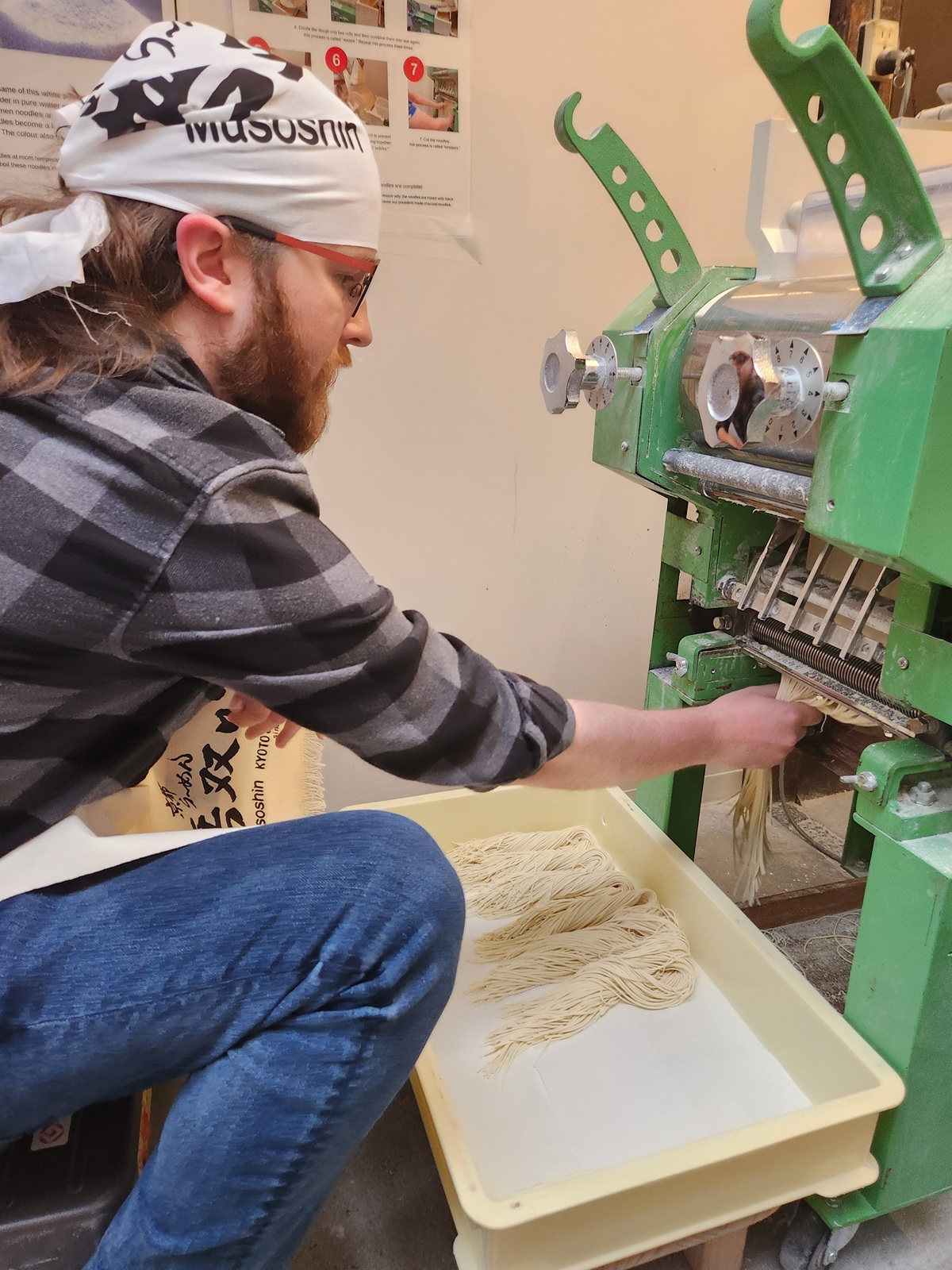
The dough mix was already prepared for us, but our instructors showed us everything that goes into ramen dough and what makes it different from other noodles.
Then we were introduced to the professional ramen noodle machine we would be using. It was already set up with the dough mix inside, and our instructors showed us how to push the mix forward so the machine could flatten it and make a uniform sheet. Then it was our turn to try it ourselves, with both me and Kevin working the dough through the machine together.
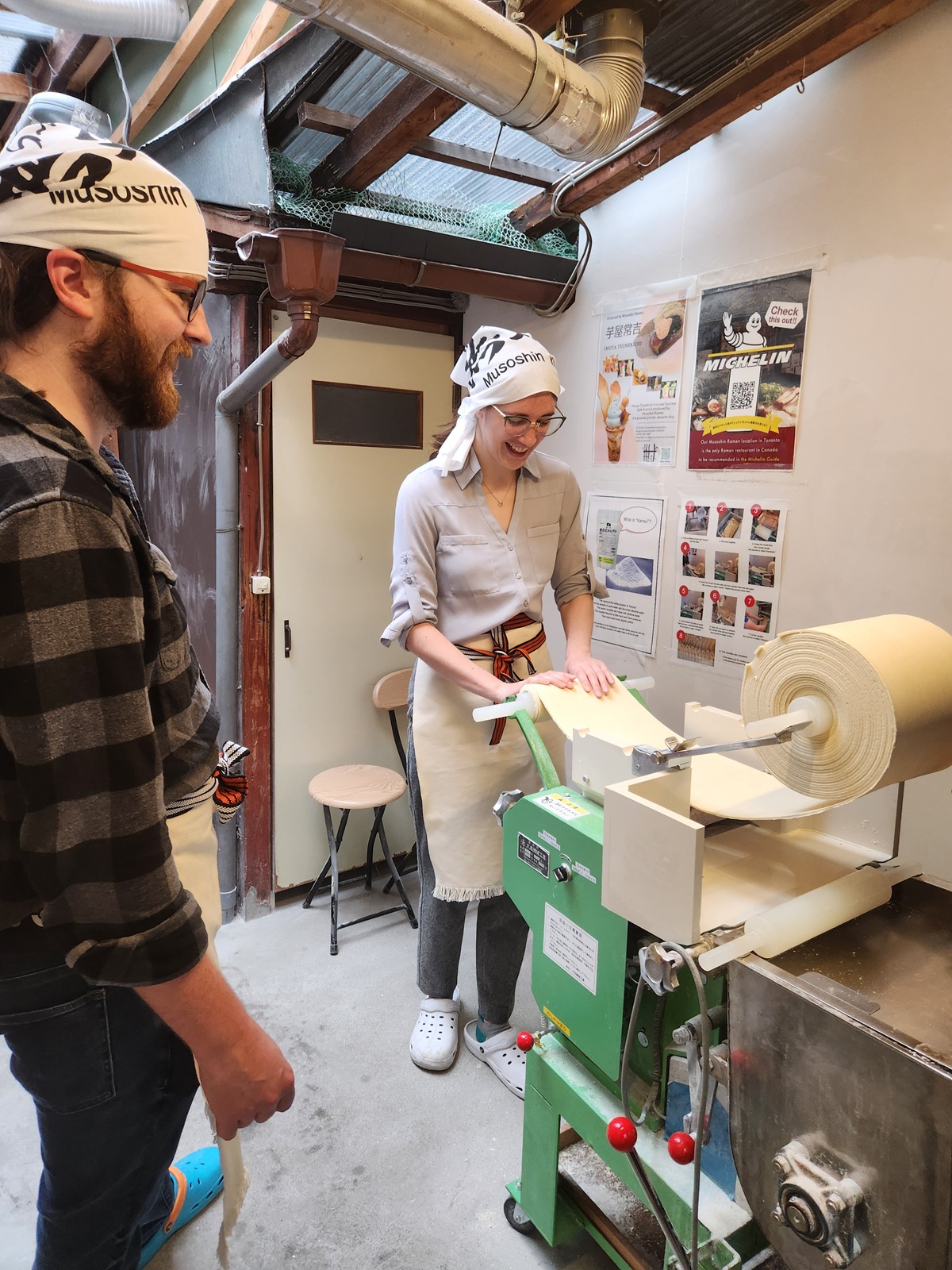
When we had a giant roll of pressed dough, like an oversized roll of paper towels, we rolled half of the sheet onto another roller so that the dough could be folded together. For this step, Kevin did the gentle rolling while I supervised and told him when the rolls were even.
With the sheet now on two rolls, we folded the halves together to strengthen the noodle dough and make it thicker and stronger before cutting. The instructors took care of most of this step for us, making quick work of the dough. We repeated these two steps a couple more times so that the dough was nice and stable.
We had a hefty roll of dough by the end, and then it was time to stretch the sheet to the proper noodle thickness. The machine mostly did it’s thing on this step, and we were responsible for powdering the sheet with flour as it rolled through.
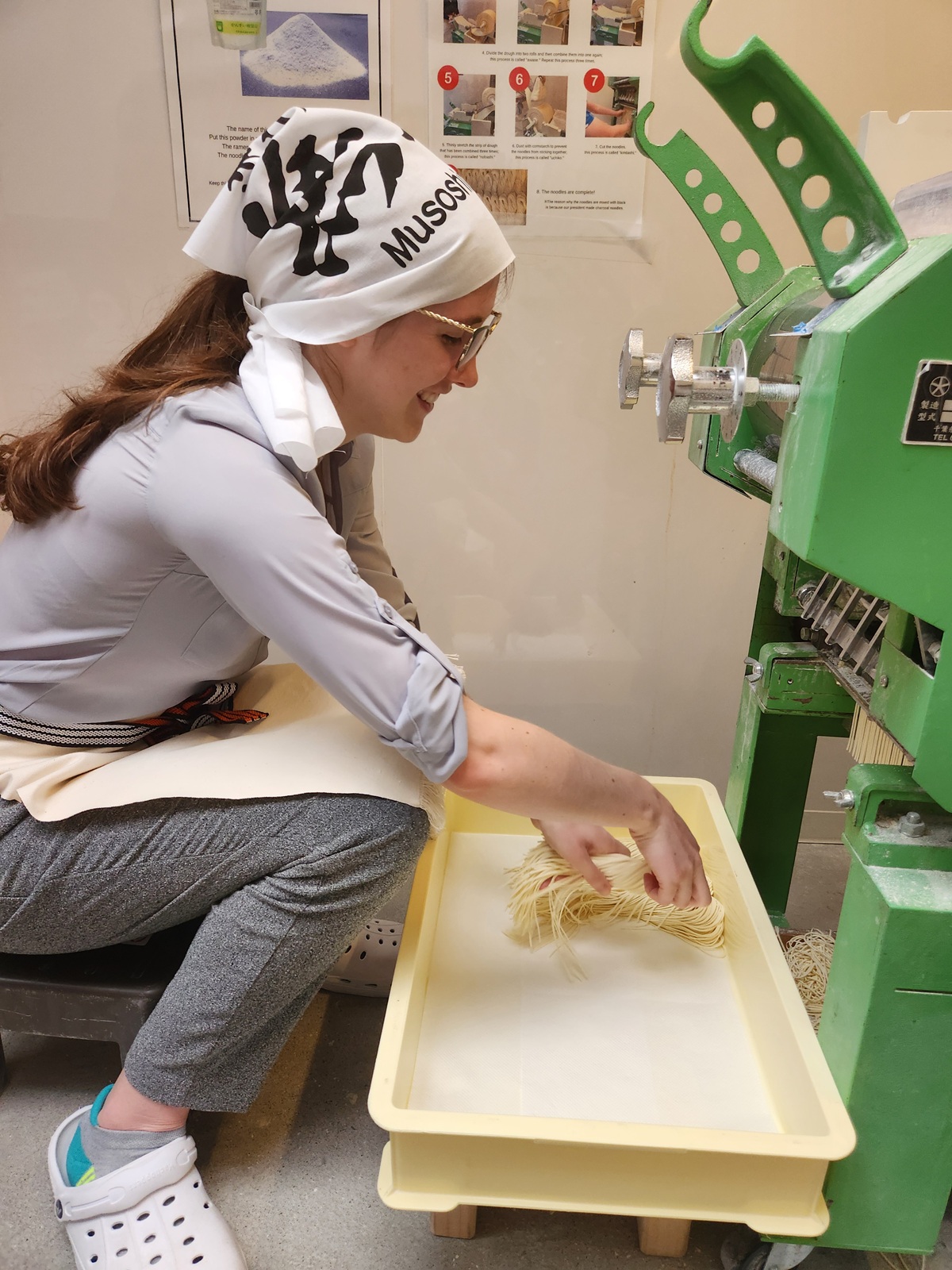
Finally, it was time for cutting the noodles! The machine cut the noodles at the proper length, while Kevin and I sat ready to catch the cut strands, twist them in a cute bundle, and lay them in the tray (making sure you got the timing right and didn’t miss the next noodle drop was the hardest part!).
By the end, we had each folded a tray each of noodles.
During the whole process, our instructors took pictures and videos on our phones for us so we could just focus on the experience. They were both very nice and very good teachers, and we had a good time chatting about Japan with them.
Going to Japan for the first time?
Download my FREE First-Time Japan Travel Checklist to plan smarter, avoid common mistakes, and feel confident before you land.
Eating Ramen at Musoshin
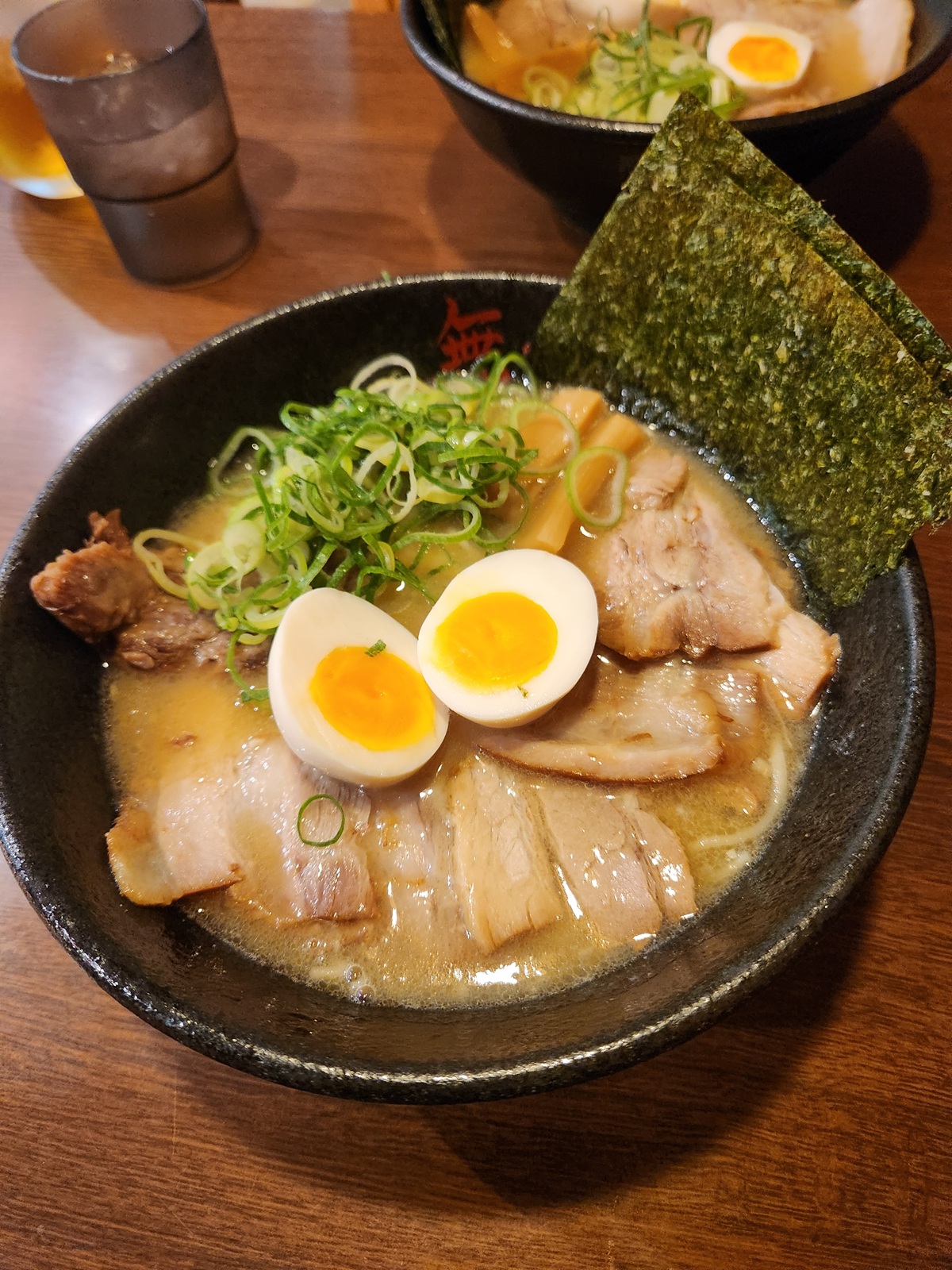
Once we had cut the noodles, they needed time to rest before being served. So even though lunch at Musoshin is included, we didn’t get to eat the noodles we’d just made.
But that’s okay, because the ramen at Musoshin is incredible no matter who cut the noodles!
We actually put in our order for our ramen and our drink before starting the noodle-making process. They have their full menu of ramen to choose from, and our instructors made recommendations for us. We both decided on the Special Musoshin Ramen with all the toppings.
One of the interesting things I learned is that they’re one of the few ramen restaurants to offer a truly vegan and vegetarian ramen, with a meatless broth, whereas many ramen shops offer a meatless option that’s still in a meat-based broth. I filed this info away for my vegetarian friends who were on the trip with us but had chosen a different activity that day.
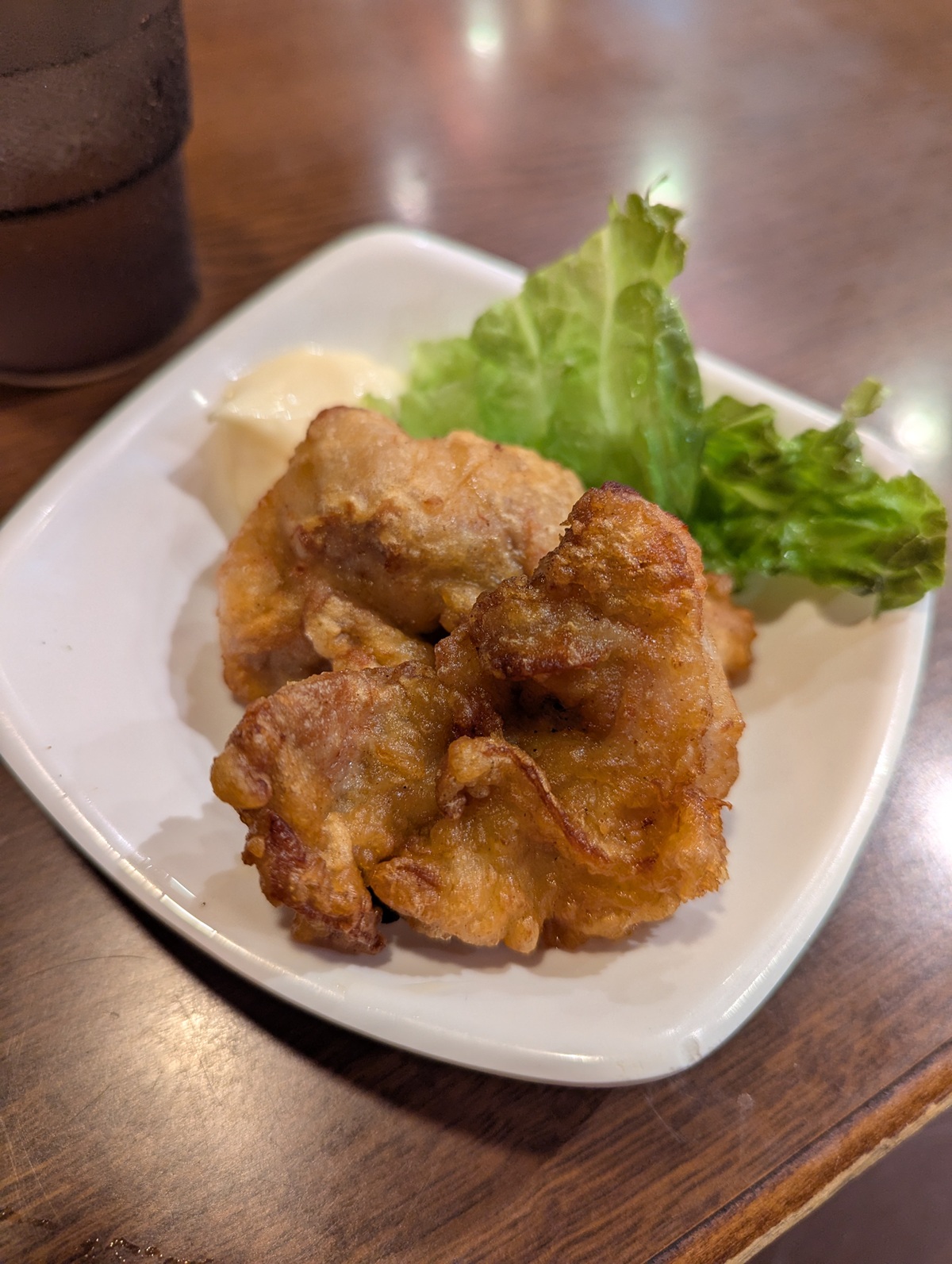
We also had a side of their fried chicken, a special they were running for leaving a review of the experience. And our lunch came with a drink, so we tried an umeshu (plum wine) they had.
After making our noodles, our instructors walked us back to the restaurant where they had a table ready for us, which was good because over the course of lunch the tiny restaurant became pretty crowded.
It didn’t take long to get our delicious bowls of ramen and our fried chicken. It was pretty filling for a lunch, but it was so worth it as one of the best meals we had in Kyoto!
Check Prices and Availability!
My Experience Taking the Class

The ramen noodle-making class was one of the most fun experiences we did in Kyoto. Kevin and I were the only participants, so the class was very hands-on and private. The instructors demonstrated each step, then let us use the professional noodle machine ourselves.
The machine looked a little intimidating at first, but the process was easy to follow once we got started. And the instructors did the job of setting the machine, while we mostly just manipulated the dough. Since the main steps had to be repeated, both of us got plenty of time making the noodles instead of taking turns for only a few seconds.
I like knowing that the noodles we made were actually served in the restaurant after they had time to rest. Somewhere in Kyoto, someone has eaten ramen noodles made with my own hands. You’re welcome; I did an adequate job.
The class fit perfectly into our day exploring Gion. After we finished making noodles and eating our ramen lunch, we made our way through Sannenzaka to Kiyomizu-dera Temple. It gave us a fun, slower start before an afternoon of uphill walking and sightseeing.
Check Prices and Availability!
Pros of the Kyoto Ramen Noodle-Making Class

The biggest advantage of this class is how hands-on it is. The group size is small, the instructions are easy to follow, and everyone gets plenty of time using the professional noodle machine instead of watching one person do all the work.
- Small class size: The kitchen only accommodates up to six participants, and Kevin and I ended up having the class to ourselves.
- Beginner-friendly: You don’t need any cooking experience. The instructors demonstrate each step, operate the machine settings, and help with the more technical parts.
- Professional equipment: You get to use the same type of noodle machine used to prepare ramen for the restaurant.
- Plenty of participation: The rolling and folding process is repeated several times, so everyone gets to work with the dough and catch and bundle the finished noodles.
- Lunch and a drink are included: After the class, you’ll sit down at Musoshin for a full bowl of ramen and your choice of drink.
- Convenient Gion location: The class fits easily into a day exploring Gion, Sannenzaka, and Kiyomizu-dera Temple.
- A souvenir to take home: You get to keep the tenugui provided during the class (this is a great multi-purpose souvenir that you can use as the locals do as a hand towel for public restrooms or a sweat rag in the summer).
- Photos are taken for you: Our instructors used our phones to take pictures and videos throughout the experience, so we could focus on making the noodles.
The class combines a hands-on activity with lunch and still leaves your day open for sightseeing. We finished with enough time to walk through Sannenzaka and visit Kiyomizu-dera without rushing.
Check Prices and Availability!
Cons of the Kyoto Ramen Noodle-Making Class
The main limitation is that this is specifically a noodle-making class, not a full ramen cooking class. You won’t prepare the broth, toppings, or complete bowl from scratch, so if you’re expecting to learn the entire ramen-making process, you may want a different experience.
- You only make the noodles: The dough mixture is already prepared, and the class focuses on flattening, folding, cutting, and bundling the noodles.
- You don’t eat the noodles you make: Fresh ramen noodles need time to rest, so lunch is made with a batch prepared earlier.
- The kitchen is small: The intimate space worked well for the two of us, but it could feel tight with the maximum group size of six.
- Some steps are handled by the instructors: They control the machine settings and take care of the more technical folding and setup, while you focus on working with the dough.
None of these were dealbreakers for us, but I want you to book the class with the right expectations. It’s a short, beginner-friendly introduction to making ramen noodles rather than a complete cooking lesson.
Who Is This Ramen-Making Class For?

This ramen noodle-making class is a good fit for first-time visitors to Kyoto, couples, ramen fans, and anyone who enjoys hands-on activities. You don’t need any cooking experience because the instructors demonstrate each step, control the machine settings, and help with the more technical parts of the process.
It also works well for anyone who needs a break from temples and traditional sightseeing. The class is relaxed, interactive, and easy to pair with an afternoon exploring Gion, Sannenzaka, and Kiyomizu-dera. The class is even good for children!
If you’re a serious foodie, you may prefer a more complete ramen class. This experience focuses on rolling and cutting the noodles, so you won’t learn how to prepare the broth, toppings, or dough mixture from scratch.
Check Prices and Availability!
Location and Things to Do Nearby
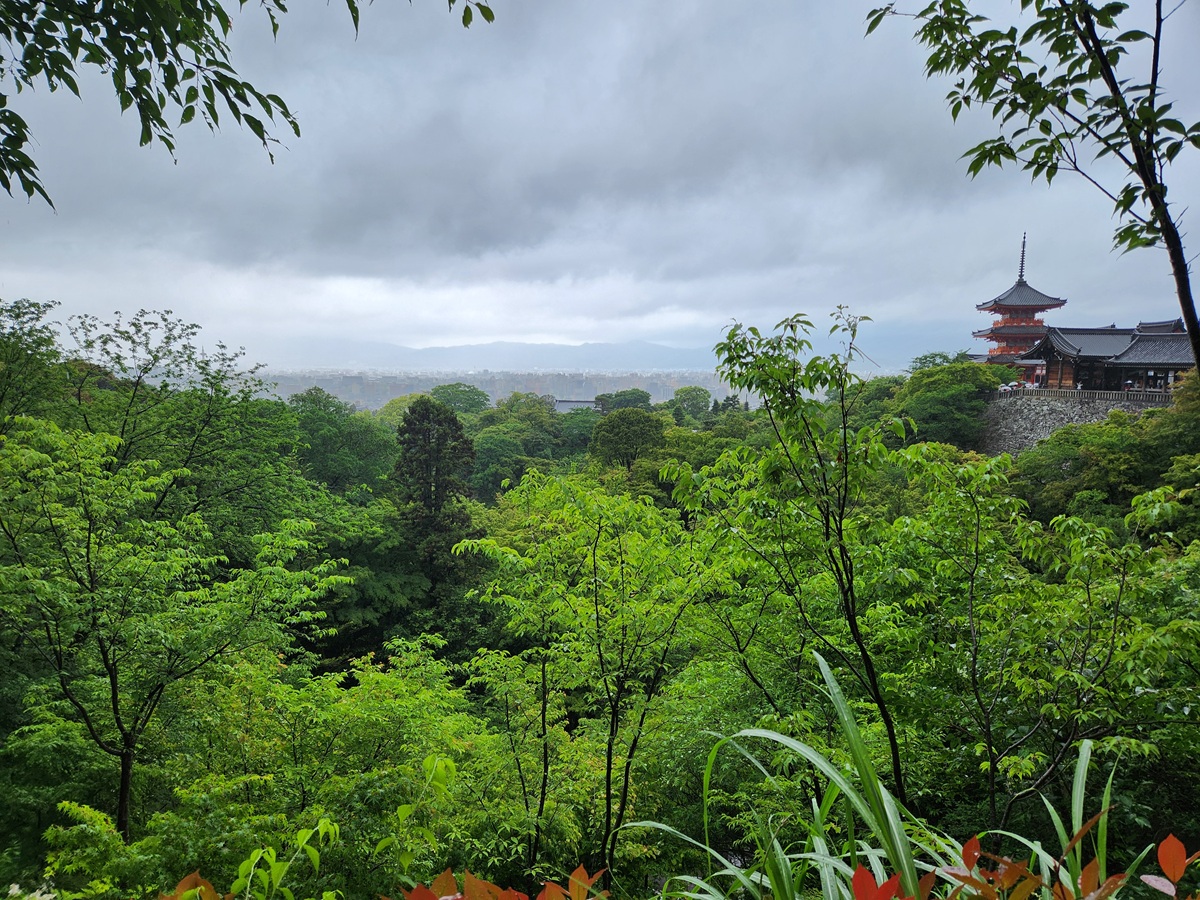
This ramen noodle-making class is located in Gion just around the corner from Musoshin. It’s location is really easy to fit into a day of Gion sightseeing, walking along Sannenzaka, visiting Kiyomizu-dera, renting a kimono for the day, or doing a geisha experience.
Ramen Noodle-Making Class Alternatives
The Musoshin class concentrates on making fresh noodles with a professional machine. Kyoto has several other food experiences that cover more of the cooking process, add another dish, or move away from ramen entirely.
- Ramen Broth Class with Custom Chopsticks: This class from Musoshin is great if you’re more interested in what gives ramen its flavor than in making the noodles. It focuses on preparing ramen broth and includes a pair of custom chopsticks. If you do this and the noodle-making class, you’ve given yourself the whole Musoshin experience!
- Ramen Making Experience at Ramen Factory Kyoto: Choose this class to prepare a more complete bowl of ramen. You’ll make the noodles, mix the soup, select your toppings, and eat the ramen you prepared. Vegetarian, vegan, and Halal options are available on request.
- Ramen and Gyoza Cooking Class: This class covers ramen, gyoza, and fried rice, with two drinks and downloadable recipes included. This is a broader cooking lesson for those who want to recreate the meal at home.
- Vegan Ramen and Gyoza Class in Arashiyama: This private workshop teaches you to make vegan dashi ramen and gyoza in Arashiyama. Lunch or dinner, recipes, an English-speaking instructor, and drinks are included.
- Kyoto Ramen Tour: Skip the kitchen and taste ramen from local shops instead. This small-group tour includes two half-sized bowls, allowing you to compare different ramen styles without eating two full meals.
- Soba-Making Experience: Choose the soba class to learn a different Japanese noodle-making technique. You’ll make buckwheat noodles by hand and eat the soba you prepare.
- Private Japanese Home-Cooking Class: Meet a local host in a traditional wooden house and prepare several seasonal, home-style dishes. The menu varies, but examples include braised chicken and vegetables, miso soup, rice, and marinated spinach.
- Tuna Cutting Show and Sushi-Making Class: Watch a live tuna-cutting demonstration before learning to make sushi. The experience includes unlimited sushi, so come hungry.
- Wagashi Cooking Class: This sweets-focused class near Fushimi Inari covers Japanese desserts such as mochi ice cream, dorayaki, and mitarashi dango. It’s a nice break from savory cooking classes.
- Gion and Pontocho Night Food Tour: This guided evening tour replaces cooking with a full dinner across small bars and restaurants in Gion and Pontocho. Food, two drinks, dessert, and three local sake tastings are included.
The Musoshin ramen noodle-making class is great if you’re interested in how ramen noodles are produced in a working restaurant. I’d recommend choosing a full cooking class to prepare broth and toppings, a food tour to taste several dishes, or one of the sushi, wagashi, and home-cooking experiences for a wider introduction to Japanese food.
How to Add the Class to Your Kyoto Itinerary
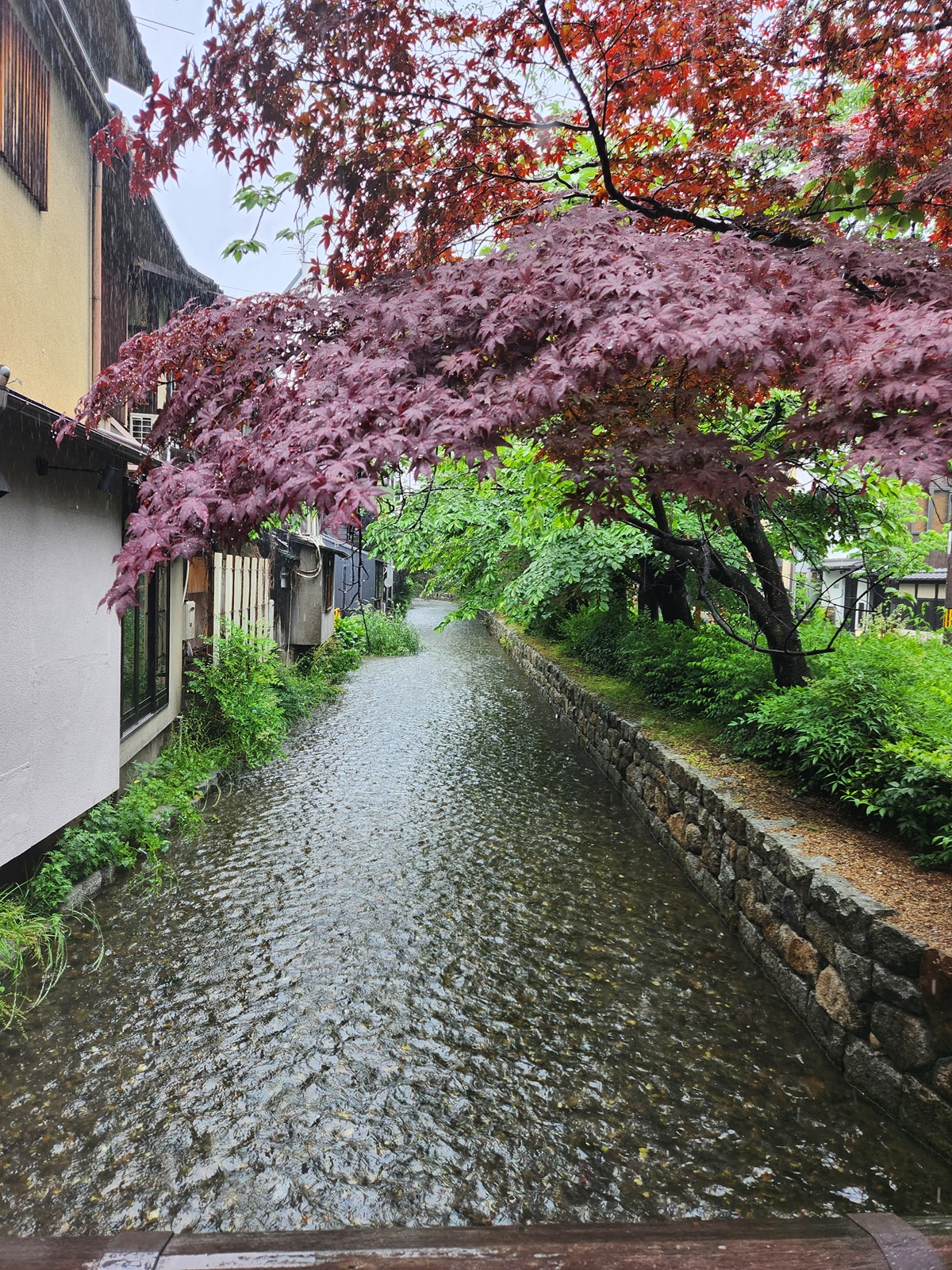
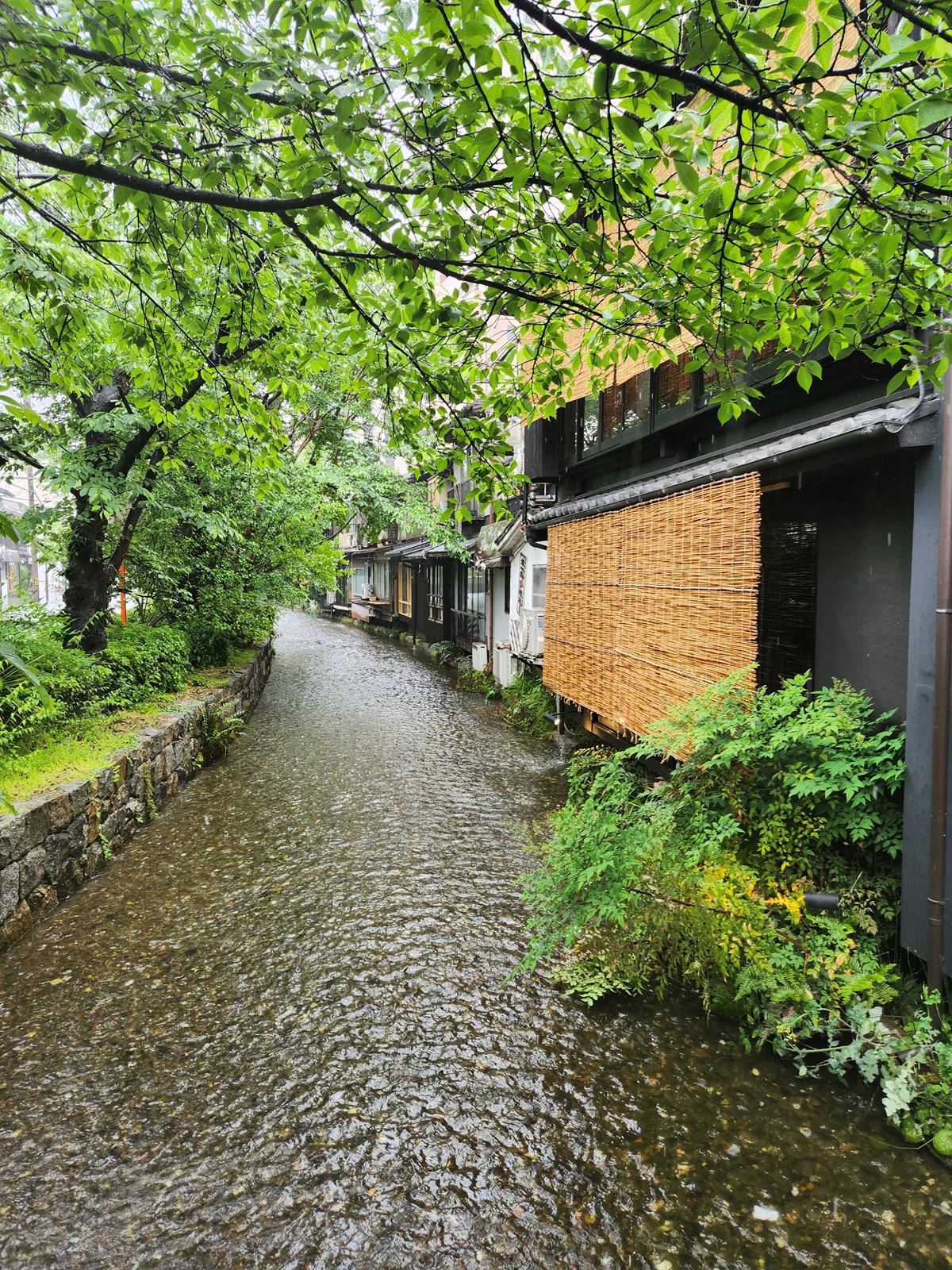
The late-morning class fits easily into a full day in Gion. After making the noodles, you’ll walk back to Musoshin for the included ramen lunch, so you don’t need to plan a separate lunch.
From there, walk through Sannenzaka on the way to Kiyomizu-dera Temple, then spend the rest of the afternoon exploring Gion. You can finish the day with a maiko or geisha show in the evening, which gives you a full schedule without spending much time crossing the city.
See how I planned the full day in my 4 Days in Kyoto itinerary, browse more ideas in my Things to Do in Kyoto guide, and find more places to eat in my Restaurants in Kyoto post.
Check Prices and Availability!
FAQs About Taking a Ramen Class in Kyoto
Do you need cooking experience for the ramen noodle-making class?
No cooking experience is required. The instructors demonstrate each step, adjust the professional noodle machine, and handle the more technical parts while you roll, fold, flour, cut, and bundle the noodles.
Do you eat the ramen noodles you make?
You won’t eat the exact noodles you make during the class because fresh ramen noodles need time to rest. Your included lunch is prepared with an earlier batch, while the noodles you make may be served to Musoshin customers the following day.
Do you make a complete bowl of ramen during the class?
No. This class focuses on making the ramen noodles rather than preparing the broth, toppings, or dough mixture from scratch. If you want to cook an entire bowl, you should choose a more comprehensive ramen class.
Are lunch and drinks included?
Yes. After the class, the instructors walk you back to Musoshin for a bowl of ramen and a drink. You can order from the restaurant’s ramen menu, which includes fully vegan and vegetarian options made with meatless broth.
How long does the ramen noodle-making class take?
The noodle-making portion takes about 1 hour, but you should also allow time for the included lunch at Musoshin afterward.
Final Thoughts: Is the Kyoto Ramen Noodle-Making Class Worth It?
I really enjoyed our Kyoto Ramen Noodle-Making Class! I think it is worth it if you’re looking for a small, interactive food experience that fits easily into a Gion sightseeing day.
It is, however, only a noodle-making class. So if you’re looking for a complete ramen cooking experience, I would suggest combining this class with Musoshin’s ramen broth class or booking a more comprehensive ramen cooking class.
Check Prices and Availability!

Ultimate Japan 11 Day Itinerary: Tokyo & Kyoto
Your Japan vacation — planned for you.
Don’t spend any more time stressing about planning your perfect vacation to Tokyo and Kyoto. Get this done-for-you, fully planned itinerary!
Top Kyoto Tours
- Kyoto Luxury Sake, Whisky, and Cocktail Tour
- Perfect Kyoto 1-Day Bus Tour
- Fushimi Inari Hidden Hiking Tour
- Kyoto Night Foodie Tour
Where to Stay in Kyoto
- Where We Stayed (Kyoto): Hotel KUU Kyoto
- Where We Stayed (Ogoto Onsen): Biwako Ryokusuitei
- Top Hotel: MIMARU SUITES Kyoto Shijo
- Great Value: Hotel Tou Nishinotoin Kyoto
- Unique Stay: Seikoro Ryokan
More Japan Travel Guides
Plan your perfect Japan trip with the help of these posts:
- 11 Days in Japan: Tokyo & Kyoto Itinerary for First-Timers
- 19 Fun Things to Do in Kyoto, Japan
- 4 Delicious Restaurants in Kyoto, Japan
- 4 Days in Kyoto: The Perfect Itinerary for First-Timers
- Kyoto Bamboo Forest Ghost Tour Review: Is It Worth It?
- I Booked a Geisha Experience in Kyoto — Here’s How It Went
- 26 Fun Things to Do in Tokyo, Japan
- 15 Delicious Restaurants in Tokyo, Japan
- We Took a Hidden Gem Food Tour in Tokyo: This is What Surprised Us
- Shiba Park Hotel Review: Library Hotel in Tokyo
- La’gent Hotel Shinjuku Kabukicho Review: Tokyo Hotel for Couples
- Where to Stay in Tokyo for First-Timers: My Honest Guide to the Best Neighborhoods and Hotels
- 14 Free Things to Do in Tokyo, Japan on a Budget
- TokyoTreat Review: Is It Worth It?
- 10 Terrifying Haunted Castles Around the World You Can Visit
- 13 Abandoned Places Around the World You Can Visit
Ready to visit Kyoto, Japan? Plan your trip with these tips.
- Book your flight: Find the cheapest flights using Skyscanner, my favorite flight search engine.
- Find accommodation: You can find top hotels in Kyoto using Booking.com
- Pack for your vacation: Make sure you’ve packed everything you need by checking out my packing list resources.
Cheers!
Paige

Would you book this Kyoto ramen noodle-making class? Let me know in the comments!


For some reason, I thought ramen was the simplest Japanese dish. Now I see I was wrong )
It was a surprisingly complex process!