
19 Fun Things to Do in Kyoto, Japan
Kyoto is a more traditional Japanese city, but it’s not all temples and shrines. If you’re looking to fill your days in Kyoto with a variety of historic attractions, cultural experiences, and great food, then I’ve got you covered!
Our time in Kyoto was one of my favorite parts of our trip — we relaxed at a traditional onsen ryokan, we met a geisha, we learned how to make ramen noodles, and we saw a few castles (if you know, you know: I love a good castle day).
From iconic spots like the Senbon Torii and Arashiyama Bamboo Grove to quieter favorites like Nanzen-ji Temple and an overnight stay in Ogoto Onsen, these are my recommendations of things to do in Kyoto for a well-rounded itinerary.

Best Things to Do in Kyoto
1. Fushimi Inari Shrine and the Senbon Torii

Fushimi Inari Shrine is one of Kyoto’s most iconic sights, and hiking through the Senbon Torii is a must.
The shrine is dedicated to Inari, the Shinto god of rice, and throughout the grounds you’ll see fox statues, which are believed to be Inari’s messengers. The most famous part of the shrine is the Senbon Torii, or “one thousand torii gates,” where rows of orange gates create a tunnel-like path up the mountain.
Because this is one of Kyoto’s most popular attractions, you can expect a lot of crowds. It’s best to go early in the morning or later in the evening. We arrived around 6:15 a.m. for our morning hike and it was fairly uncrowded. Kevin even went back around 9 p.m. and said it was much less crowded and the temperatures were cooler.

Ultimate Japan 11 Day Itinerary: Tokyo & Kyoto
Your Japan vacation — planned for you.
Don’t spend any more time stressing about planning your perfect vacation to Tokyo and Kyoto. Get this done-for-you, fully planned itinerary!
2. Kiyomizu-dera Temple
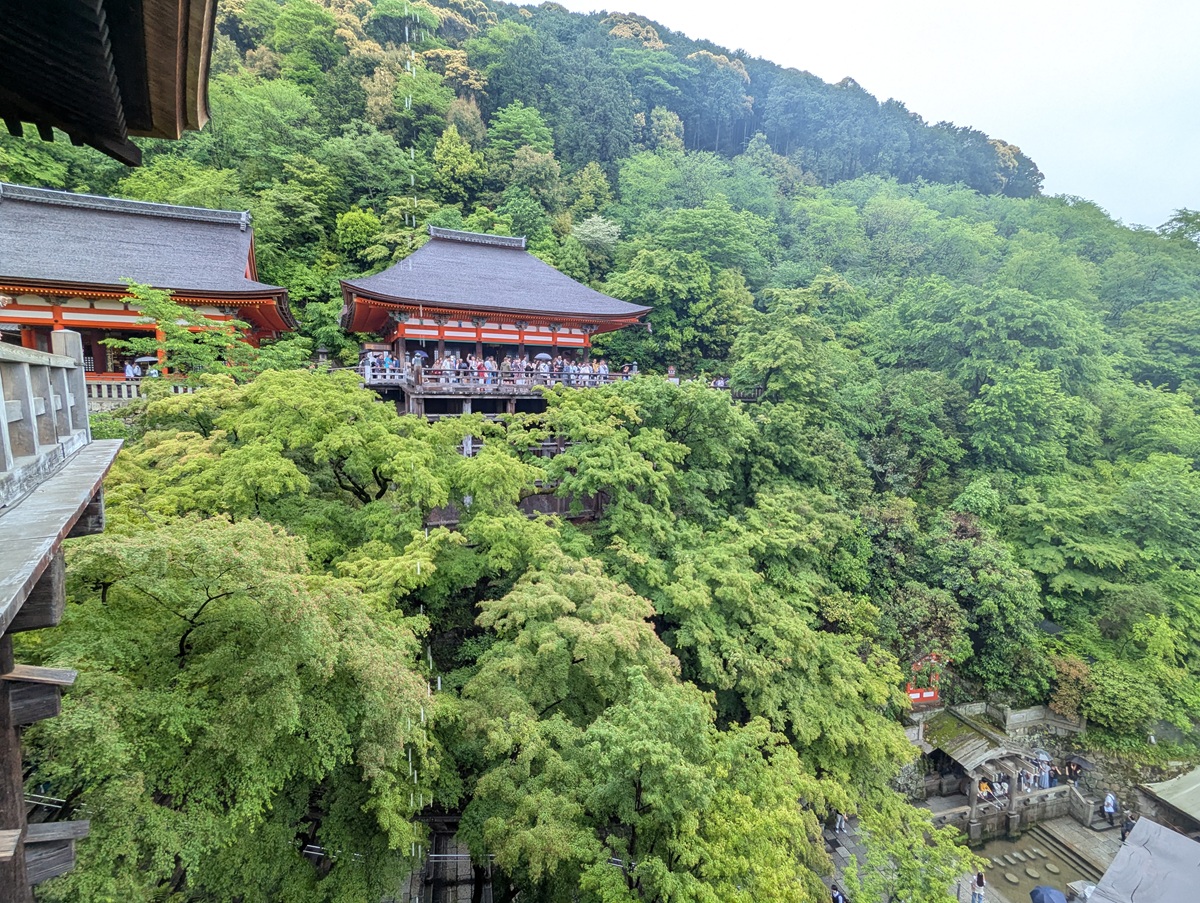
Kiyomizu-dera Temple is one of Kyoto’s most famous temples. Set partway up Mt. Otowa, it has beautiful architecture and some of the best views in the city.
Kiyomizu-dera is a Buddhist temple dedicated to Kannon, the deity of mercy and compassion. A visit starts at Nio-mon (the main gate) and Sai-mon, the west gate that’s especially known for its sunset views.
Hon do, the main hall, is an incredible wooden structure constructed in 1633. From here, you can see the pagoda through the trees.
3. Kyoto Nishiki Market Food Tour with Arigato Travel

Taking a Nishiki Market Food Tour is a really fun way to experience Kyoto through its food.
Nishiki Market is often called “Kyoto’s kitchen,” and while you can absolutely wander it on your own, I highly recommend taking a tour with Arigato Travel because their local guides know exactly what’s worth trying.
On the tour, you’ll get multiple food stops, a regional lunch, and a tea tasting. It focuses on Kyoto specialties and seasonal ingredients, and you get to try a bunch of things, so you’ll really get a feel for the city’s foodie culture.
Book your Kyoto Nishiki Market Food Tour here.
Going to Japan for the first time?
Download my FREE First-Time Japan Travel Checklist to plan smarter, avoid common mistakes, and feel confident before you land.
4. Stay at a Traditional Onsen Ryokan Near Kyoto
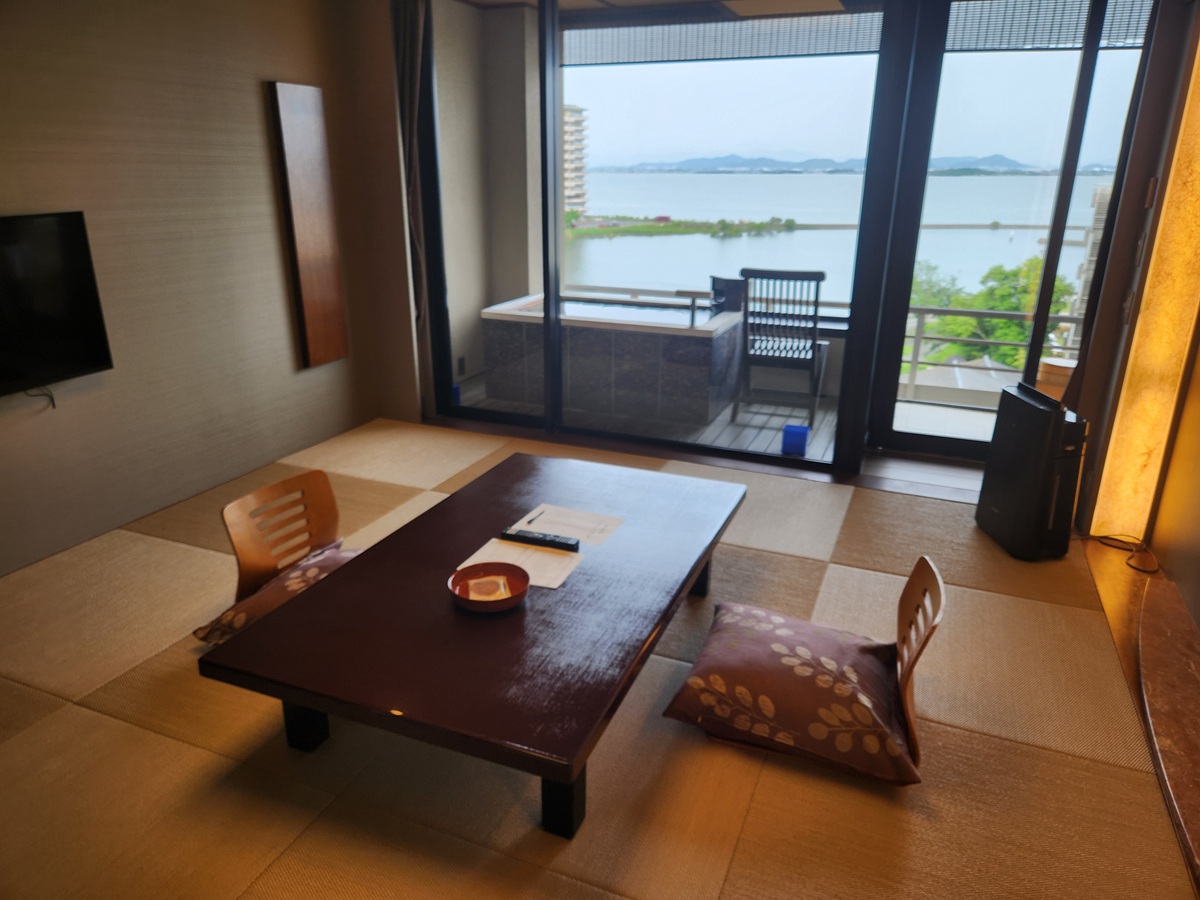
Since Kyoto is the more traditional destination compared to Tokyo, it only makes sense to have a traditional onsen ryokan experience here, even if it’s only for one night (these places can be pricey).
We got out of the city, just a short 20 minute train ride away, for an overnight stay in Ogoto Onsen at Biwako Ryokusuitei, a beautiful resort hotel on Lake Biwako with traditional Japanese-style rooms, private balcony baths, and public hot spring baths.
We stayed in a traditional tatami room with a seating area, low tables, and cushions, and later in the evening the staff came in and set up futons for sleeping. The room also had yukata robes, which made it extra fun to lean into the full ryokan experience. One of the best parts was our private open-air bath on the balcony, fed by hot spring water and overlooking the lake.
This resort was a whole experience! We lounged around at a lakeside happy hour in our yukata, had a semi-private 5-course meal at the hotel restaurant, relaxed in the public baths with an outdoor area and a barrel sauna, and ended our night with a soak in our own private balcony bath.
It was one of the most relaxing experiences of the whole trip.
Book your stay at Biwako Ryokusuitei here.
5. Ramen Noodle Making Class

This Ramen Noodle Making Class is a really fun hands-on activity that’s a nice break from traditional Kyoto sightseeing. We learned how ramen noodles are made and then got to make a batch ourselves using a professional noodle machine.
The class is really small and private, and it takes place in a small kitchen space around the corner from the actual restaurant the noodles are used for (yep, the noodles you make are used in the restaurant!).
Our instructors walked us through the noodle-making process step by step. Since several parts of the process repeat, Kevin and I both got a chance to try each stage.
Afterward, we sat down in the restaurant for lunch and were treated to bowls of ramen (not with the noodles we just made, those have to wait a day before being served; who knows, maybe we were eating some other class’s noodles!).
If you want to read about our entire class, you can read my full ramen noodle class review here.
Book your Ramen Noodle Making Class here.
6. Maiko or Geisha Show

Seeing a maiko or geisha performance is one of the most Kyoto-specific cultural experiences you can do. We attended a maiko experience, which included an English-speaking guide, a short Q&A with the maiko (an apprentice geisha), a traditional performance, and even a chance for Kevin to play a classic drinking game with the maiko.
You can read my full review of our geisha experience here.
This is such a great introduction to a part of Kyoto culture that’s a little mysterious and often misunderstood by foreigners. Instead of just spotting a geisha in Gion and moving on, you actually get context about the symbolism behind the kimono, the dance, and the traditions surrounding geisha culture.
There are different geisha tour options, like dinner with a geisha and tours that include a show and a walk through Gion. But even our simple show and Q&A (which is typically the cheapest option) was an incredibly fun and memorable experience.
Book your Geisha show and experience in Kyoto here.
7. Arashiyama Bamboo Forest

The Arashiyama Bamboo Forest, or Arashiyama Bamboo Grove, is one of Kyoto’s most photographed sights.
Bamboo stalks grow thick like walls around the path through the forest, the canopy overhead enclosing the walkway. It’s free to visit, and it’s a nice place for a walk.
The bamboo forest does get crowded during the day: it’s one of Kyoto’s most popular attractions, and photographers and Instagramers love it. If you want to avoid the crowds, I have an alternative option for you below.
8. Arashiyama Bamboo Forest Ghost Tour
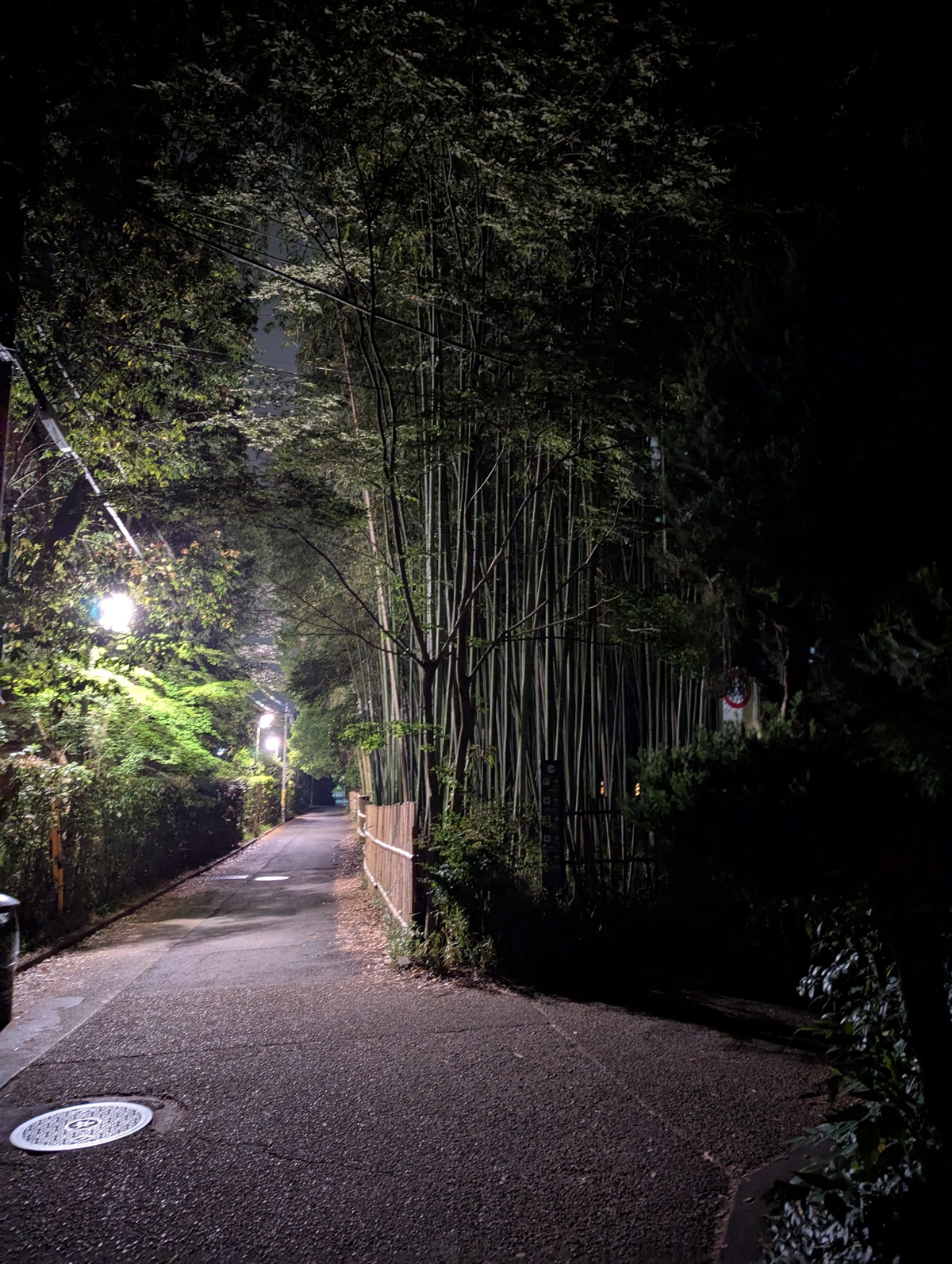
The Arashiyama Bamboo Forest is packed during the day, but at night, the area becomes so quiet that it feels like a completely different place. That eerie atmosphere makes the Arashiyama Bamboo Forest Ghost Tour such a fun and unusual thing to do in Kyoto.
The tour takes place after dark, when the streets around Saga-Arashiyama are nearly empty. We walked through deserted streets, past cemeteries and quiet playgrounds, over reportedly haunted railroad tracks, and into the Bamboo Grove itself. All the while, our guide told us Kyoto ghost stories and local legends.
The final “challenge” is walking through the Arashiyama Bamboo Grove at night, in the dark, on your own (though you can go in pairs if you want).
If you don’t care about getting Instagram-perfect daytime pictures, don’t have time in your schedule during the day, or just want to avoid the crowds, this tour is a unique alternative that still lets you see one of Kyoto’s most famous sights.
You can read my full review of our ghost tour here.
Book your Arashiyama Bamboo Forest Ghost Tour here.
9. Try a Japanese Public Bath Experience

Kyoto is known for its traditional public baths, so this is the perfect time for a cultural experience. Bathing with strangers was a little intimidating at first, but by the end of the trip, I felt like a local.
We stayed at the Hotel Kuu Kyoto, which has a public bath facility for its guests. Japanese public baths are typically separated by gender, and at Hotel Kuu, they have a small bath and a large bath that switch between men and women each day.
The larger bath has more variety, including a sauna, cold-water bath, hot bath, outdoor bath, showers, and changing room. The smaller bath is more basic, with just a hot bath plus showers and changing space.
At a Japanese public bath, you bathe completely naked, and before entering the baths, you have to thoroughly wash yourself at the shower stations. It can feel a little awkward the first time, especially for Americans who aren’t used to that level of communal nudity, but after a few times, it starts to feel much more normal.
Hotel Kuu Kyoto also allows tattoos in the public baths, which is worth knowing since many traditional bath facilities in Japan still restrict them.
Book your stay at Hotel Kuu Kyoto here and experience their public baths.
10. Arashiyama Monkey Park Iwatayama

While Kevin and I were out exploring castles (you’ll learn about those soon), others in our group went to the Arashiyama Monkey Park Iwatayama, and they loved it!
It’s a short uphill hike to the top of the mountain where you’ll find wild Japanese macaques roaming around, and you’ll get a great view over Kyoto.
You’re not allowed to touch the monkeys (they’re wild, after all), but you can feed them. There’s a feeding area where you can buy food and feed the monkeys from inside a screened building.
11. Nijō Castle
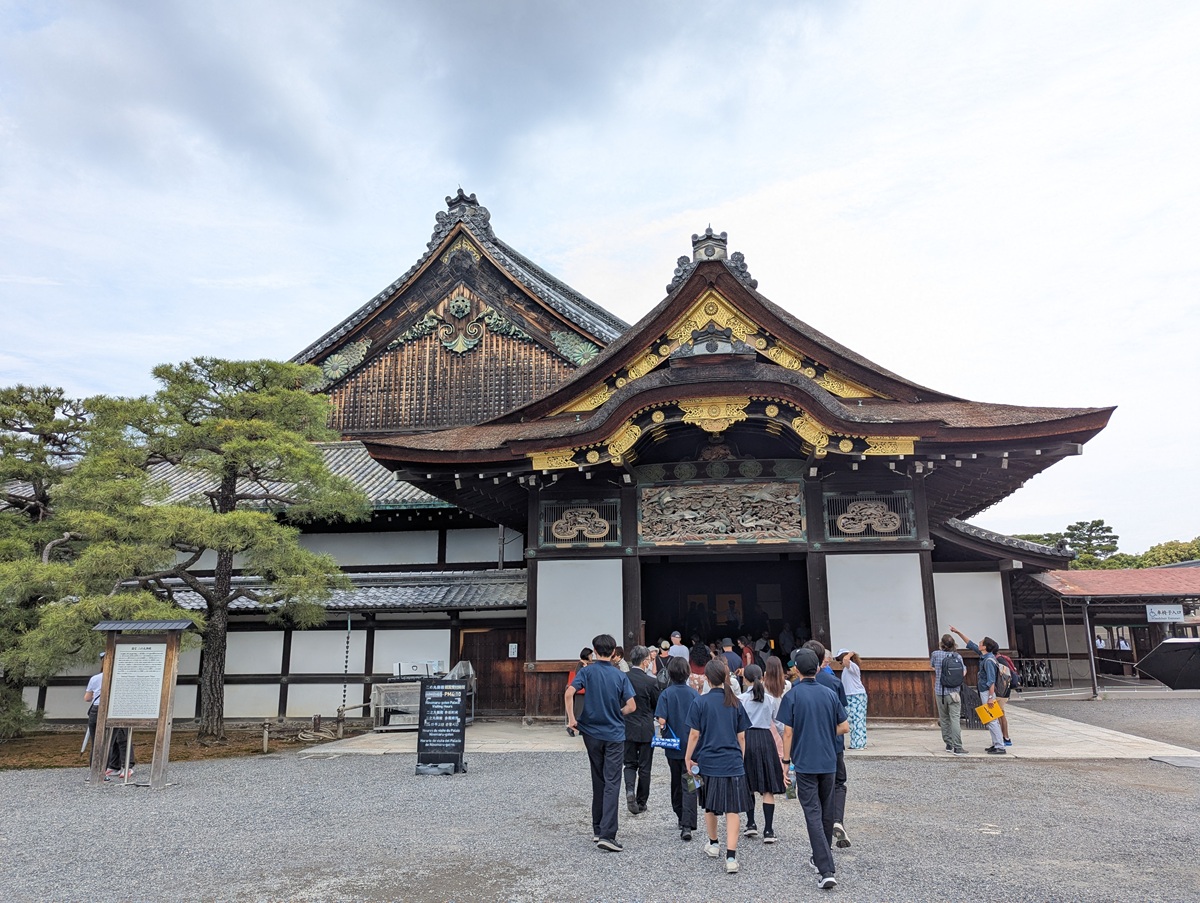
Nijō Castle is a great historical attraction in Kyoto. Built in 1626, the complex includes two moats, palace buildings, gardens, and the remains of the former keep area.
This was the Kyoto residence of the shōgun, and the palace interiors were designed to impress. There’s so much history, architecture, and political implications behind the elaborate gold details adorning the palace interior and even in the layout of the palace complex.
There are different admission options, but I’d recommend doing the castle grounds admission plus Ninomaru-goten Palace admission. You can also visit the gardens and climb the base of the former keep for a nice view over the castle complex.
12. Day Trip to Osaka

A day trip to Osaka is an easy train ride, and it’s easy to make it just a half-day trip as well if you don’t have a ton of space in your itinerary. Osaka is a fun change of pace to Kyoto: it’s more flashy, more modern, and has a different energy.
Osaka as a day trip from Kyoto is easy to do on your own, and you really don’t need to book a guided tour.
Some popular things to do in Osaka include exploring the neon-lit Dōtonbori district, visiting Osaka Castle, visiting the massive Kaiyukan Aquarium, and spending a day at Universal Studios Japan.
On our half-day trip, we easily fit in a trip to Osaka Castle and dinner in Dōtonbori. If you’re a big foodie, I recommend taking this Dōtonbori Daytime Food Tour with Arigato Travel to find the local gems and go beyond the touristy spots.
Book your Osaka Castle ticket here, and book your Dōtonbori Daytime Food Tour here.
13. Day Trip to Nara

Nara is one of the easiest day trips from Kyoto, and one of the most popular. People love those little deer!
A good day trip to Nara should include a visit to Nara Park (home to the adorable free-roaming deer), Kofuku-ji Temple (famous for its five-storied pagoda), Kasuga Grand Shrine (known for its 3,000 stone and bronze lanterns), and Todai-ji Temple (famous for its Great Buddha Statue that’s the largest in Japan).
Nara gets busy fast, so it’s best to take a morning day trip and see the big sights before the crowds get in. A guided day tour is a great way to get to Nara before the crowds and without having to worry about public transit.
Top Nara Day Tours
- World Heritage Kyoto & Nara Uji Authentic Matcha Experience
- Nara Early Morning Tour (Kyoto or Osaka Departure Available)
- Discover Ancient Nara: Private Car Tour from Kyoto or Osaka
- Nara Private Tour: Flexible Pickup from Kyoto, Osaka, or Nara
14. Nanzen-ji Temple
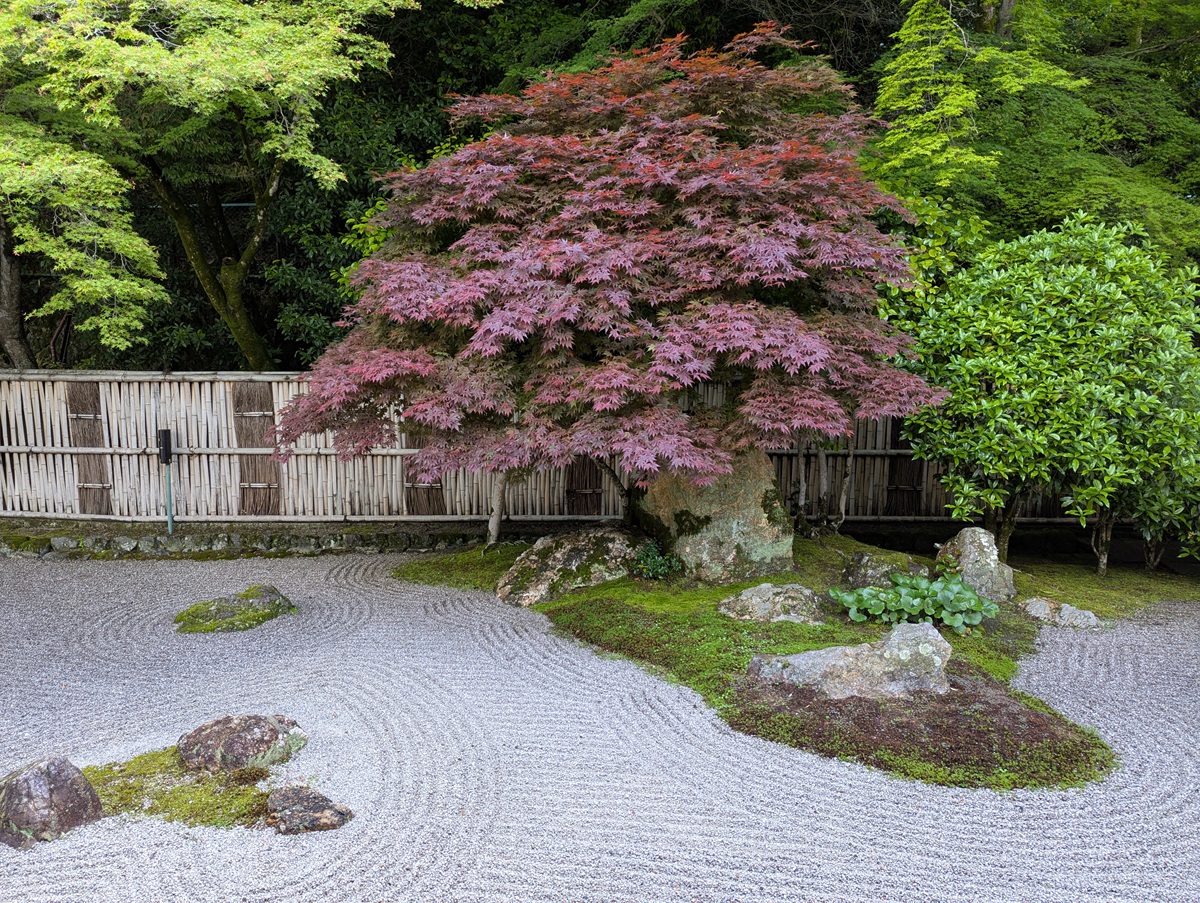
Nanzen-ji Temple is a Zen Buddhist temple complex that’s a little quieter and more peaceful than some of Kyoto’s better-known temple stops.
The temple complex dates back to 1291. There’s a lot to see here, and it’s a mix of free and ticketed structures and gardens.
I recommend paying to enter the Hōjō, the abbot’s quarters that houses beautiful golden screen paintings and a zen rock garden. You can walk around the lower level of the Sanmon (the main gate) for free, and it’s a small fee to climb to the top. There’s also the Nanzen-ji Aqueduct that’s free to see; this aqueduct carries irrigation water from the Lake Biwa Canal through the temple grounds to Kyoto City.
15. Higashi Hongan-ji Temple
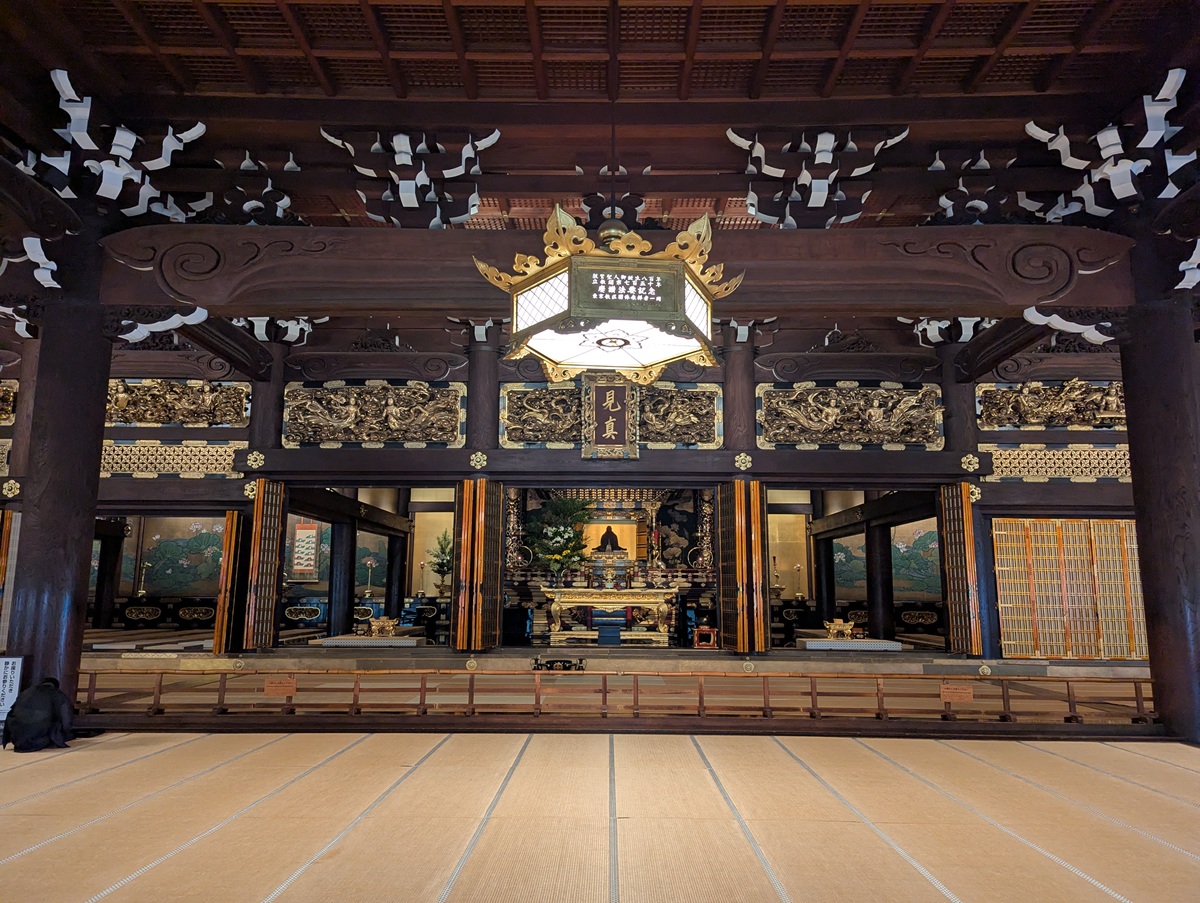
Higashi Hongan-ji Temple is a large Buddhist temple that was established in 1602 and later rebuilt in the late 1800s. It’s free to visit, making this a great budget thing to do in Kyoto.
You can walk through all the temple buildings. Before entering, you must take off your shoes; a lot of people leave them at the foot of the stairs, but you can also put them in a plastic bag and carry them with you, that way you don’t have to backtrack through the entire temple to get back to your shoes.
Amida Hall and the Founder’s Hall (Goei-dō) are beautifully gilded in gold leaf. The Founder’s Hall is one of the largest wooden structures in the world at 249 feet long, 190 feet wide, and 125 feet high. Be sure to also see the Gallery and Audiovisual Hall, which many people miss, that has a permanent exhibit covering the life of Shinran.
16. Teramachi and Shinkyogoku Shopping Streets

Teramachi Shopping Street and Shinkyogoku Shopping Street are a nice break from temples and shrines.
These two covered arcades are in the heart of Kyoto’s main shopping district and are nice places to wander for a while, especially if the weather isn’t great.
Teramachi has more of a local feel, with art galleries, bookshops, clothing stores, and shops selling religious goods (its name literally means “temple street,” and that history goes back to the 16th century when temples were relocated here). Shinkyogoku tends to feel a little more touristy, with more souvenir shops.
17. Pokémon Center Kyoto

If you’re a Pokémon fan, you’ll definitely want to add Pokémon Center Kyoto to your itinerary!
This large store is packed with Pokémon plushies, accessories, cards, toys, home goods, and other collectibles. We ended up picking up some PokéBears for me and Eevee goodies for Kevin.
18. Sannenzaka

Sannenzaka is one of Kyoto’s most famous pedestrian shopping streets. This historic sloping street is lined with traditional-style buildings, souvenir shops, snack stops, and little storefronts selling everything from sweets to ceramics.
If you visit Kiyomizu-dera Temple, you’ll likely find yourself walking up Sannenzaka. It’s a nice place to browse for gifts or try a few snacks as you make the trek up the mountain. This is where I bought an adorable teddy bear souvenir made of kimono fabric.
The street gets very crowded, especially during the day and in the busy season. As with most hotspots in Kyoto, try to come early in the day or later in the evening to avoid the crowds.
19. Kyoto Photoshoot with Flytographer
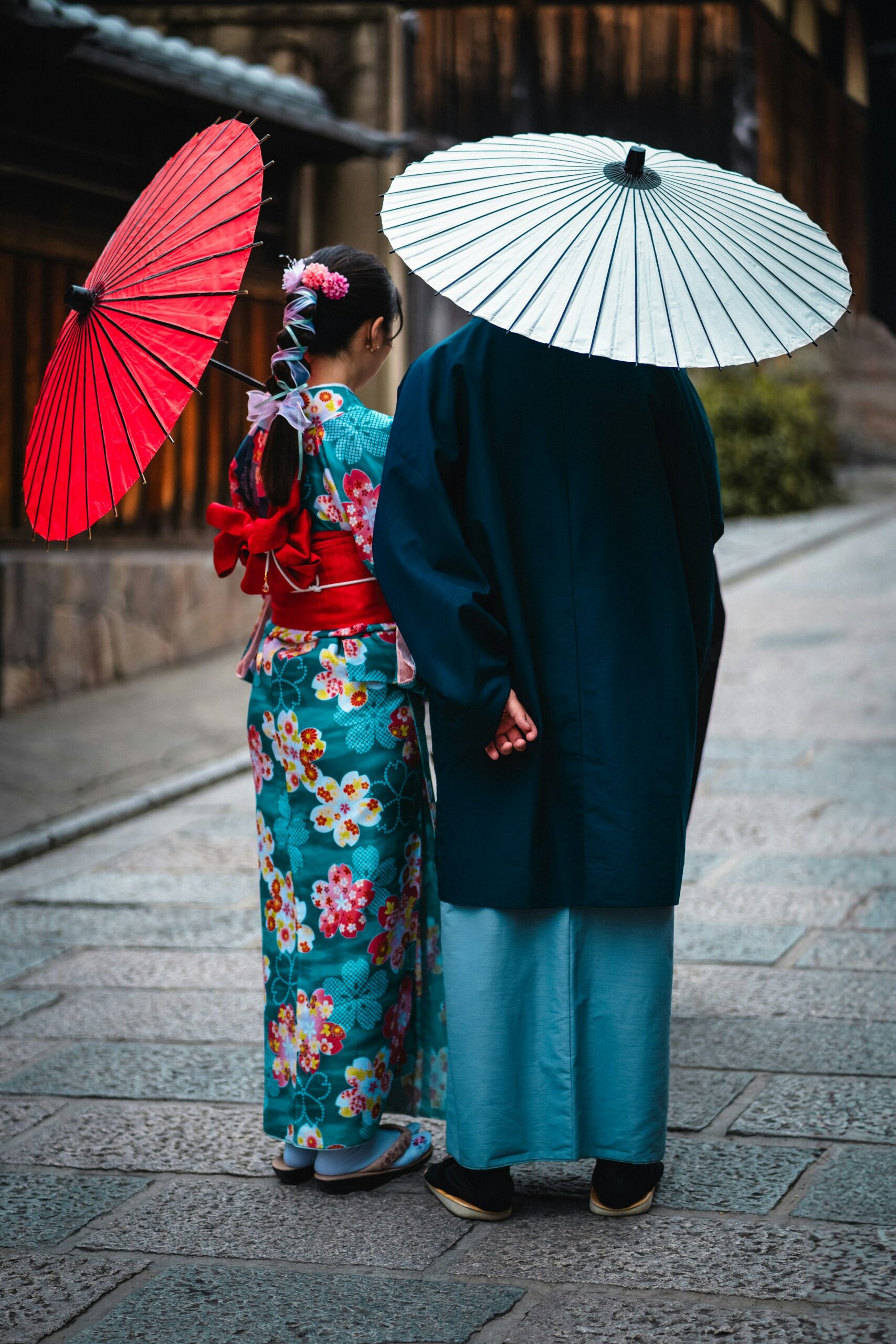
Explore Kyoto with a fun and talented photographer, learn local tips, and capture priceless memories with photogenic backdrops. It’s a win all around!
With Flytographer, you can hire an amazing local photographer for a fun vacation photoshoot. Get wall-worthy photos that allow you to relive your trip as the perfect souvenir.
You can use my link here for $25 off your first Flytographer photoshoot.
Book your Kyoto Flytographer photoshoot here, and get $25 off your first photoshoot.
Kyoto Activities Map
Ready to explore all that Kyoto has to offer? Use the map below to plan out your trip around the city!
And if you want to know how to fit all this into your schedule, you can check out my 4-day Kyoto itinerary here. I hope you have an amazing time with all these fun things to do in Kyoto, Japan!

Ultimate Japan 11 Day Itinerary: Tokyo & Kyoto
Your Japan vacation — planned for you.
Don’t spend any more time stressing about planning your perfect vacation to Tokyo and Kyoto. Get this done-for-you, fully planned itinerary!
Top Kyoto Tours
- Kyoto Luxury Sake, Whisky, and Cocktail Tour
- Perfect Kyoto 1-Day Bus Tour
- Fushimi Inari Hidden Hiking Tour
- Kyoto Night Foodie Tour
Where to Stay in Kyoto
- Where We Stayed (Kyoto): Hotel KUU Kyoto
- Where We Stayed (Ogoto Onsen): Biwako Ryokusuitei
- Top Hotel: MIMARU SUITES Kyoto Shijo
- Great Value: Hotel Tou Nishinotoin Kyoto
- Unique Stay: Seikoro Ryokan
More Japan Travel Tips
Plan the best Japan trip ever with the help of these posts:
- 4 Days in Kyoto: The Perfect Itinerary for First-Timers
- Kyoto Ramen Noodle-Making Class Review: Is It Worth It?
- 5 Delicious Restaurants in Kyoto, Japan
- Kyoto Bamboo Forest Ghost Tour Review: Is It Worth It?
- I Booked a Geisha Experience in Kyoto — Here’s How It Went
- 11 Days in Japan: Tokyo & Kyoto Itinerary for First-Timers
- 26 Fun Things to Do in Tokyo, Japan
- We Took a Hidden Gem Food Tour in Tokyo: This is What Surprised Us
- Shiba Park Hotel Review: Library Hotel in Tokyo
- La’gent Hotel Shinjuku Kabukicho Review: Tokyo Hotel for Couples
- 14 Free Things to Do in Tokyo, Japan on a Budget
- 15 Delicious Restaurants in Tokyo, Japan
- Where to Stay in Tokyo for First-Timers: My Honest Guide to the Best Neighborhoods and Hotels
- TokyoTreat Review: Is It Worth It?
- 13 Abandoned Places Around the World You Can Visit
- 10 Terrifying Haunted Castles Around the World You Can Visit
Ready to visit Kyoto, Japan? Plan your trip with these tips.
- Book your flight: Find the cheapest flights using Skyscanner, my favorite flight search engine.
- Find accommodation: You can find top hotels in Kyoto using Booking.com
- Pack for your vacation: Make sure you’ve packed everything you need by checking out my packing list resources.
Cheers!
Paige

What are your favorite things to do in Kyoto? Let me know in the comments!


