11 Days in Japan: Tokyo & Kyoto Itinerary for First-Timers
Visiting Japan is a huge bucket list trip, and for first-timers, the obvious stops are Tokyo and Kyoto. You can see it all in Tokyo and Kyoto, plus day trips to Mashiko, Osaka, and a stay at an onsen ryokan on this 11 day Japan itinerary.
If you want to go-kart through the streets of Tokyo, put on a kimono for a traditional green tea ceremony, wield a samurai sword, meet a geisha, walk through thousands of Torii gates, visit a maid cafe, get naked in a hot spring, and stuff yourself full of ramen, then this is the itinerary for you.
I put together this whirlwind itinerary for our trip to Japan. Kevin and I traveled with some friends, so the itinerary is good for a group if you’re traveling with friends or family, but it’s also good for couples as well because we didn’t stay in a group the whole time.
If you’re looking for a Japan vacation that hits the historical sights, lets you geek out over anime and nerd culture, and is absolutely full of delicious food, then you’re going to love my 11 day Tokyo & Kyoto itinerary!
11 Days in Japan Overview
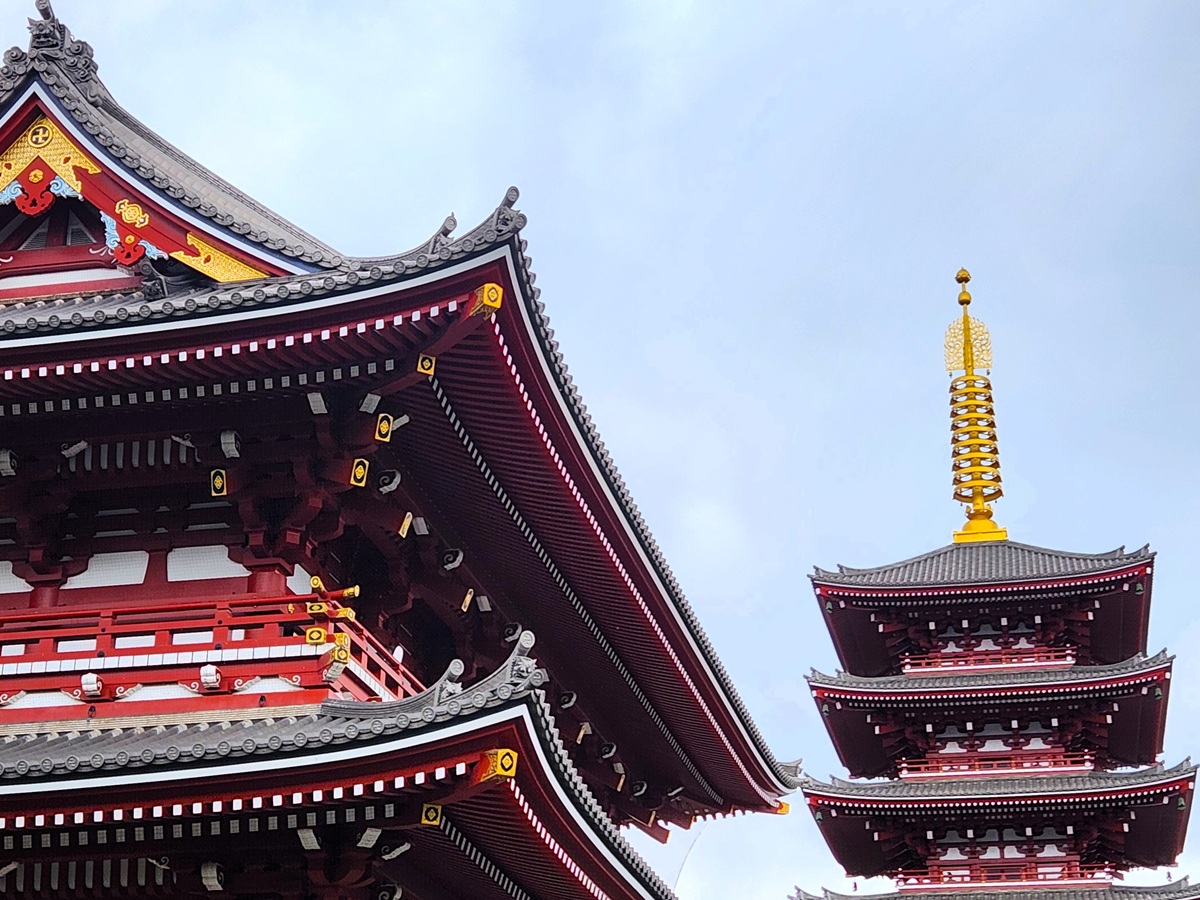
This 11 day itinerary starts with your arrival in Tokyo (for us US travelers, that means arriving a day after your flight takes off; be sure to add in a travel day). You’ll spend a few days in Tokyo, take a day trip to Tochigi, then head to Kyoto, spend a day in Ogoto Onsen, and then head back to Tokyo.

Want to take this itinerary with you? Download your easy-to-use spreadsheet version of this itinerary that you can take with you while you explore the country. You’ll also get bonuses like insider tips, additional recommendations, and a downloadable map!
Detailed Japan 11 Day Itinerary
Day 1: Arrive in Tokyo
We flew into Haneda Airport (HND), which is the closer of Tokyo’s two airports. Kevin has previously flown into Narita International Airport (NRT) and felt it was too far from the city center. Sometimes Narita has more international flight options, though. Luckily for us, there are direct flights from Atlanta to both airports.
Most long-haul international flights will arrive in the afternoon or early evening. Some airlines do have early morning arrivals, but I really don’t recommend that. Get there in the afternoon and let the jetlag take over, you’ll go right to sleep. Our flight arrived in Tokyo at 1 p.m.
Remember: Flights from the US leave a day earlier. So if your flight is on a Friday, you’ll arrive in Tokyo on Saturday.
To more efficiently clear customs in Tokyo, you’ll want to pre-register using the Visit Japan Web website. This gets you the QR code you’ll need to scan at customs. You can fill out the form manually when you arrive, but doing it before you leave just saves you time.
The customs line can be long. It can take anywhere from 30 minutes to 2 hours to clear customs. It took us about 1 hour.
Before you leave the airport, I recommend going ahead and getting your Welcome Suica card. This is like a pre-paid debit card valid for 28 days that you’ll use for trains and buses nationwide, and you can also use it in convenience stores and vending machines. You can get it at the JR East Travel Service Center at Terminal 3 in Haneda.
To get to our hotel, we took the Airport Limousine Bus, which had a drop-off location at the train station right by our hotel, so it was super convenient for us. It’s also a cheap transportation option, and you don’t have to deal with your luggage on public transit. You can buy your ticket at the airport once you’ve cleared customs.
Check in at La’gent Hotel Shinjuku Kabukicho
Congrats, you’ve made it to Tokyo! So now it’s time to get checked-in.
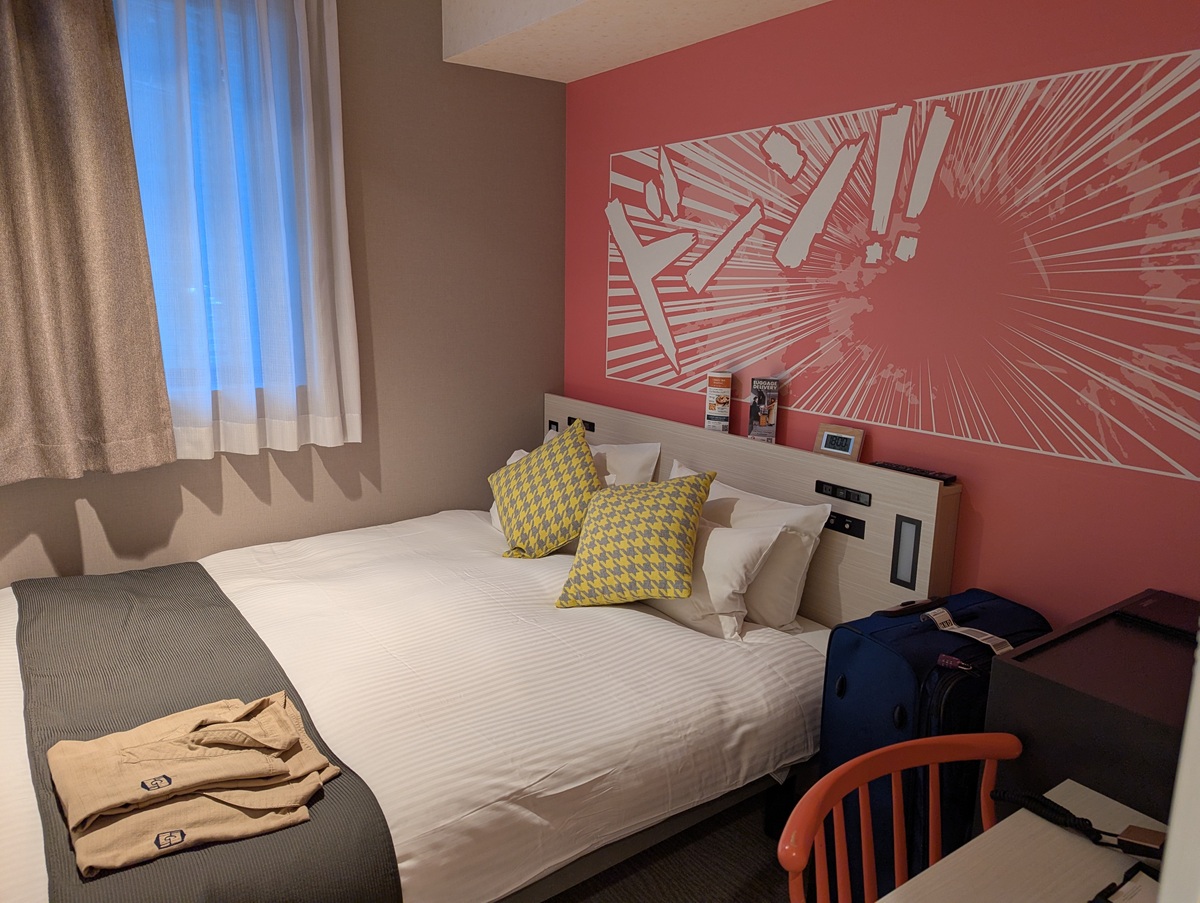
For our first Tokyo leg, we stayed at La’gent Hotel Shinjuku Kabukicho. The hotel has a modern and playful design that fits in perfectly with the entertainment district of Kabukicho.
The main reason we chose this hotel was because it’s super close to the Seibu Shinjuku Station, Higashi-Shinjuku Station, and Shinjuku Station. You can easily go anywhere in the city thanks to these three rail stations. And we did use them all at one time or another on this trip.
Kabukicho is the entertainment district, so it has a ton of nightlife. During the day, the area is pretty quiet, but at night it’s hopping. Luckily, La’gent Hotel Shinjuku Kabukicho is just far enough removed that it’s never loud at night. But you’re just steps away from lots of restaurants, karaoke, and bars.
You can read my full review of La’gent Hotel here if you want to learn more about our stay. And if you’re not sure this is the right area for you, I’ve broken down the top Tokyo neighborhoods and lodging picks in this guide.
Book your stay at La’gent Hotel Shinjuku Kabukicho here.
Going to Japan for the first time?
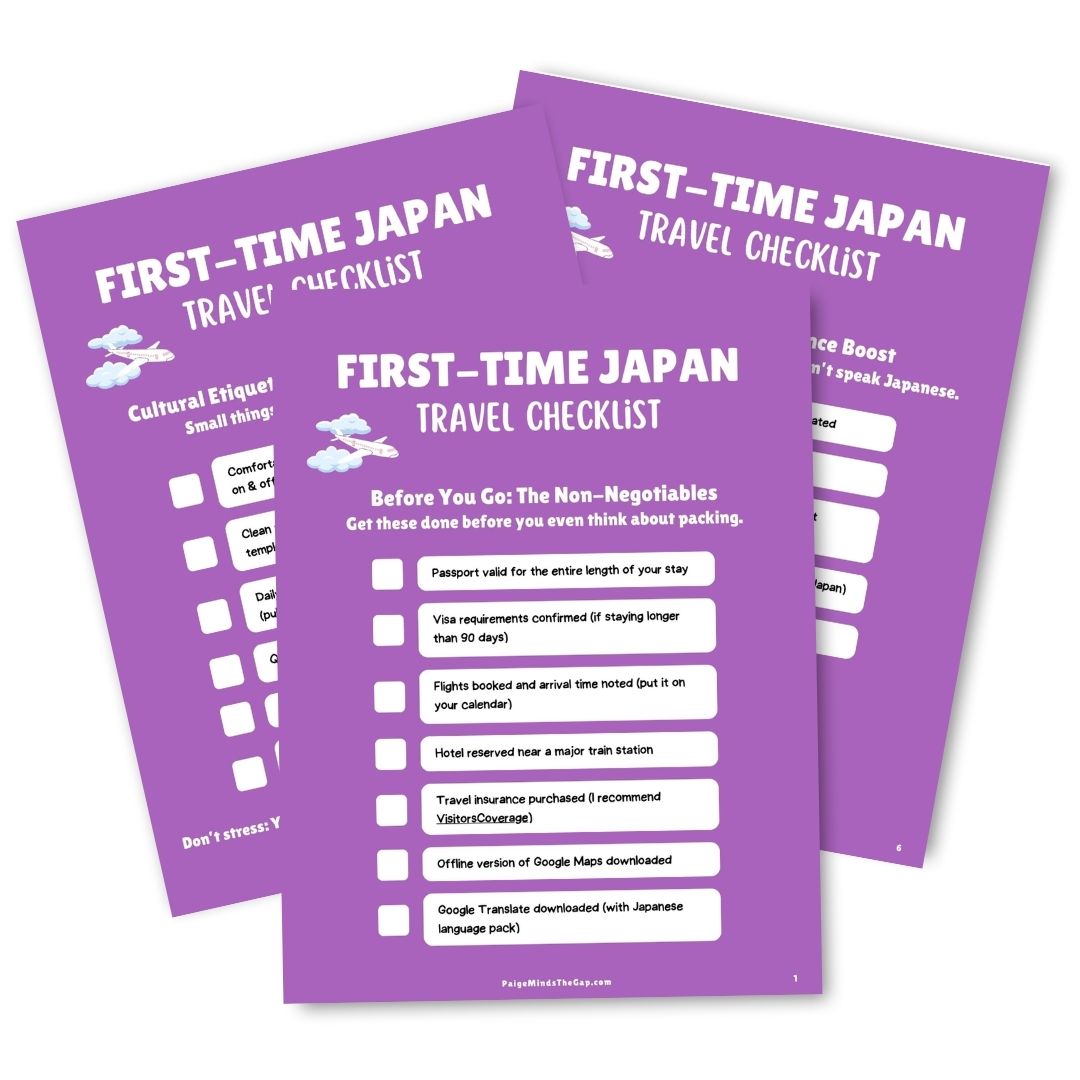
Download my FREE First-Time Japan Travel Checklist to plan smarter, avoid common mistakes, and feel confident before you land.
Dinner at Japanese Risotto Otsu — Shinjuku Kabukicho


We didn’t want to stray too far from the hotel for dinner (since we were about ready to crash for the night), so we wandered a ways into Kabukicho and found Japanese Risotto Otsu — Shinjuku Kabukicho.
This is a small ramen shop on the corner. You order via the touchscreen just inside the door, then hand your ticket to the server.
The service is quick and easy, the portion sizes are pretty big, and the price is good. We had a pork ramen, a chicken ramen, and gyoza.
Day 2: Tokyo
For our 2nd day in Tokyo, we went out and did some actual exploring! On this day, we went to the Sumida City and Asakusa areas for some of Tokyo’s top attractions like Tokyo Skytree, Sensō-ji Temple, a traditional tea ceremony, and a samurai experience.
Tokyo Skytree
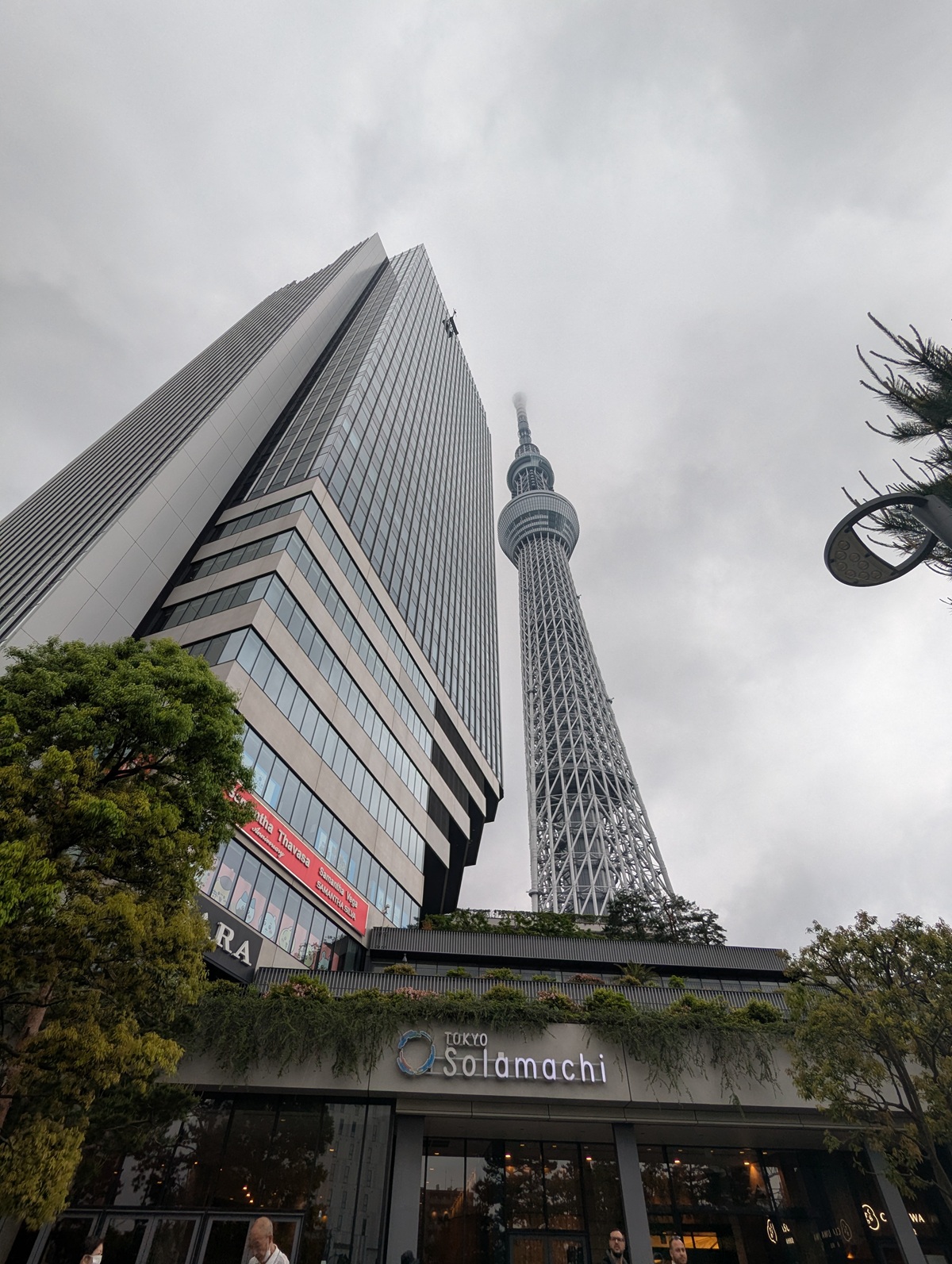


Tokyo Skytree is the tallest tower in the world and the third tallest structure in the world at 2,080 feet tall. And you can head up to to the top observation deck, which will put you 1,480 feet above the city.
This was our first stop in the morning, and getting there right as it opened meant not having to deal with a ton of crowds at this popular Tokyo attraction.
I do recommend checking the weather for the day you want to go. If it’s rainy or overcast, you won’t be able to see much and you might want to try for a different day. That said, we did visit on an overcast day, and we still enjoyed it.
Book your Tokyo Skytree tickets here.
Lunch at Pizzeria Mar-de Napoli
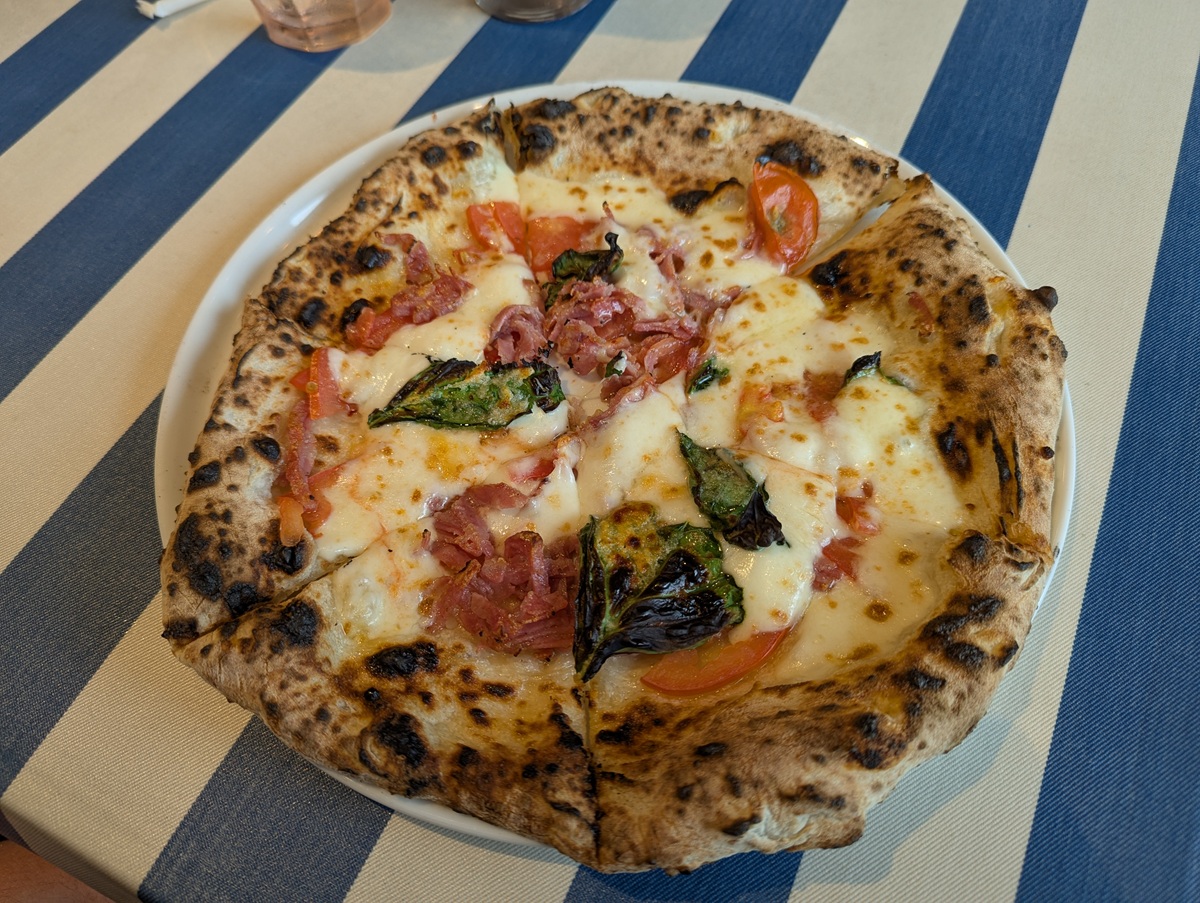


For lunch, we stuck around Tokyo Skytree Town and found a restaurant inside the shopping center there.
We decided on Pizzeria Mar-de Napoli to see the Japanese take on Italian food. Plus, one of their pizzas won the Pizza World Cup in 2012.
We tried their Spaghetti with Meat Sauce (because I am a spaghetti fiend), the Campione pizza (which wone the Pizza World Cup in 2012), and the Burrata Cheese e Prosciutto e Rucola pizza.
Sensō-ji Temple


Sensō-ji Temple is the oldest temple in Tokyo. It’s a Buddhist temple dedicated to Kannon, the bodhisattva of compassion.
We started at the Kaminari-mon Gate (also called the Furaijin-mon Gate), walked up the Nakamise Shopping Street, and walked through the Hozo-mon Gate (also called the Nio-mon Gate) before visiting the main Kannondo Hall to make an offering and read our fortunes.
Making an offering at a Buddhist temple involves throwing a coin into the offering box, bowing twice, clapping your hands twice, praying, and bowing once more.
On our way back out, we stopped at Bentendo Hall. There are other gates and structures you might want to see here, like the Five-Storied Pagoda or the Denboin and its Garden.
This is one of the most famous temples in Tokyo, so you can expect it to be pretty crowded in the middle of the day. But the best part is, it’s free to visit, so you definitely won’t want to skip this temple if you’re visiting Tokyo on a budget.
Asakusa Shrine

Right next to Sensō-ji Temple is the quieter Asakusa Shrine. This is a Shinto shrine that honors the men who founded Sensō-ji.
While the crowds descend upon Sensō-ji, a lot of people overlook the Asakusa Shrine. But it has some of the oldest shrine buildings in Tokyo.
Samurai Experience at the Samurai Ninja Museum
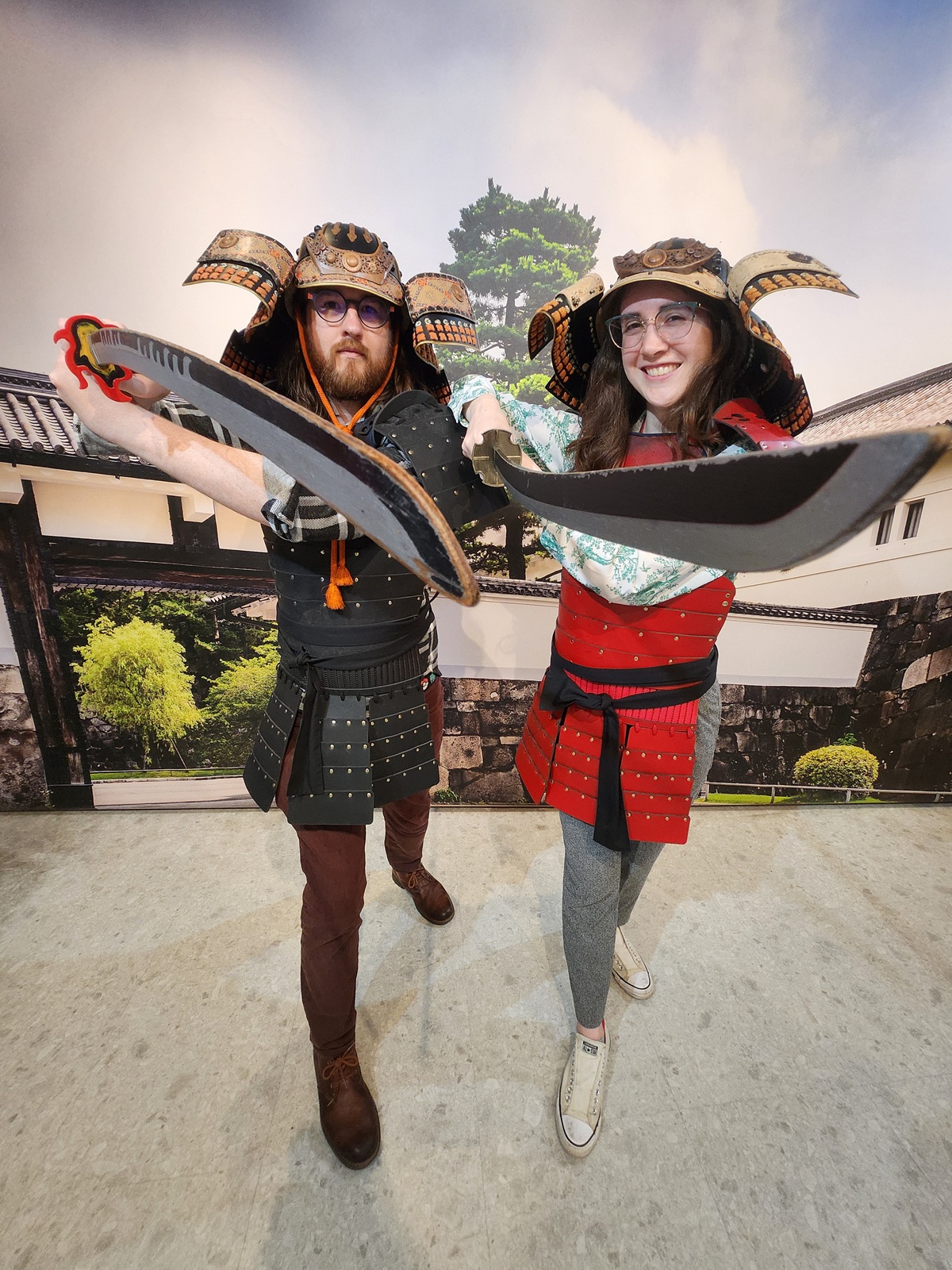
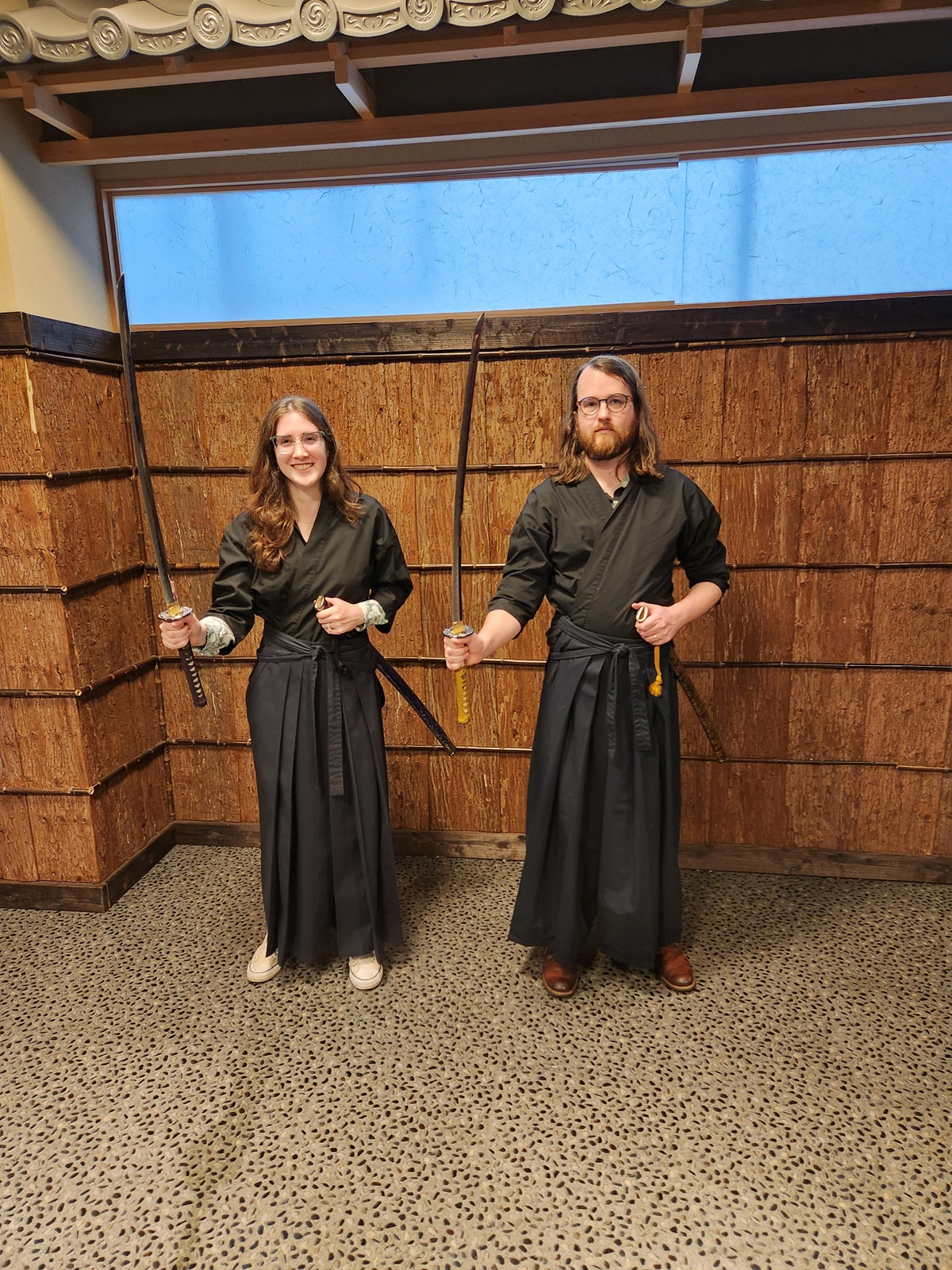


The Samurai Experience at the Samurai Ninja Museum in Tokyo was one of our most fun experiences.
I knew the nerds in our group would like swinging around a katana. Note that you aren’t actually using a real sword in this experience (Japan has cracked down on letting tourist swing sharp blades), but the swords are weighted so you’re not just playing with a toy.
While we waited for the experience to get started, we dressed up in some samurai costumes and took pictures. Then for the experience, we put on the traditional Hakama, picked out our sword, learned how to properly wear and draw a sword, and performed traditional movements with the sword.
Afterward, we took a short guided history tour of the Samurai Ninja Museum. And then we tried our skills throwing ninja stars. One person in our group even won the star-throwing challenge! (If you only want the museum, dress-up photo opp, and ninja star experience, they also offer a basic ticket.)
Book your samurai experience in Tokyo here.
Kimono Tea Ceremony


The Kimono Tea Ceremony was my favorite experience in Tokyo.
We got dressed up in beautiful kimono. For the ladies, this was a whole process that involved picking out your kimono, picking out your obi, getting tied and cinched in, then having your hair done and ornamented.
Then we entered the traditional tea ceremony room and learned about the rituals behind the preparation and serving of tea while we ate some Japanese sweets. We learned how to make matcha, whisking the tea ourselves.
After the ceremony, we went out to their decorative terraces to take a bunch of pictures in our kimono!
Book your kimono tea ceremony in Tokyo here.
Dinner at CoCo Ichibanya


There are a bunch of CoCo Ichibanya locations throughout Tokyo, but we passed one back in Shinjuku on the way back to our hotel.
CoCo Ichibanya is a popular curry house franchise. They serve meat, vegetable, seafood, and other types of Japanese curry. They have a large spiciness scale (curry is one of the few foods where the Japanese seem to like spice), so you can go wild.
I had the traditional Pork Cutlet Curry, while Kevin had a Chicken Cutlet Curry with a topping of Fried Chicken with a spiciness of 2, and that was almost too much for him (and he likes spice!). I did their standard medium (so no added spice level) and I was sweating.

Ultimate Japan 11 Day Itinerary: Tokyo & Kyoto
Your Japan vacation — planned for you.
Don’t spend any more time stressing about planning your perfect vacation to Tokyo and Kyoto. Get this done-for-you, fully planned itinerary!
Day 3: Tokyo
On our 3rd day in Tokyo, we visiting Meiji Shrine and spent some time in Akihabara before heading out on a food tour of Shimbashi.
Meiji Shrine
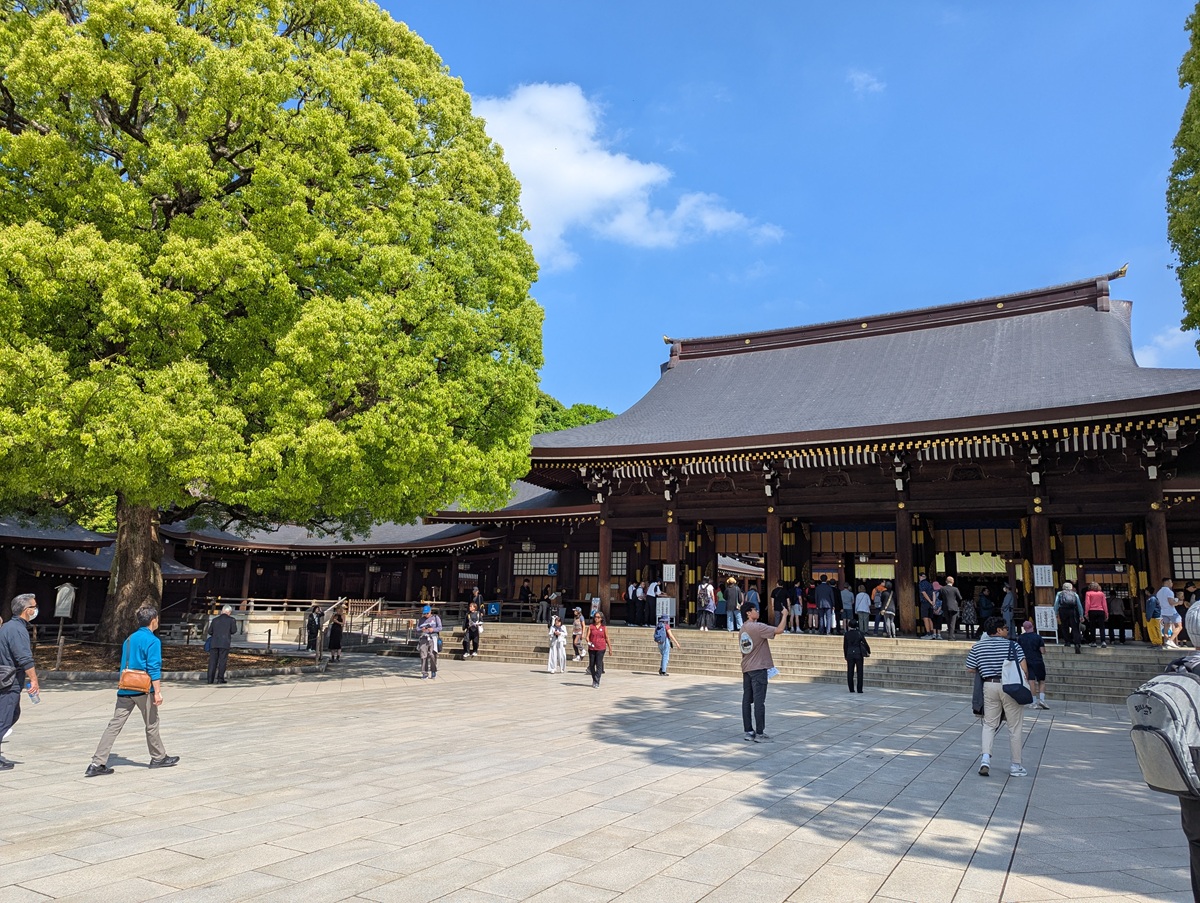


Meiji Shrine (Meiji Jingu) is a Shinto shrine that is dedicated to Emperor Meiji and Empress Shōken. The complex is in a beautiful 170 acre forest.
We entered through the Kitasando Torii-gate at the Yoyogi entrance and walked along the wooded path to the main shrine.
Then we visited the Inner Garden where they have a beautiful Iris Garden in the spring, a tranquil pond, and Kiyomasa’s Well. The gardens require a small entry fee. The Meiji Jingu Museum was closed when we visited, but you can get discounted entry tickets to it using The Tokyo Pass.
We exited along the South Path, passing the Sacred Sake Barrels and Wine Barrels. We left the complex via the Harajuku entrance.
Harajuku

While we were in Harajuku, known for its quirky fashion, we decided to do a little shopping.
Stop by Takeshita Street, a pedestrian shopping street where you can find shops selling everything from colorful kawaii cute clothes and accessories to edgy grunge and goth fashion.
Lunch at Maidreamin Maid Cafe in Akihabara
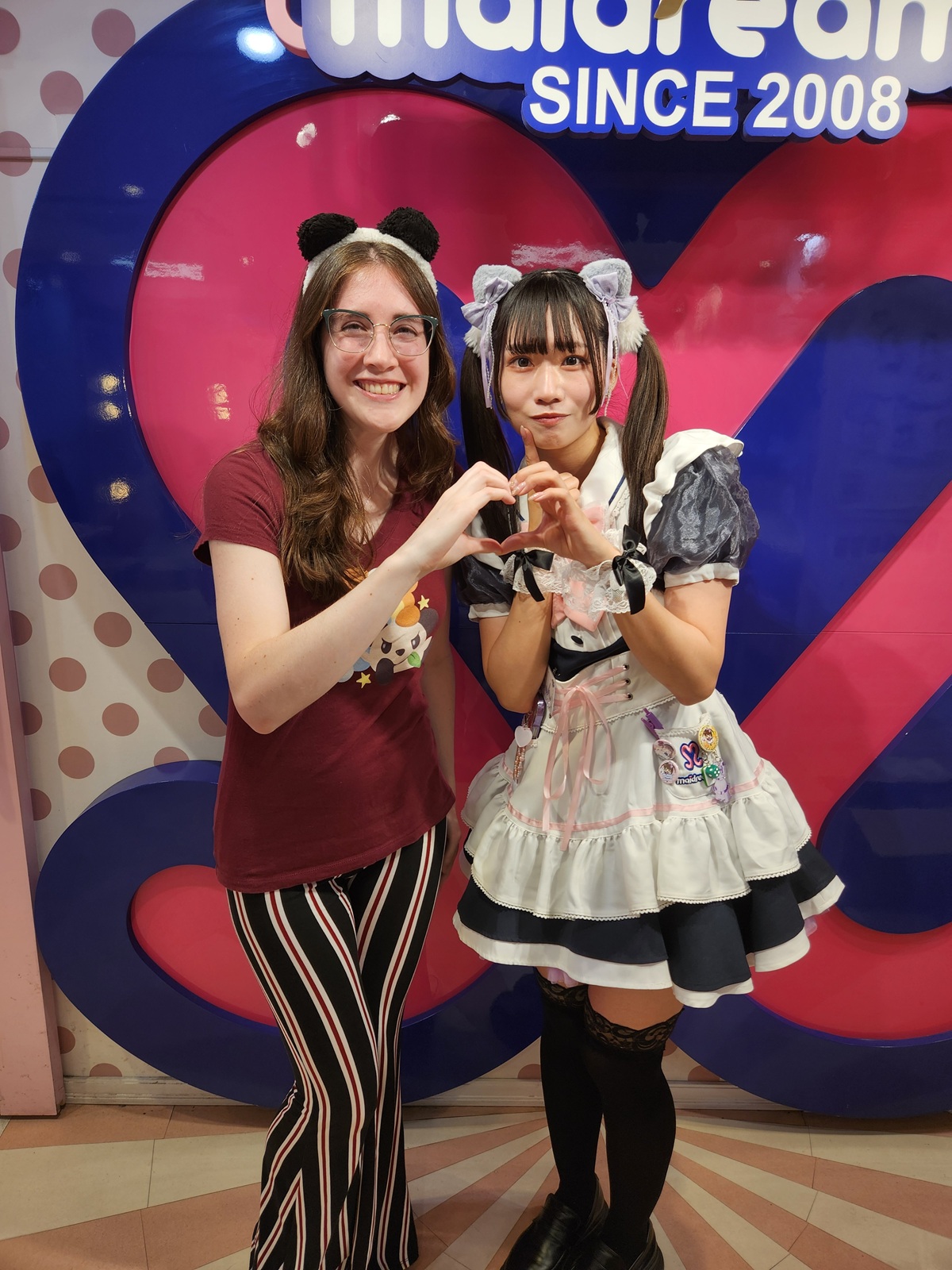


For lunch, we headed to Akihabara to dine at a maid cafe. Maid cafes are a big part of otaku culture (those who are passionate about anime and manga) and typically appeal to men, so it’s definitely not going to be everybody’s cup of tea. But a lot of women like it as well for the cute factor.
At a maid cafe, your staff are adorable girls in French maid-inspired costumes who welcome you in for a friendly and lighthearted meal. Everything is very kawaii. The maids sing and dance, they draw pictures on your food, the food itself is cute, and you can get pictures with the maids.
We chose Maidreamin at their main location in Akihabara. Maidreamin is a popular maid cafe chain, so you should make a reservation ahead of time.
I fully chose this cafe because a lot of their food is shaped like bears. And I loved it.
You’ll pay an entry fee for 1 hour plus food (that’s the price listed on the menu for whichever combo you choose). We did the Perfect Combo that included an a meal, an animal parfait, a drink, a souvenir photo, and a headband gift.
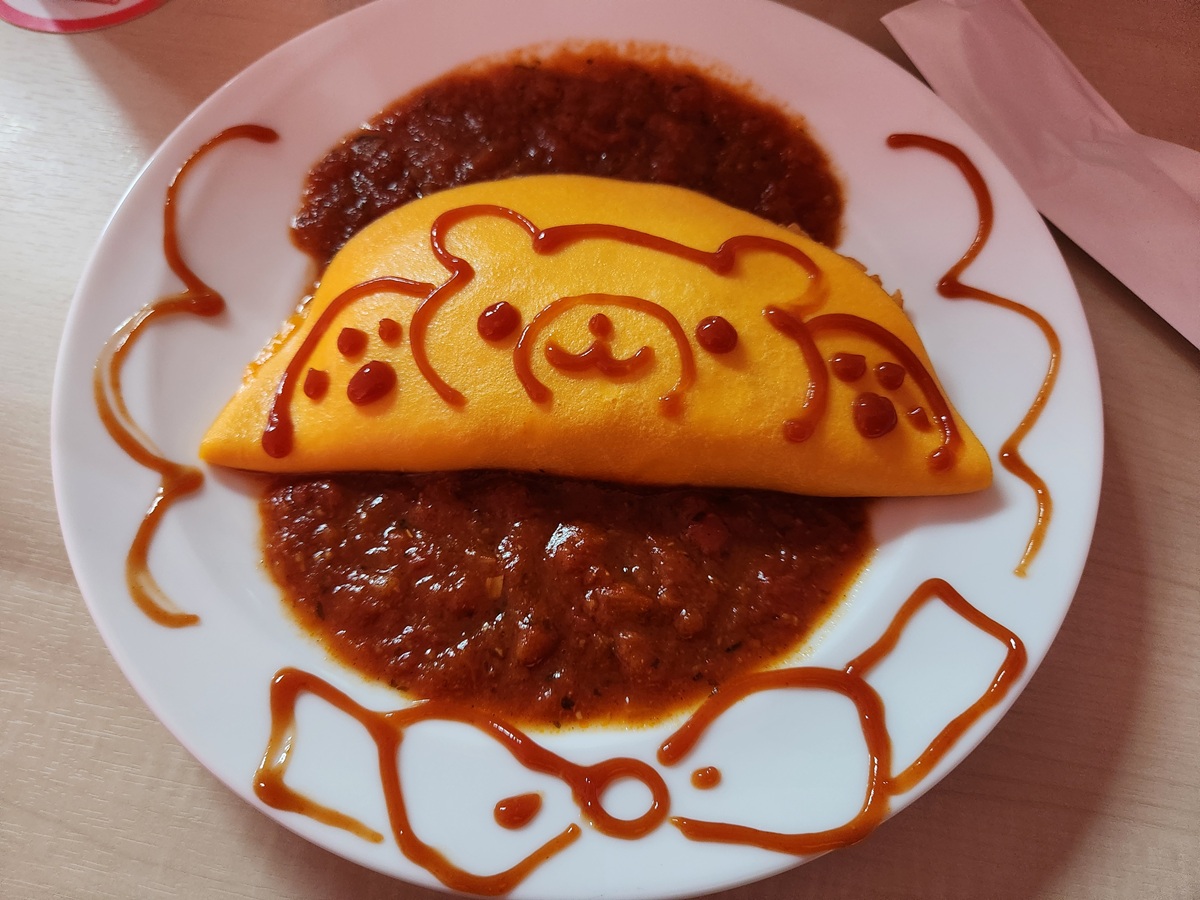
I did the Bear Hamburg Steak with rice, and the Panda parfait, and I got a panda headband to match. Most of the rest of our group got one of the Omelette Rice dishes with different sauces, and we had a whole slew of animal parfaits. Yes, Kevin knew exactly what to do and got the Bear parfait.
For the Omelette Rice, the maids will draw a picture on your omelet in ketchup. And of course you have to bless your food with a spell of “moe-moe-kyun!”
You can take pictures of your food and yourself in this maid cafe, but you can’t take pictures of the maids or other patrons. The only way to get a picture with a maid is to pay extra, which of course we had to do!
Akihabara

Akihabara (also shortened to Akiba) is like Nerd Mecca. It’s known for its electronics stores and specialty shops for all things anime, manga, trading cards, figurines, and video games.
Stores like GiGO, Azone Akihabara, Akihabara Kotobukiya, and namco are huge multi-level stores where you can geek out to your heart’s content.
Shimbashi Hidden Gem Food Tour with Arigato Travel


For dinner, we did the Shimbashi Hidden Gem Food Tour with Arigato Travel. Shimbashi (also called Shinbashi) is where you’ll find all the salarymen, so not many tourists find their way here. But it’s also where you’ll find tons of bars and rustic izakaya for delicious eats.
Shimbashi was also Tokyo’s first railway terminal, so naturally we met the tour group by the historic steam engine outside the station.
The tour gives a great after-work local dining experience. We learned a lot about work culture (and the origin of all those all-you-can-drink bars) and tried so many different dishes that we wouldn’t have known to try on our own.
This walking tour takes you to 5 hidden gems to dine on Wagyu, ramen, sake, and a sweet treat. Kevin and I also lucked out when another group canceled, so we ended up on a private tour with Sandra, and it was phenomenal!
You can read my full review of the food tour here.
Book your Shimbashi Hidden Gem Food Tour here.
Day 4: Tokyo
On our 4th day in Tokyo, we went to the Ueno Zoo (you know I can’t resist a bear) and then learned a lot of history at the Tokyo National Museum and the Edo Castle Ruins at the Imperial Palace.
Ueno Zoo

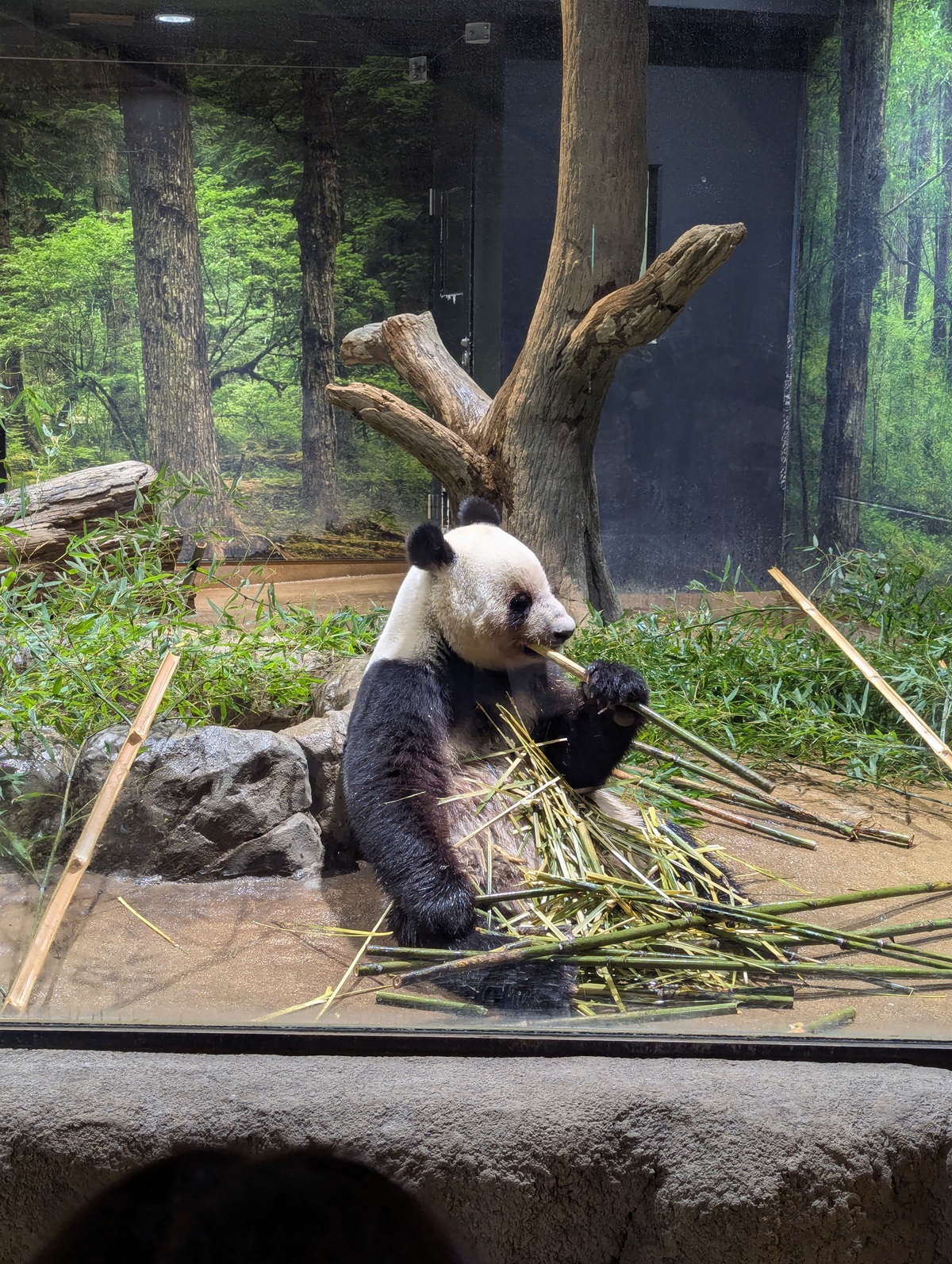

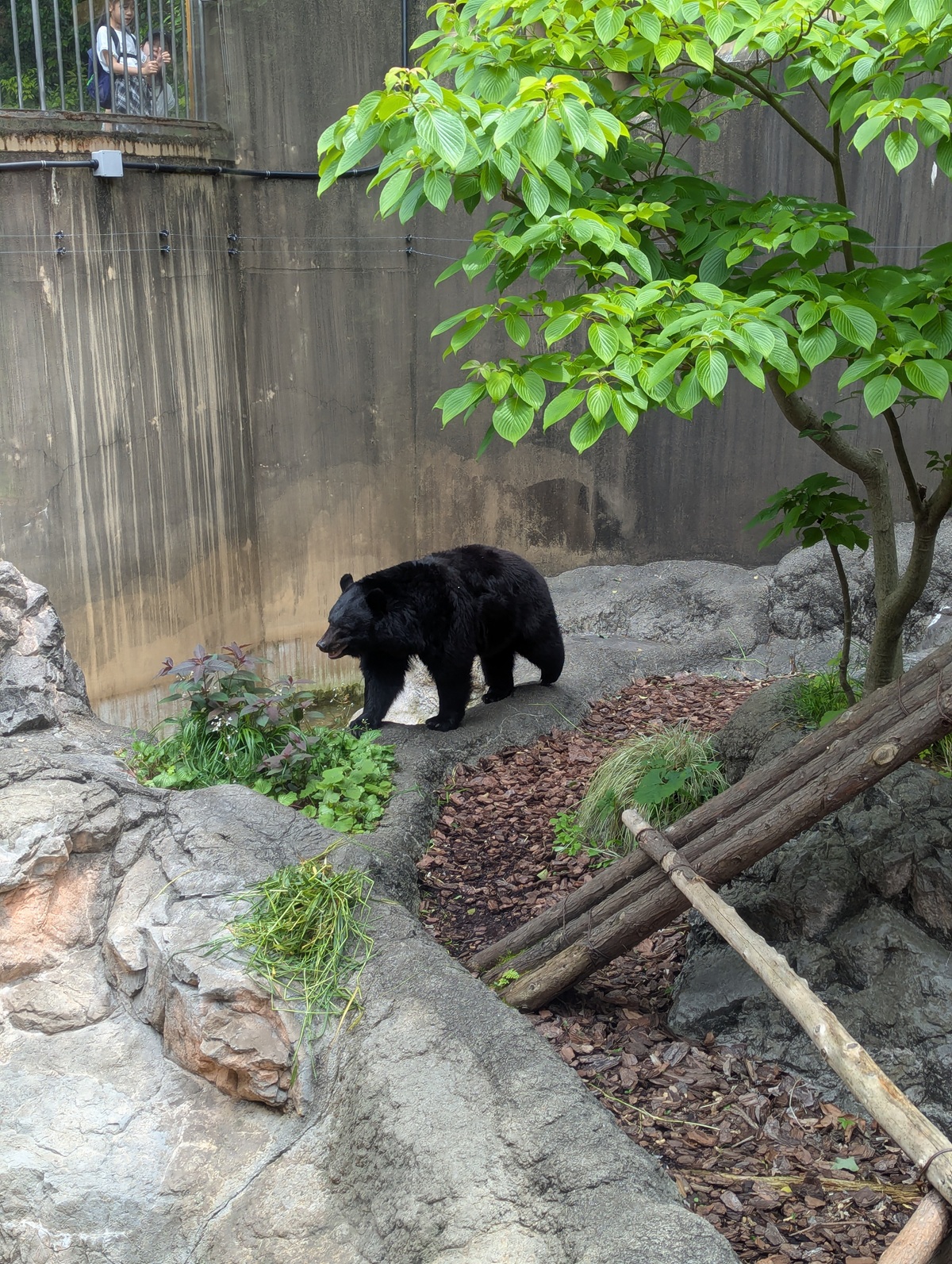
Ueno Zoo is Japan’s oldest zoo, opened in 1882. It covers 35 acres and houses more than 2,600 animals from over 500 different species.
If you’ve made it this far, you know why I wanted to visit: bears. Ueno Zoo has Polar Bears, Hokkaido Brown Bears, Sun Bears, Japanese Black Bears, and Panda Bears. I hadn’t see a Japanese black bear before, so I was very excited for that. And of course Zoo Atlanta had to send back its pandas, so I was in need of my panda fix.
The pandas are very popular, and you can expect a long line to see them. We got in the line when it was a 45 minute wait (and it was exactly 45 minutes on the dot), and by the time we left it was up to 1.5 hours. And that was only to see the female panda. The male panda had a separate line that was also 1+ hours long.
Besides the bears, Ueno Zoo has tigers, gorillas, bison, hippos, giraffes, seals, penguins, and more. If there’s an animal you want to see, they probably have it.
This zoo is huge, and it’s split into two sections connected by a long bridge. Expect to do a lot of walking and spend a good bit of time here just because it takes so long to walk around.
You can get discounted tickets to Ueno Zoo using The Tokyo Pass.
Lunch at Ueno Park


For lunch, find a spot to eat around Ueno Park. There are often festivals going on, especially in the summer, in the park that have food vendors (this is what we did, which I’ll tell you about more below).
There are cafes and restaurants located inside the many museums around the park, including the Tokyo National Museum which is next on the itinerary. So you can visit a museum and eat lunch if you’d like.
There are also a few standalone cafes like EVERYONEs CAFE, Starbucks, and Ueno Green Salon.
Satsuki Festival at Ueno Park

If you’re visiting in May, you just might come across the Satsuki Festival at Ueno Park like we did.
This festival celebrates the Japanese azalea (satsuki) bonsai. Cultivated plants are on display under tents, and there are plenty of local craft vendors selling their goods.
Plus, they have food vendors where you can get street food delicacies like ikayaki (grilled squid on a stick) and chicken nanban (fried chicken with tartar sauce).
Tokyo National Museum
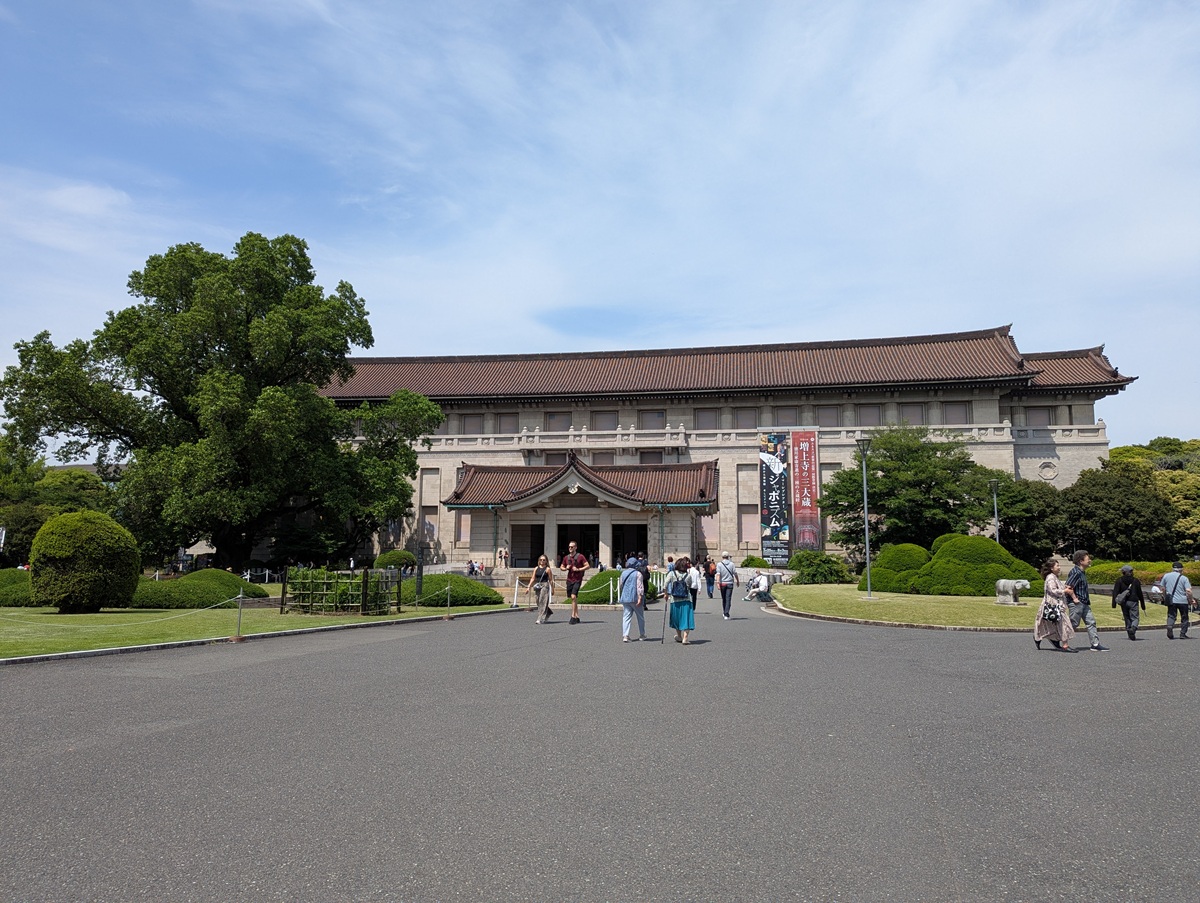


Our next stop was the Tokyo National Museum, an art and history museum that’s the oldest national museum and the largest art museum in Japan.
The museum is made up of several different buildings. There’s a treasure gallery, a Japanese art gallery, an Asian art gallery, a Japanese archaeology gallery, a garden, and a special exhibits gallery.
I recommend at least making it to The Gallery of Horyuji Treasures to see some national treasures, as well as the Honkan Japanese Gallery.
Get your tickets to the Tokyo National Museum here.
Or you can get discounted tickets to the Tokyo National Museum using The Tokyo Pass.
Related tour: Tokyo National Museum Private Tour
Imperial Palace East National Gardens and the Edo Castle Ruins


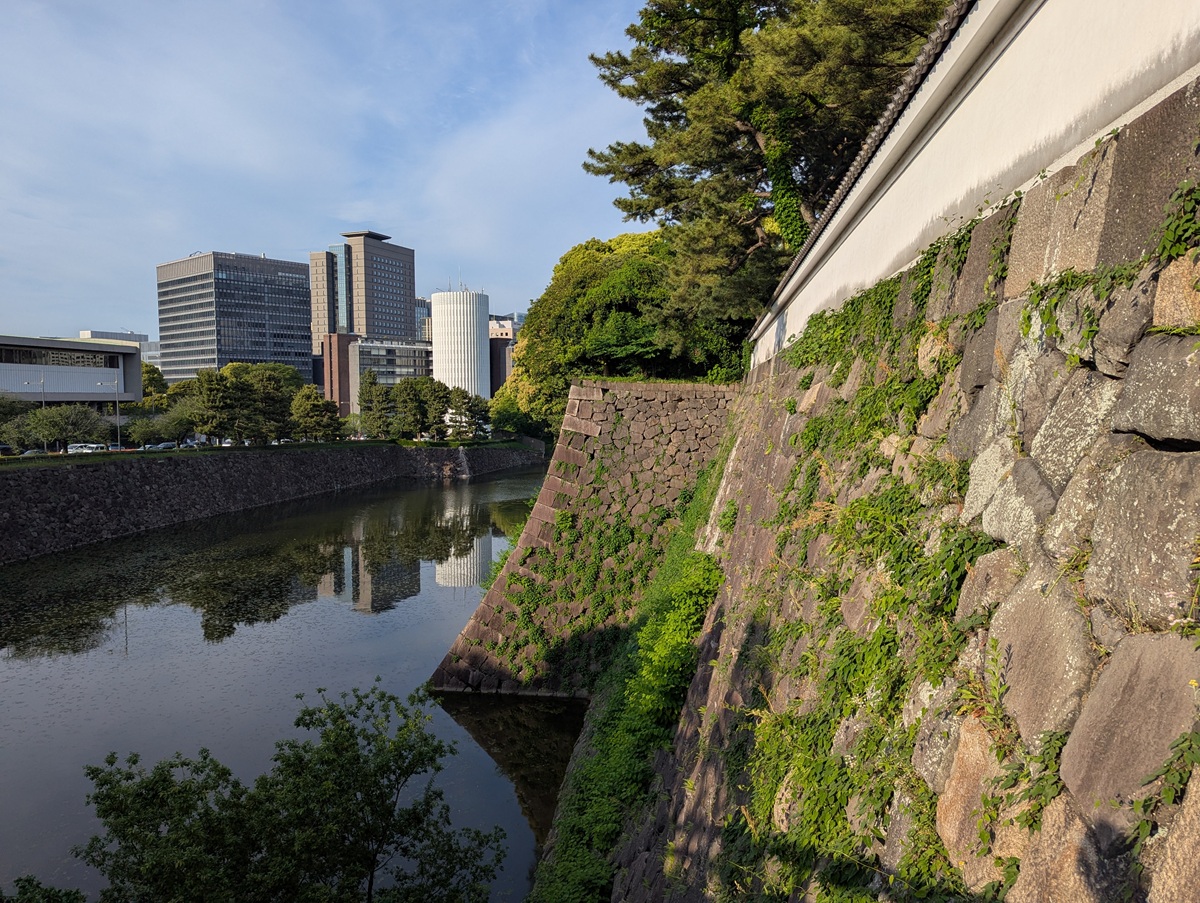
The Imperial Palace East Gardens are the former site of Edo Castle from 1457 to 1873 when it was consumed by a fire. The current Imperial Palace, where the emperor resides, now sits on the western part of the grounds.
Getting a reservation for a guided tour of the Imperial Palace grounds is difficult since there are only two tours a day. So we just stuck with the free East Gardens and the castle ruins.
We entered from Ōte-mon Gate and passed many ruins of Edo Castle’s old gates and guardhouses. Once in the gardens, we took a circuit to the left toward the orchard and rose garden.
One of the best remaining pieces of Edo Castle is the Fujimi-yagura Turret, which dates from 1659. Be sure to also take the hill up to the Fujimi-tamon Defense House where you can see into the grounds of the Imperial Palace.
All that’s left of the Edo Castle keep is the base. This foundation was rebuilt in 1658, but they never completed rebuilding the keep. You can walk to the top of the base to look out over the gardens.
Leaving the gardens, we exited through the Kita-Hanebashi Gate and circled around the outside of the castle’s moat.
Dinner at Tokyo Sushi Itamae Sushi
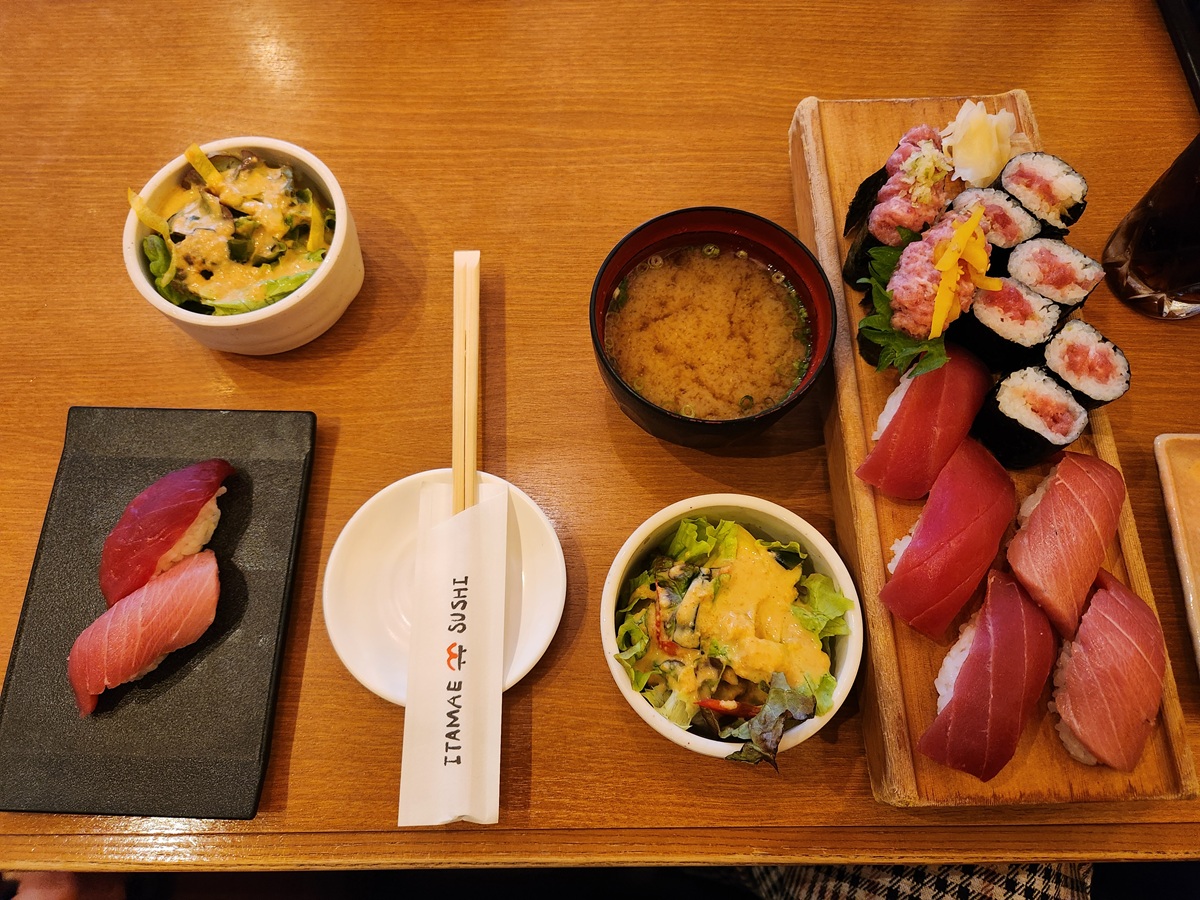
Back in Shinjuku, we had dinner at Tokyo Sushi Itamae Sushi at the Shinjuku Toho Building.
This is a huge sushi restaurant, and it’s open and airy. We did the Fresh Wild Bluefin Tuna Combo, an assortment of sushi and handroll sushi, and a rice bowl.
Day 5: Mashiko Day Trip
On our 5th day in Japan, Kevin and I took a day trip from Tokyo to Mashiko to learn about pottery and sake. This was a custom tour put together by our friends at Arigato Travel and our transportation was provided.
Want to take this same tour? Reach out to Arigato Travel for a tailored itinerary and mention that you were referred by Paige Minds The Gap.
If you want to do this all yourself, your options are:
- Rent a car and drive (be sure you have your international driver’s permit) the 2 hours to Mashiko. This is a good option because there’s some distance between the brewery and the pottery studios, so you can do everything on your own time. But driving in Japan costs a good bit in tolls.
- Take the train and buses, which will take about 2.5 hours but requires a good bit of changes.
- Option 1: Take the JR Utsunomiya Line from either Tokyo Station or Ueno Station to Oyama Station in Tochigi. Change at Oyama Station for the Mito Line bound for Mito, and change at Shimodate Station. At Shimodate Station, take the Moka Line going toward Motegi and get off at Mashiko Station.
- Option 2: Take the Shinkansen bullet train to Utsunomiya Station and change to Kanto Higashino Bus toward Mashiko Station.
Related tour: Mashiko Experience Japanese Culture and Craftsmanship by Private Car
Tonoike Sake Brewery


Our first activity in Mashiko was was visiting Tonoike-san at Tonoike Sake Brewery.
We took a guided tour of the brewery and learned how sake is made. Then we sat down for a sake tasting of their Sanran brand. We tried 4 different sake varieties along with a bunch of different snacks, like a Japanese charcuterie, that paired well with different varieties.
Our favorites were the Sanran Daiginjo that won gold in the 2022 Japan Sake Awards and the Sanran Junmai Daiginjo that has won regional and international recognition.
Lunch and pottery at Tōchian Aoi i Utsuwa to Inaka Ryōri


Tōchian Aoi i Utsuwa to Inaka Ryōri (陶知庵 碧いうつわと田舎料理) is a family-owned restaurant and pottery studio. (My rough translation of the name is Tochian Blue Pottery and Country Cuisine.)
You’ll get an incredible home-cooked meal here. And all the ceramic ware used in the restaurant is what they sell in the pottery shop. They don’t speak much English here, and the menu is fully in Japanese, so come prepared with Google Translate.
We had the Rustic Tochian Curry and the Special Tandoori Chicken Meal.
Afterward, we took a short tour of their pottery studio, met their resident cat, and shopped the store. We brought home some sake cups and a water cup.
Shoji Hamada Memorial Mashiko Sankokan Museum


At the Shoji Hamada Memorial Mashiko Sankokan Museum, you can see the art and studio of world-renowned potter Shoji Hamada.
The museum encompasses his own home, his studio, his climbing kilns (kilns built on a slope, which you’ll see all over Mashiko), and a collection of Hamada’s own works plus works by other artists that he had a connection with.
Giant Tanuki

The Giant Tanuki statue at the Mashiko Kyohan Center is of Mashiko’s official mascot named “Ponta”.
The tanuki, a Japanese racoon dog, is a symbol of luck and prosperity. He holds Mashiko pottery in his hand.
Like any good tanuki statue, this Giant Tanuki is well-endowed. Huge testicles on a tanuki statue represent “golden sacks” of money, so the town of Mashiko must be very prosperous indeed with a statue like this at its center.
Snack stop at Kanmidokoro Kamakura Mashiko Jōnaizaka-ten

We stopped for a small snack at Kanmidokoro Kamakura Mashiko Jōnaizaka-ten (甘味処鎌倉 益子城内坂店), a sweets shop where you can get warabimochi sweets and drinks.
Since it was so hot out, I got one of their lemonade-type drinks, and Kevin got a soft-serve ice cream cone.
Daisei Gama


Daisei Gama (or Daisei Kiln) is a pottery shop and traditional climbing kiln that was founded in 1861. They have the largest climbing kiln in Mashiko. All of their products are fired exclusively in climbing kilns.
We took a tour of kilns and their pottery studio (we even fed their goats). They gave us a demonstration of their pottery skills on the kick wheel. And then the let us have a try at the kick wheel ourselves!

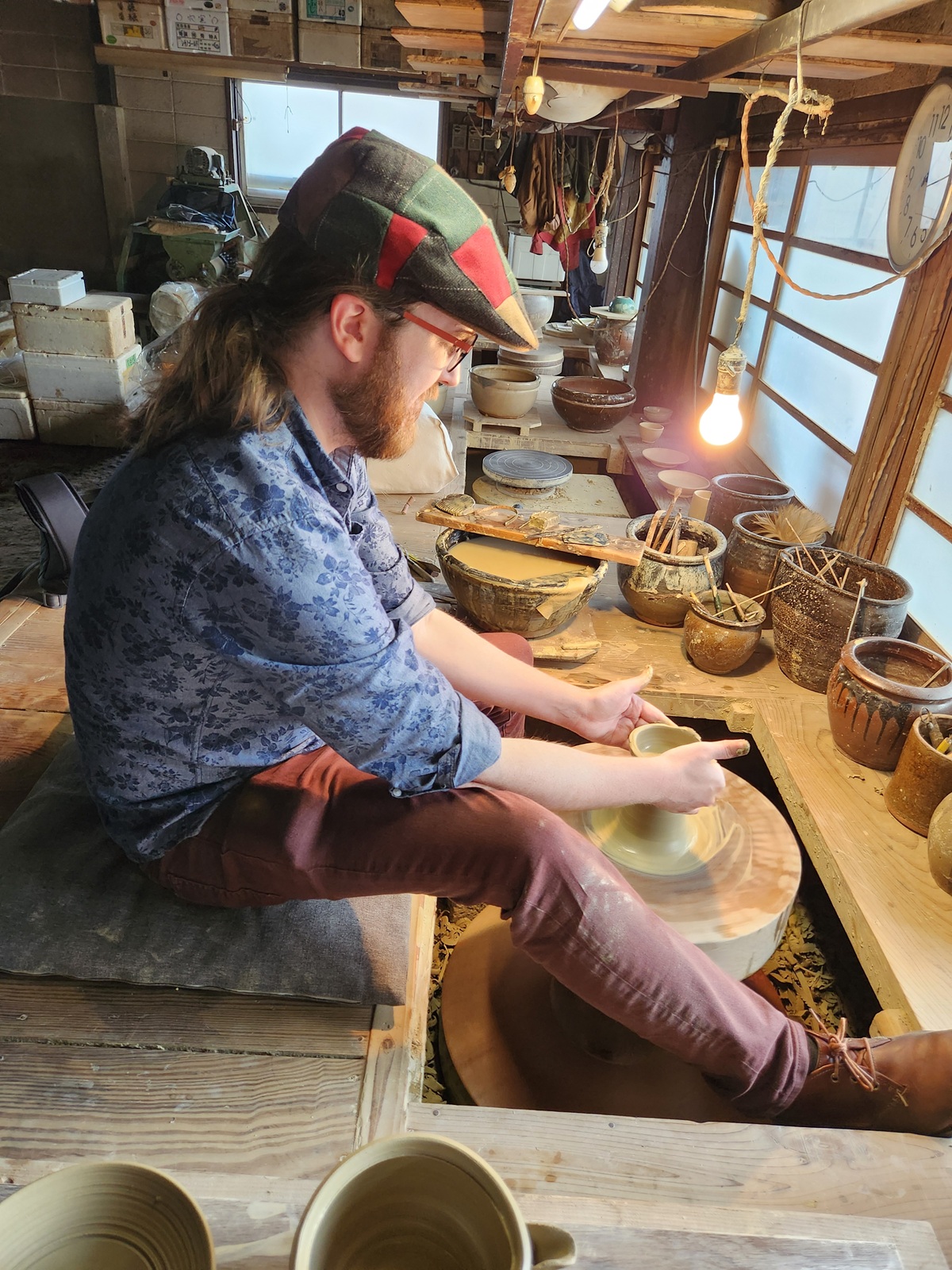
Mine went well, but I don’t have the skills to even out the sides. Kevin was doing great until it came time to cut it off.
Then we checked out their shop and bought an adorable little succulent planter for Kevin’s mom.
Toko


Toko is another great pottery shop and art gallery set in a large traditional Japanese house.
They sell pottery from about 40 different artists, as well as their in-house Sayado WAda Kiln brand. And in the very back room, you’ll find a gallery of unique pottery works on display.
Toko even offers hands-on workshops. Their most popular is the Kintsugi class, the traditional Japanese technique of repairing broken pottery with gold.
Higeta Indigo Dyeing Studio


Higeta Indigo Dyeing Studio was established around 1790 for dyeing fabric in a beautiful indigo color.
It still uses the original dyeing area to dye fabric in the traditional manner. You can visit the over 200-year-old thatched-roof building and see the 72 earthenware indigo vats.
This was our last stop in Mashiko before heading back to Tokyo.
Dinner at Ganso Aburado
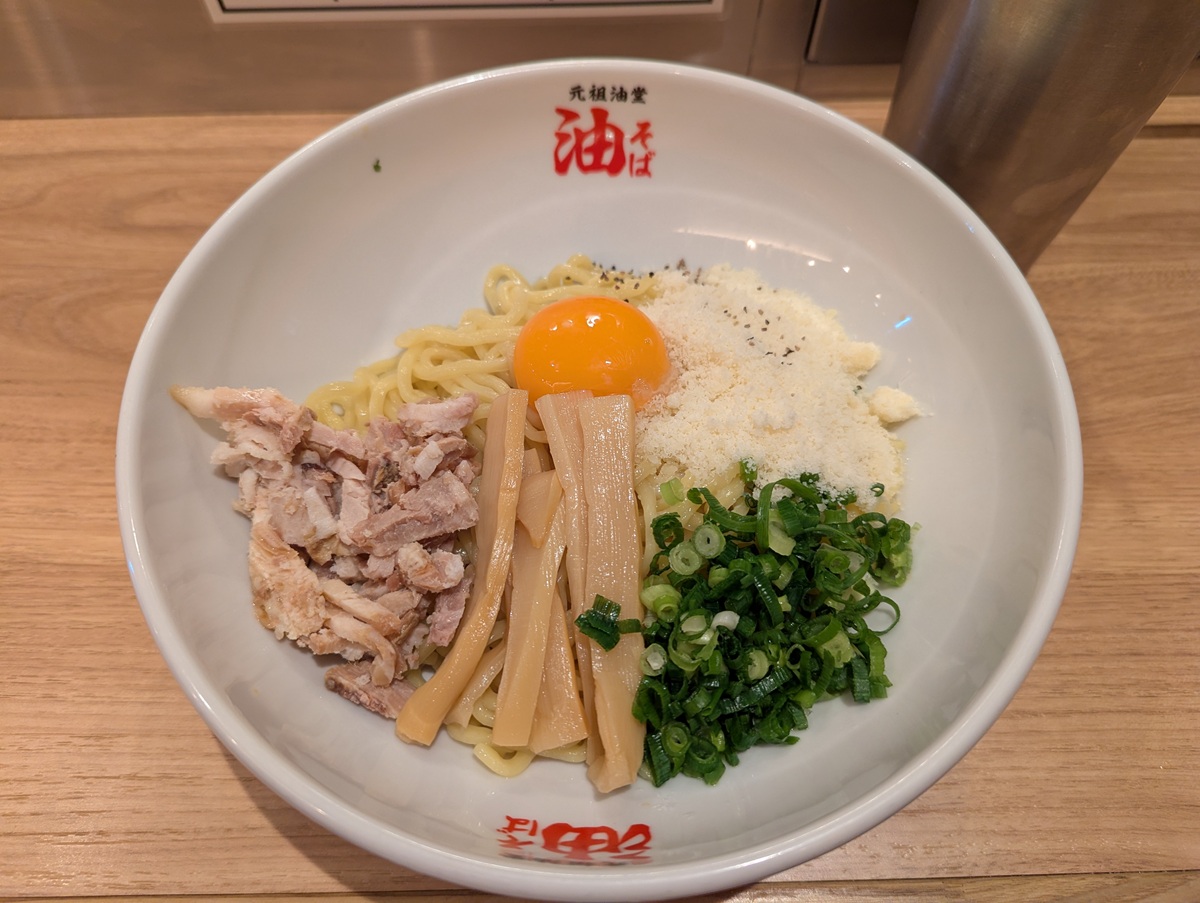

Back in Shinjuku, we ate dinner at Ganso Aburado on the recommendation of our Arigato Travel tour guide who said it was the best aburasoba he’s had in Tokyo.
Aburasoba is like a soupless ramen. The noodles are made with soy sauce and oil, and toppings like pork, egg, green onion, bamboo, and parmesan cheese are placed on top. You need to mix it all together, being sure to get the oil up from the bottom.
You’ll order from a touchscreen kiosk, making it super easy to order in English. Plus, at this restaurant, they offer free self-serve drinks like tea and flavored water. And they have tons of free sauces and powders that you can use to customize your dish even further.
I did their standard with pork, egg yolk, green onion, bamboo shoots, and parmesan cheese. This made kind of like a Japanese carbonara. Kevin did extra pork, egg yolk, green onion, bamboo shoots, and spicy sauce.
Shibuya Crossing


Shibuya Crossing is known as the world’s busiest pedestrian crossing.
We actually went here on the morning of Day 6, but we learned that morning is not the best time to go to experience the huge crowds, so I’m sticking it into the itinerary around here.
Even with morning rush hour in Tokyo and the hordes of people pouring out of Shibuya Station, the Crossing itself was relatively uncrowded around 8 a.m. We came through the Crossing later on Day 10 on our Monkey Kart tour at round 5 p.m. and it was packed. I’ve included both pictures for comparison.
The best time to go is in the evening, around dusk. So if you’re just interested in experiencing the crossing madness, pop on over around suppertime and then continue on with your plans.
Karaoke

It’s not hard to find a karaoke lounge in Shinjuku, since it is the entertainment district. The place we went to has since closed, but Karaoke Big Echo Shinjuku is another popular choice.
We did one hour with one alcoholic drink each for the group of 6 of us. We got a private room with a main mic and a back-up mic (so you don’t have to sing alone).
The English song selection was extensive and diverse, so you can definitely find something to sing along to once you figure out the controls. There are multiple screens with the lyrics, and some songs will have the music video as well.
Day 6: Tokyo to Kyoto
For our 6th day in Japan, we made the trip from Tokyo to Kyoto on the Shinkansen (the bullet train). In Kyoto, we did a little sightseeing at the Higashi Hongan-ji Temple and the Arashiyama Bamboo Forest before diving into Japan’s onsen culture.
Shinkansen to Kyoto


The Shinkansen (the bullet train) is the fastest way to get from Tokyo to Kyoto.
The fastest option is the Nozomi (2 hours and 15 minutes), the second fastest is the Hikari (2 hours and 40 minutes), and the slower option is the Kodama (3 hours and 40 minutes) due to extra stops.
We ended up taking the Hikari from Tokyo Station to Kyoto Station.
If you have checked-luggage-sized bags, you’ll want to make a reservation in advance for the seats with an Oversized Baggage Area. This will allow you to put your suitcase behind your seat. This space is reserved just for those seats, so no one else is supposed to put their bag there. Plus, you’ll be right by the doors and won’t have to struggle far with your luggage.
The train trip is quick and comfortable. The seats lean back really far, they have tray tables that fold down, and there’s tons of leg room. Small bags can go on the rack above you or below you, and there are even coat hooks and trays in the windows.
If you want a chance to see Mt. Fuji on the ride, book seats on the right side of the train going from Tokyo to Kyoto.
You can stop by your hotel to drop off your luggage before exploring more.
Lunch at NEW Taihou
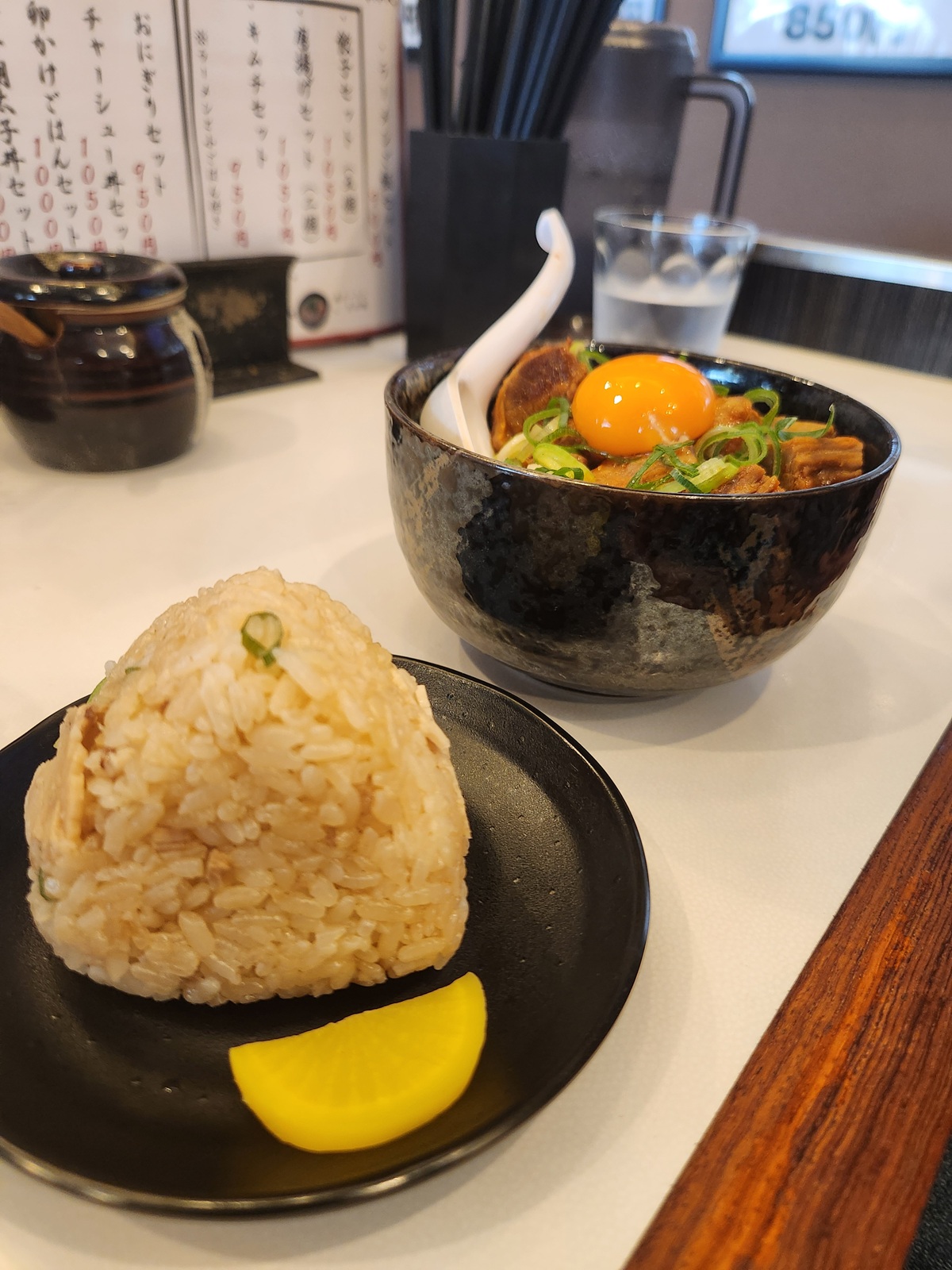
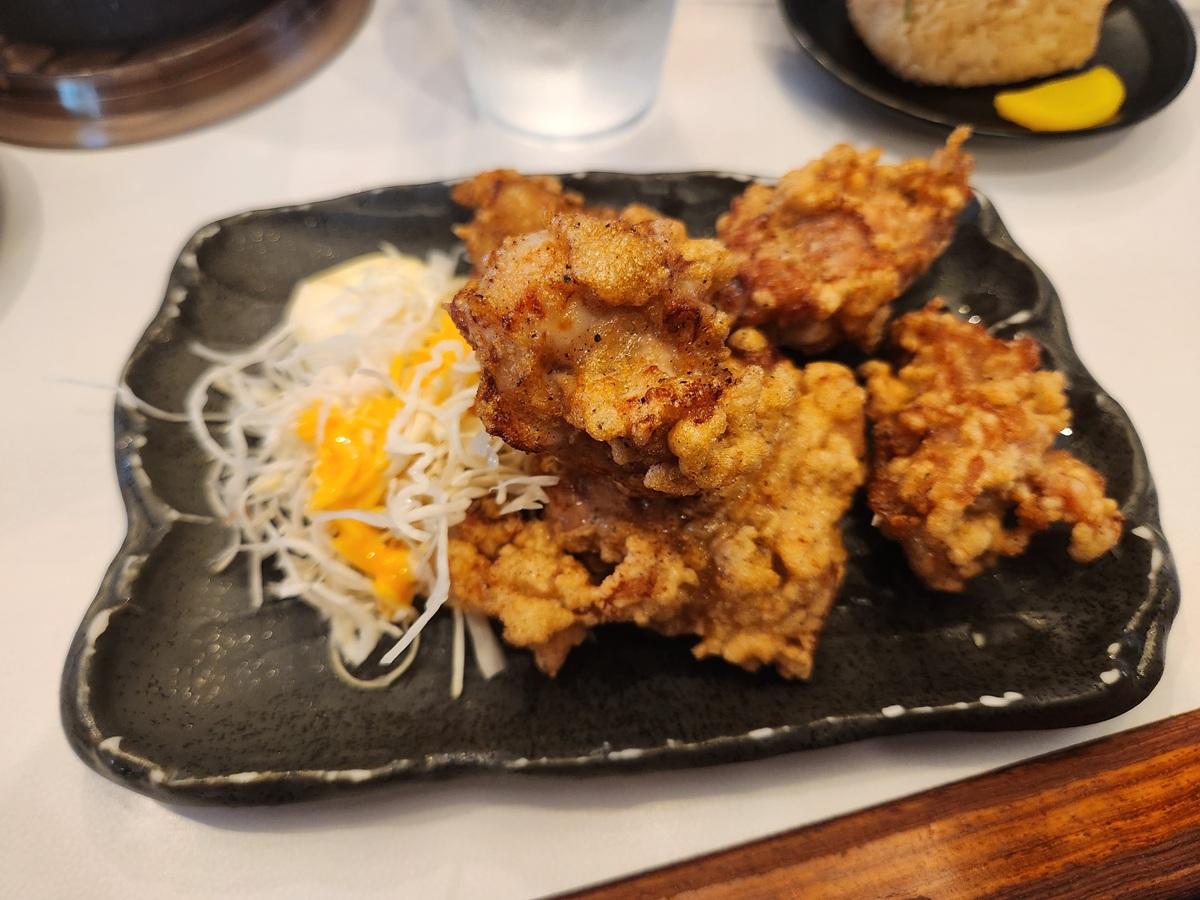
For lunch, we ate at NEW Taihou, a tiny 11-seat restaurant that has some of the best ramen in Kyoto.
They have ramen, aburasoba, dumplings, chicken kuraage, onigiri (rice balls), and donburi (rice bowls).
We had the Suji-don (beef rice bowl), onigiri, and the chicken nanban.
Higashi Hongan-ji Temple
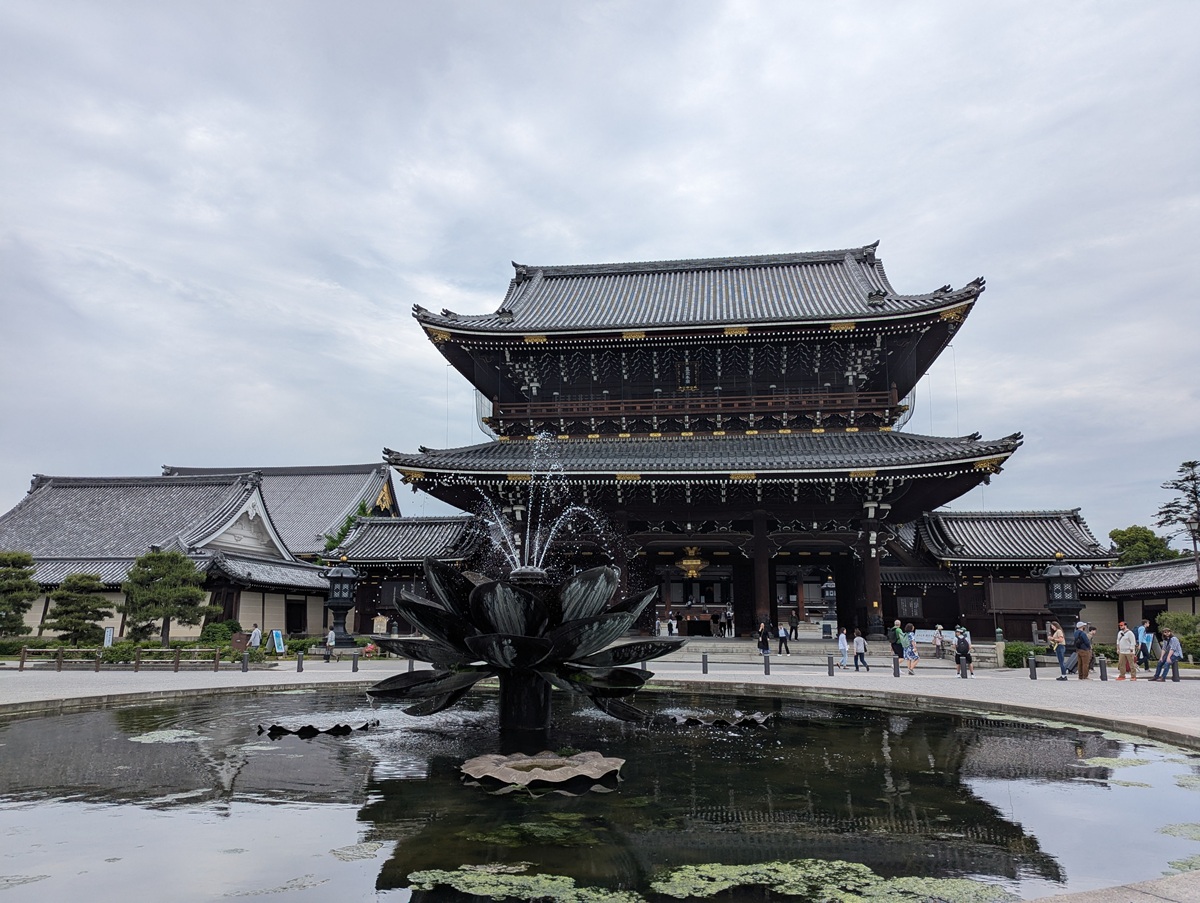
Higashi Hongan-ji Temple is a Buddhist temple that was established in 1602 and later rebuilt in the late 1800s.
We entered through the Founder’s Hall Gate (Goei-dō-mon) and then made our way through the temple buildings. We started at the Amida Hall (Amida-dō).
Before entering the temple buildings, we had to take off our shoes and place them in plastic bags to carry with us so we’d have them at the other side of the temple once we’d gone through all the buildings.
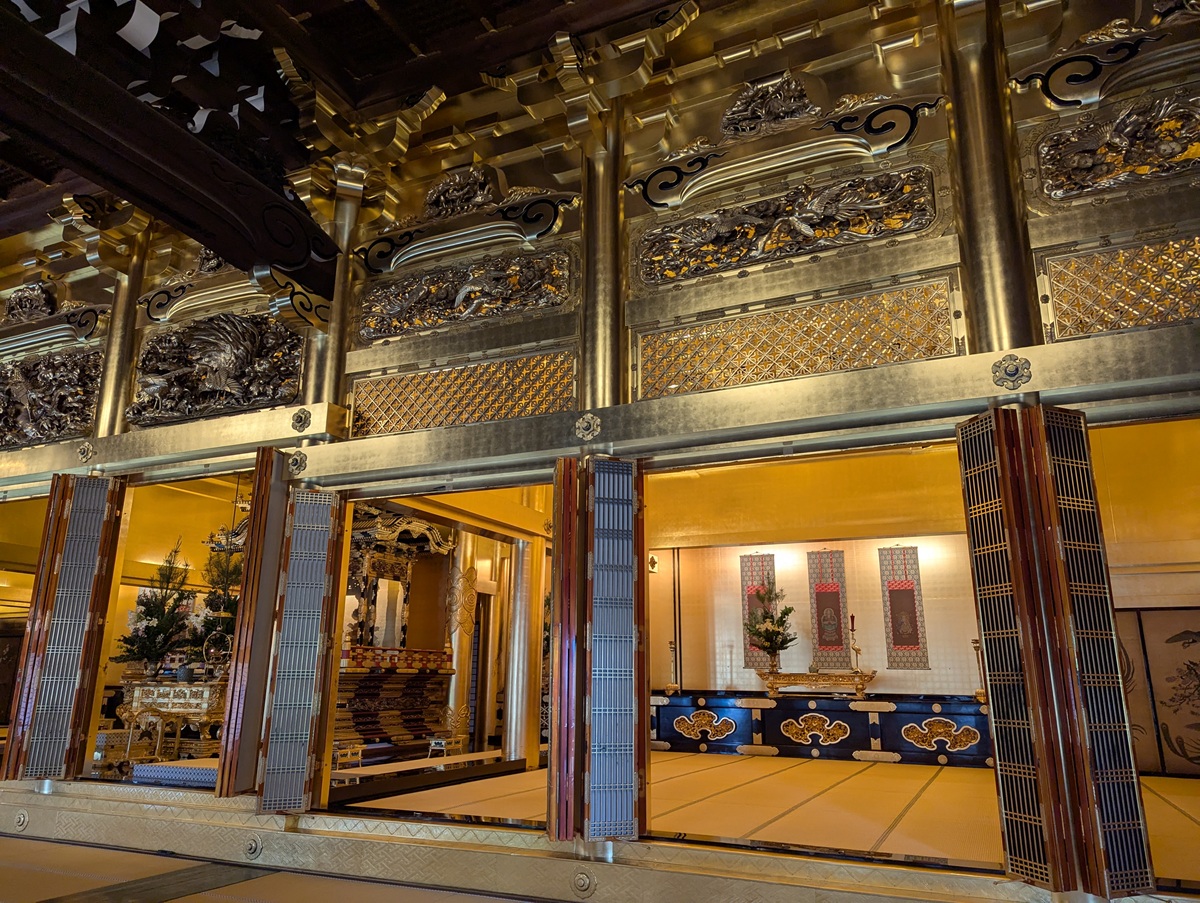
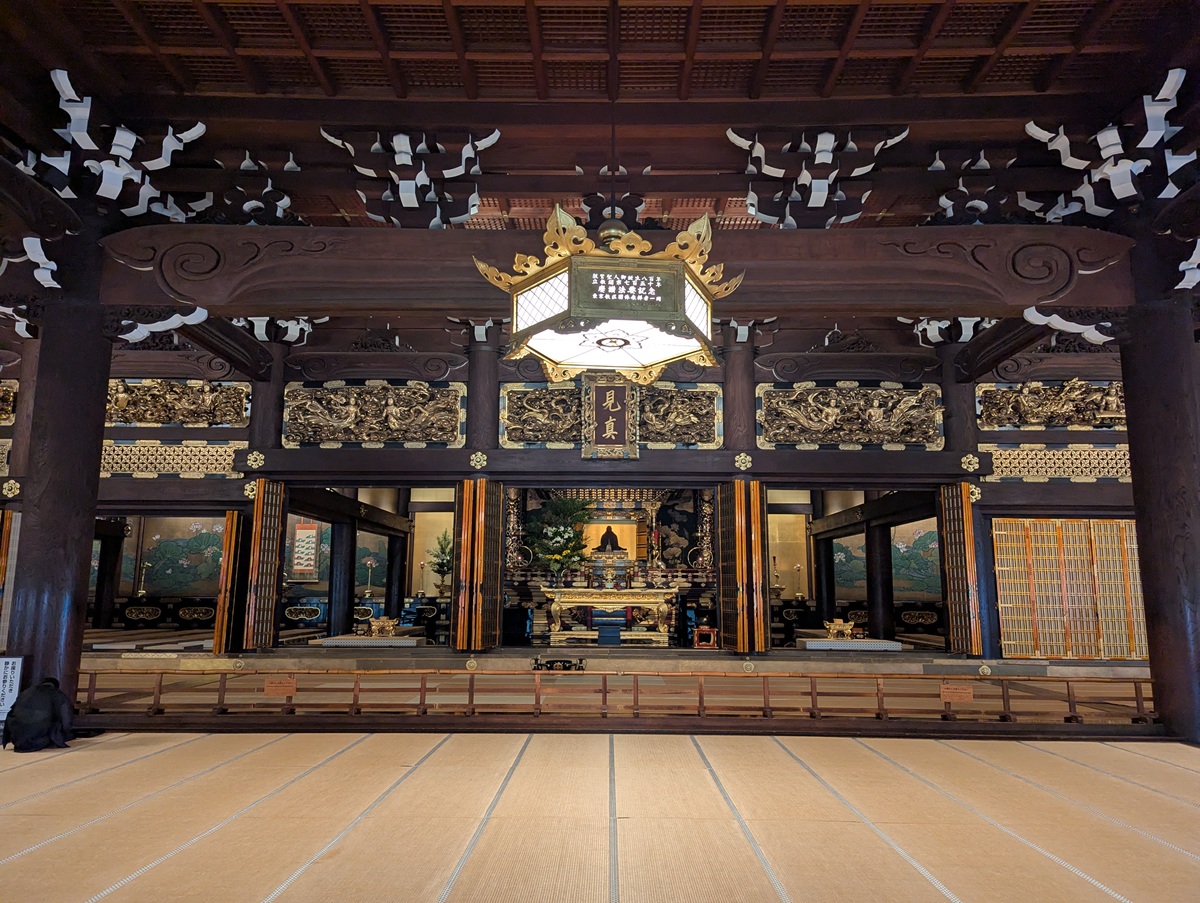
Amida Hall and the Founder’s Hall (Goei-dō) are beautifully gilded in gold leaf. The Founder’s Hall is one of the largest wooden structures in the world at 249 feet long, 190 feet wide, and 125 feet high.
You’ll make your way through the buildings to the Gallery and Audiovisual Hall, which many people miss. The permanent exhibit covers the life of Shinran, and they feature special exhibitions as well.
Check in to Hotel Kuu Kyoto

Hotel Kuu Kyoto is located right across the street from Higashi Hongan-ji Temple.
The hotel has comfortable rooms with more space than we had in our Tokyo hotel, plus a public bathhouse for ultimate relaxation.
We had a Standard Double room, which had a spacious king-sized bed (two twins pushed together). We got their breakfast buffet each morning as well. And they even have a free bus that will take you one-way to some of the major sights, which our friends took advantage of one day and said they enjoyed.
Book your stay at Hotel Kuu Kyoto here.
Public Baths at Hotel Kuu Kyoto

The public baths are separated by gender. There’s a large bath facility with a sauna, cold-water bath, hot bath, and outdoor bath plus showers and a changing room. Then there’s the small bath facility with just a hot bath and the showers and changing room. The facilities are assigned male or female each day, and it switches every day.
After checking-in, we decided to have our first Japanese public bath experience.
At a Japanese onsen, you bathe completely naked. So you have to strip down and completely cleanse yourself in the public shower before enjoying the baths. Here’s a full guide to onsen etiquette (the hotel also provides an illustrated guide).
For the first day, the ladies had the smaller facility. This one was nice when it was just me and my friend. But we didn’t spend long because it’s just a hot tub, and well, we got hot. We tried it again another day, and there were more people, so it was loud and less relaxing inside. But again, no one stays long in here.
The second day was the ladies’ turn in the big facility. This one was really nice because there’s a lot to do. Even when it was busy, it didn’t feel crowded because there were multiple baths to use. And the outdoor bath was so nice!
We were definitely the only non-Asians that I saw making use of the baths. And we Americans can be so prudish about nudity. But after the first time, you hardly even notice how naked you are in a room full of stranger!
Have tattoos? Typically, tattoos in an onsen are a no-no, but modern times are changing that. Hotel Kuu Kyoto allows tattoos in the public baths. You don’t have to cover them up.
Dinner at Saganoya
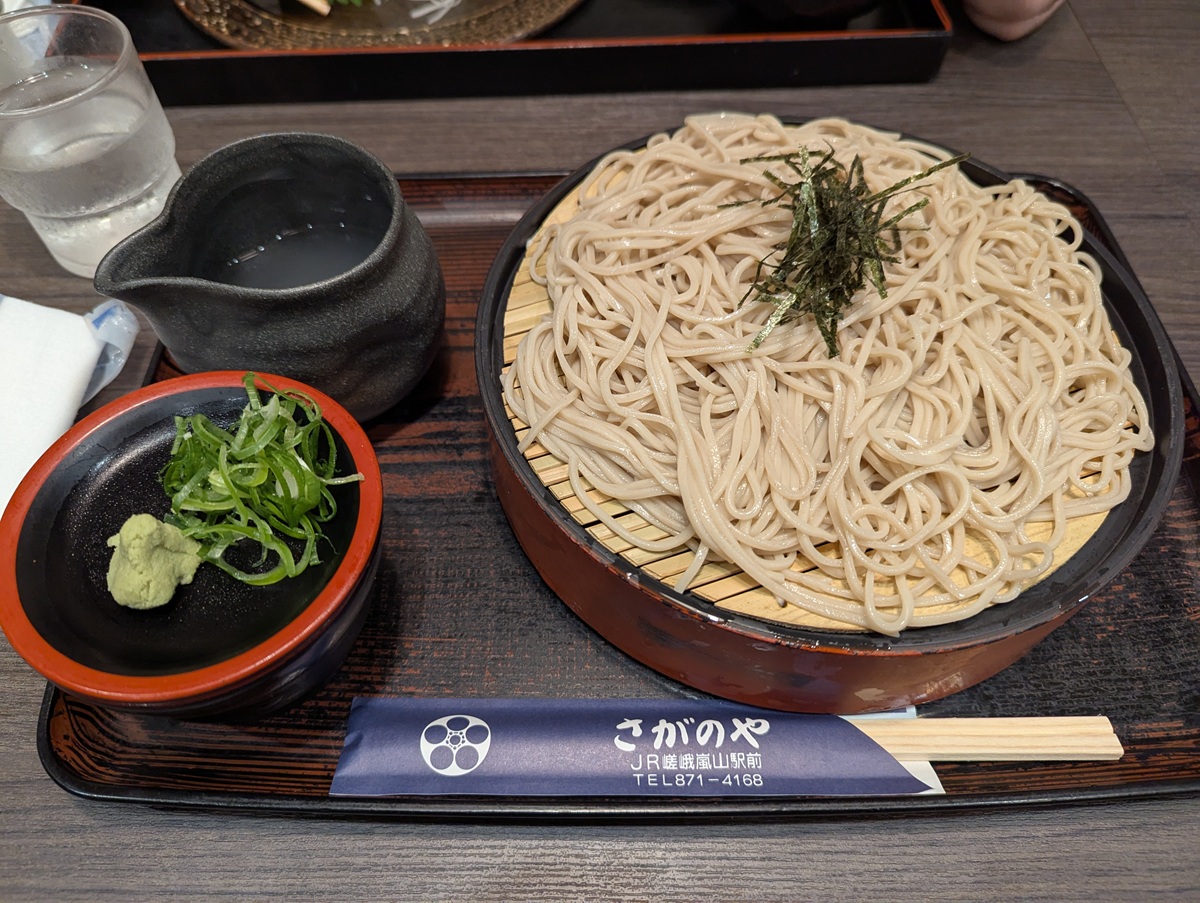

For dinner, we headed to Saga-Arashiyama and ate at Saganoya.
This restaurant has a bunch of different options, from tofu to zaru soba to sashimi to rice bowls.
Our group had a variety of items, like zaru soba (a cold noodle dish), sashimi meal, tuna bowl, special egg bowl, tempura shrimp, and a tempura shrimp bowl.
Arashiyama Bamboo Forest Ghost Tour
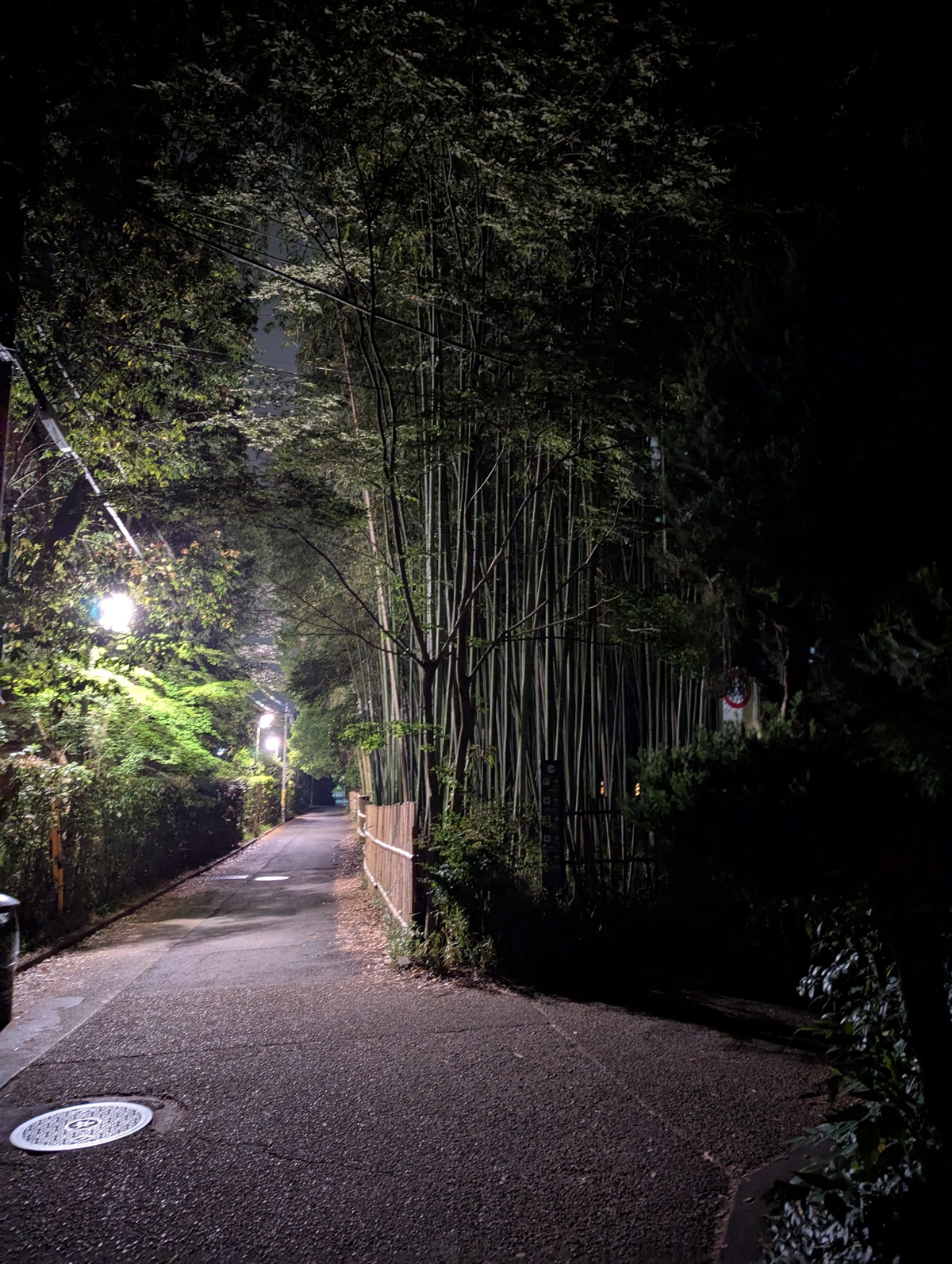
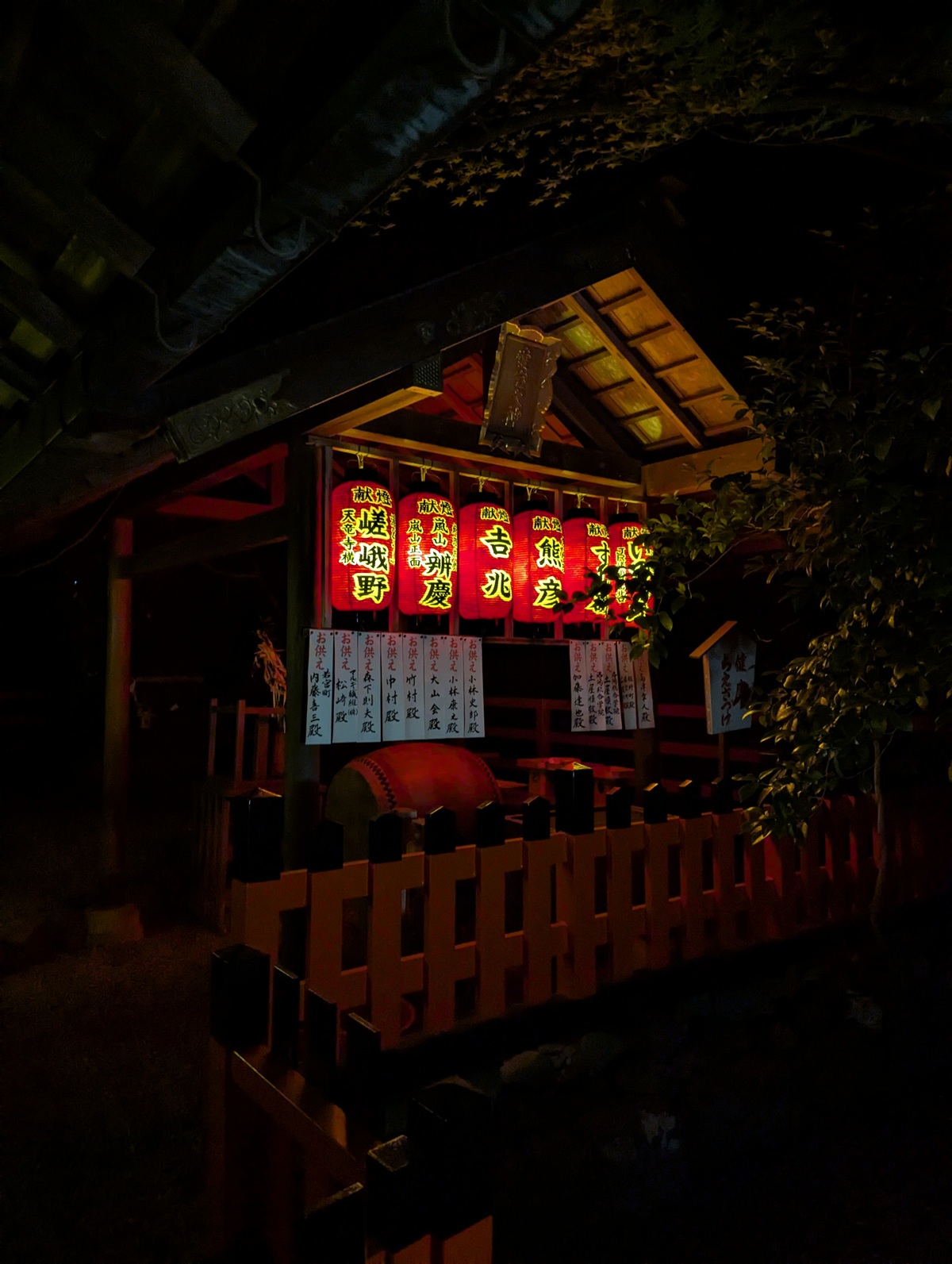


After dark, Saga-Arashiyama pretty much becomes a ghost town. During the day, it’s a popular spot for the Arashiyama Bamboo Forest and the Arashiyama Monkey Park Iwatayama, but after dark there is almost nobody around.
So it’s only fitting that we took a ghost tour of the Arashiyama Forest.
When you walk around at night, there’s hardly another person in sight, let alone any other tourists. So listening to stories of Kyoto’s haunted spots and legends is even more eerie on the dark, deserted street.
The tour took us from the train station, through the empty streets, past cemeteries and deserted playgrounds, over haunted railroad tracks, and finally into the Bamboo Grove.
The final challenge on this tour is to walk through the Arashiyama Bamboo Grove, in the night, in the dark, all on your own. (You can walk down in pairs if you want. I made Kevin go with me because I’m susceptible to bad dreams, so if I went alone, I wouldn’t be sleeping, which meant he wouldn’t be sleeping.)
I take a lot of ghost tours, and I don’t normally get spooked. But something about the seclusion of this one (and maybe the fact that every Japanese ghost is out to kill you) in the darkened bamboo did give me chills. You can read my full review of our ghost tour here.
Book your Arashiyama Bamboo Forest Ghost Tour here.
Day 7: Kyoto
On our next day in Kyoto, we explored mainly in Gion where we learned how to make ramen, visited Kiyomizu Temple, and met a geisha.
Ramen Noodle Making Class
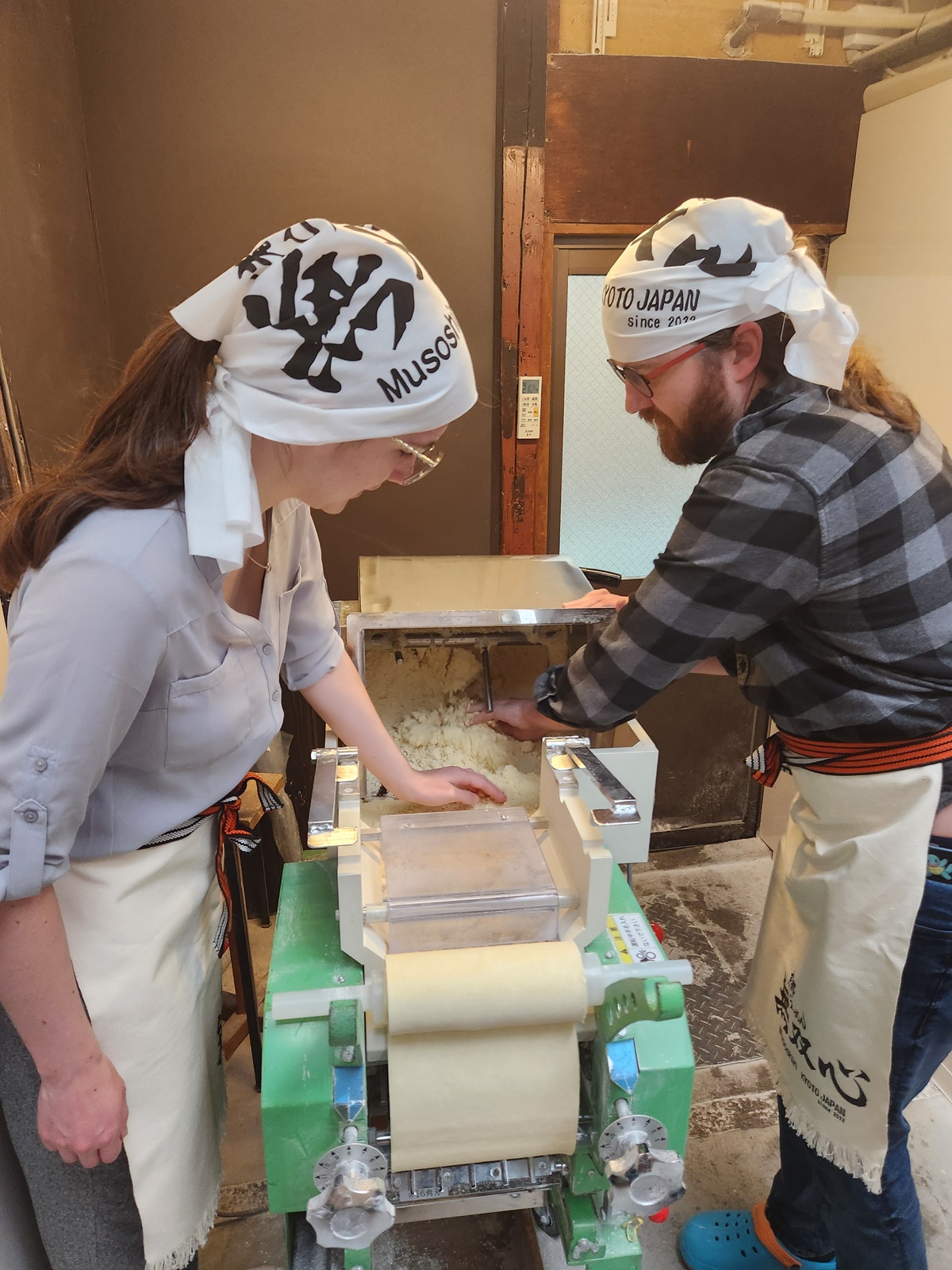
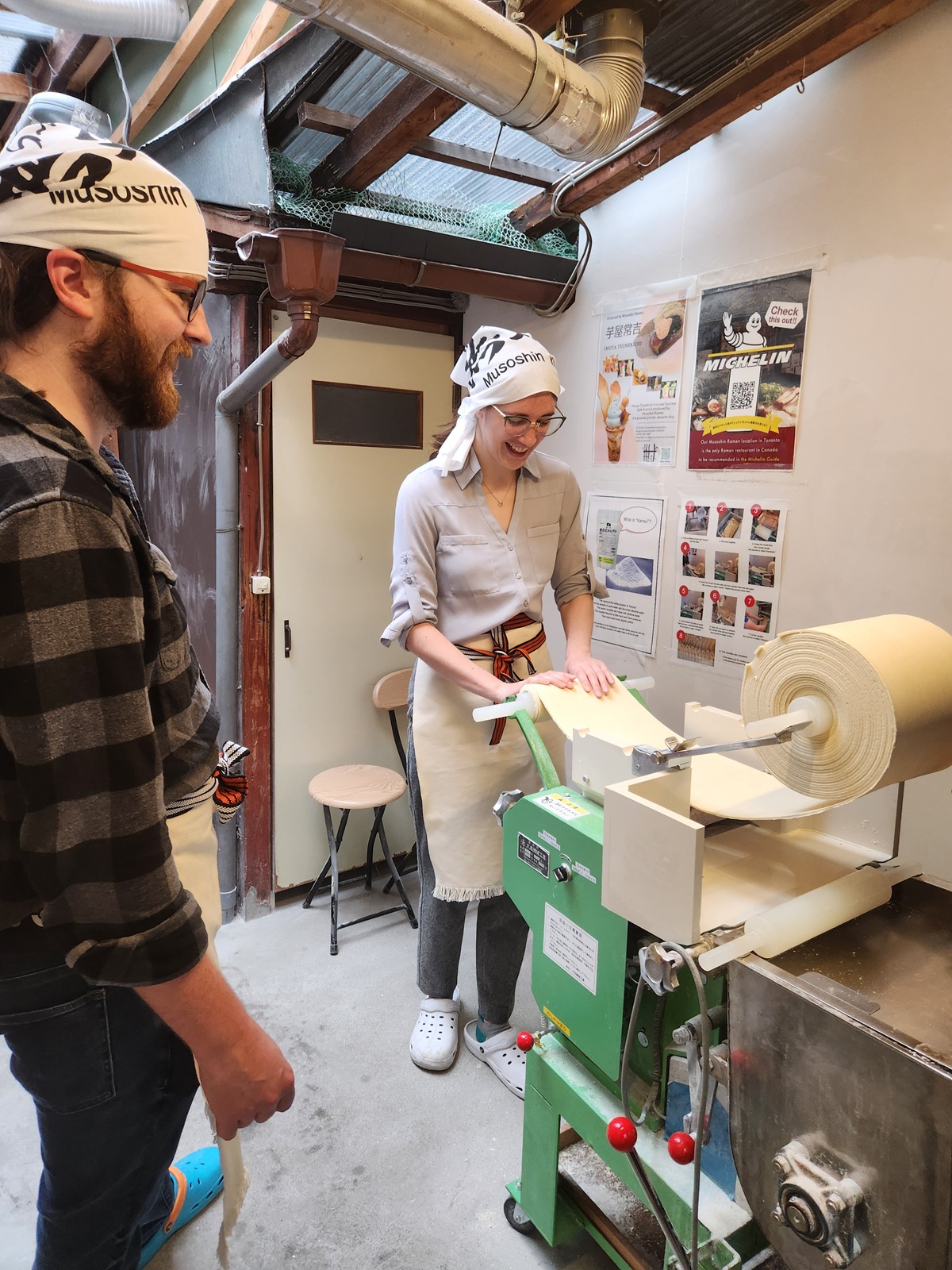
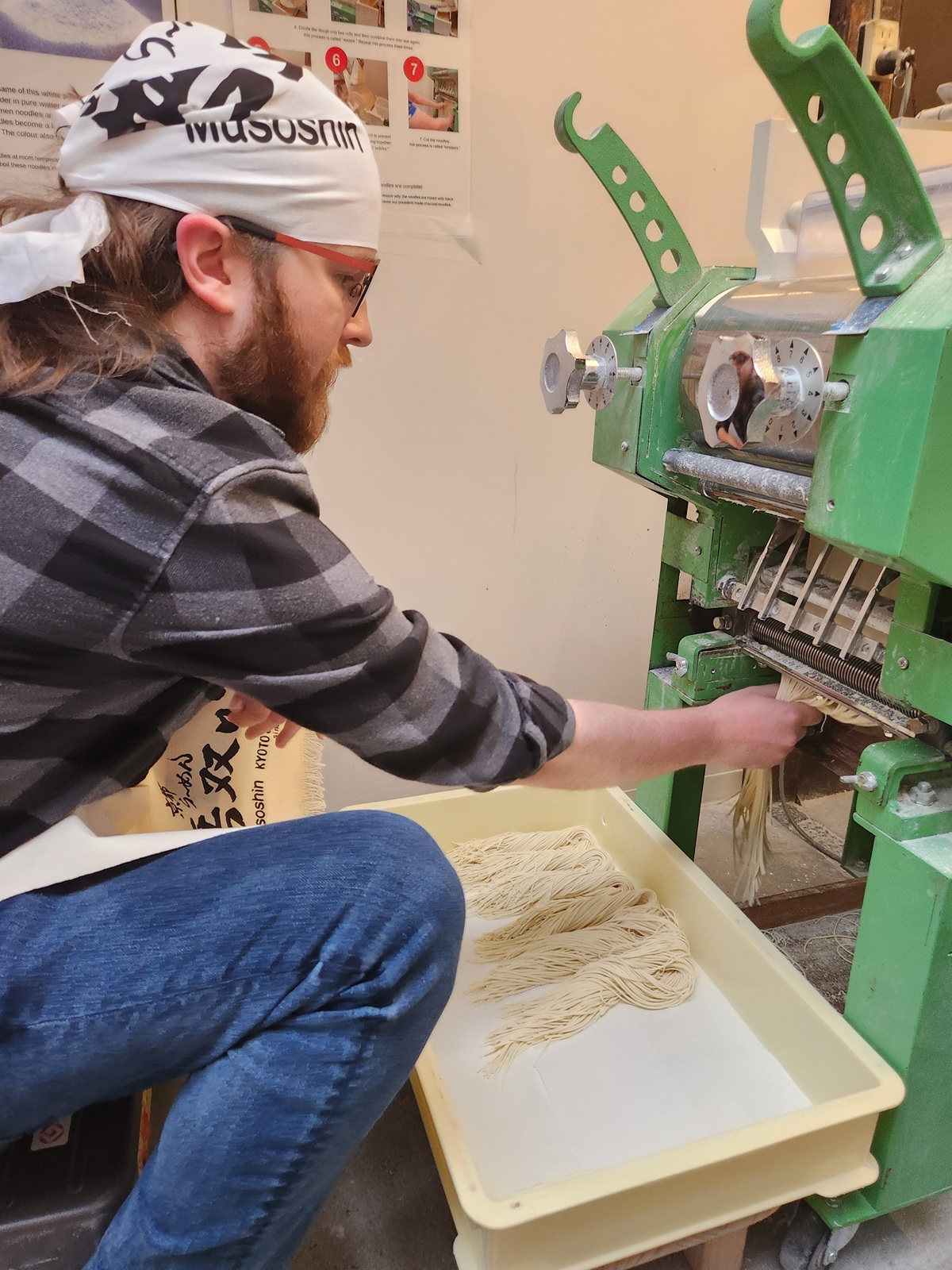
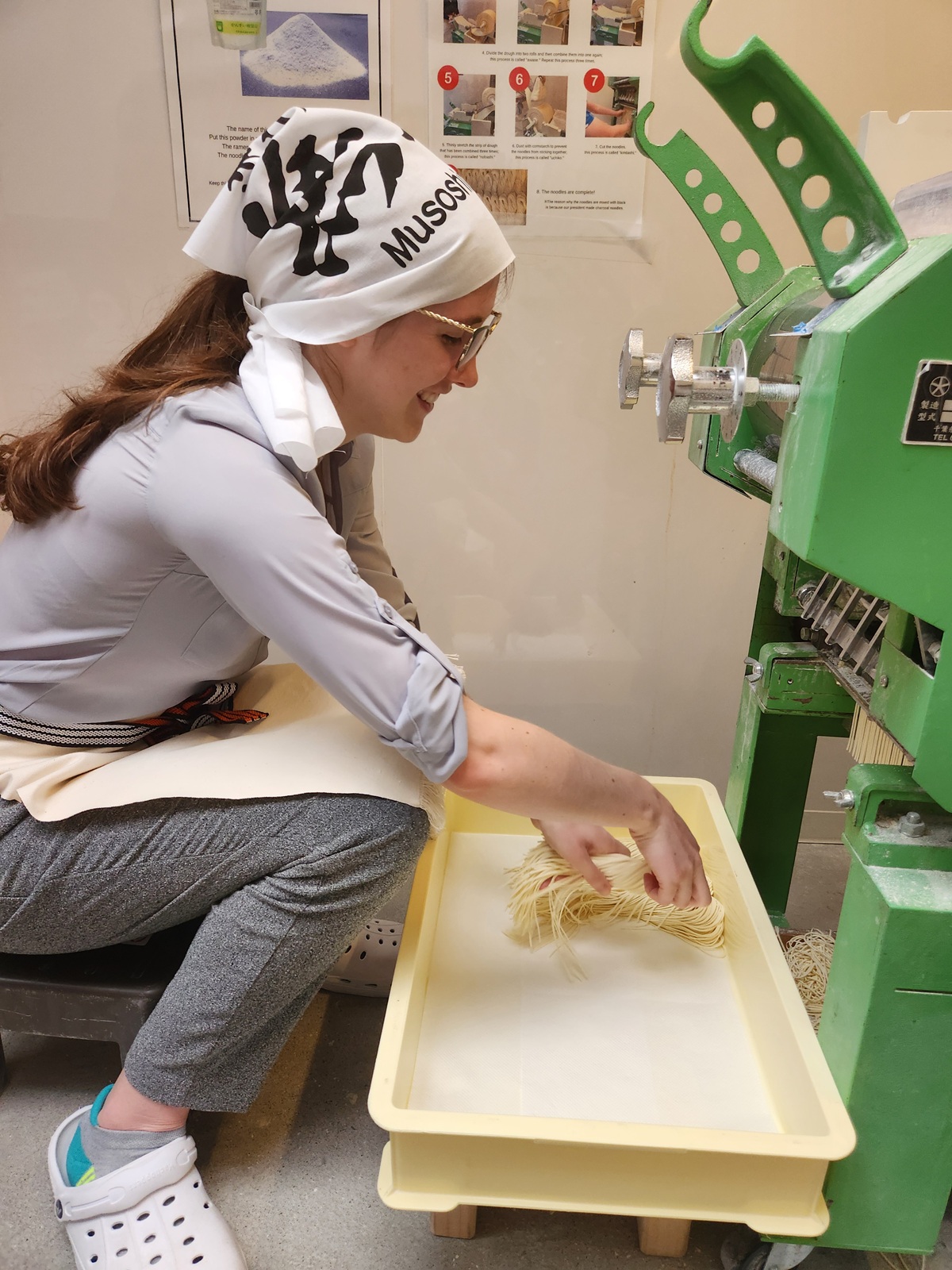

Kevin and I made our way to Kyoto’s historic Gion district to the highly-rated restaurant Musoshin where we would learn how to make ramen noodles, which was one of the most fun things we did in Kyoto.
After donning our apron and tenugui towels as hair covers, we were ready to start making noodles!
We learned how the dough is made, then we got to use a professional ramen machine to make the sheets of dough perfect and cut them to the right length. Since steps of the process are repeated multiple times, Kevin and I both got the chance to do each step.
After we made the noodles, we got to enjoy a bowl of ramen in the restaurant for lunch (a bowl of ramen and a drink are included in the experience). Plus, we got to keep the tenugui as a souvenir.
You can read about the entire adventure in my full ramen noodle class review here.
Book your Kyoto Ramen Noodle Making Class here.
Lunch at Musoshin Gion
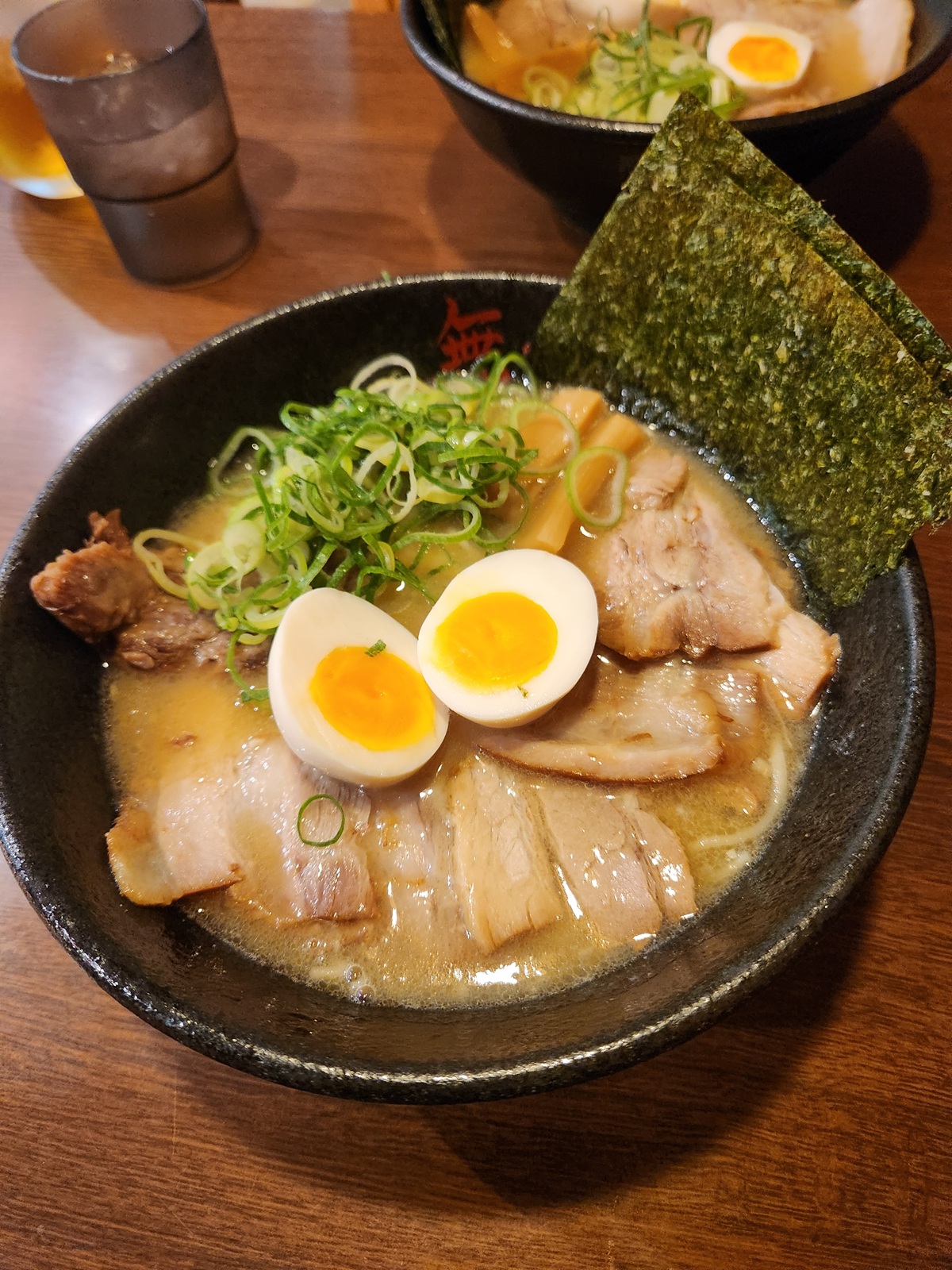
Musoshin Gion is a delicious ramen shop where you can enjoy fresh homemade ramen noodles (whether you participated in the ramen noodle making class or not).
This is one of the rare ramen shops where you can find a fully vegetarian or vegan ramen (a lot of other places will have a vegetable option that’s still in a meat-based broth).
We did the Special Musoshin ramen with all of the toppings. We also had a side of their fried chicken, and umeshu (plum wine) to drink.
Kiyomizu-dera Temple

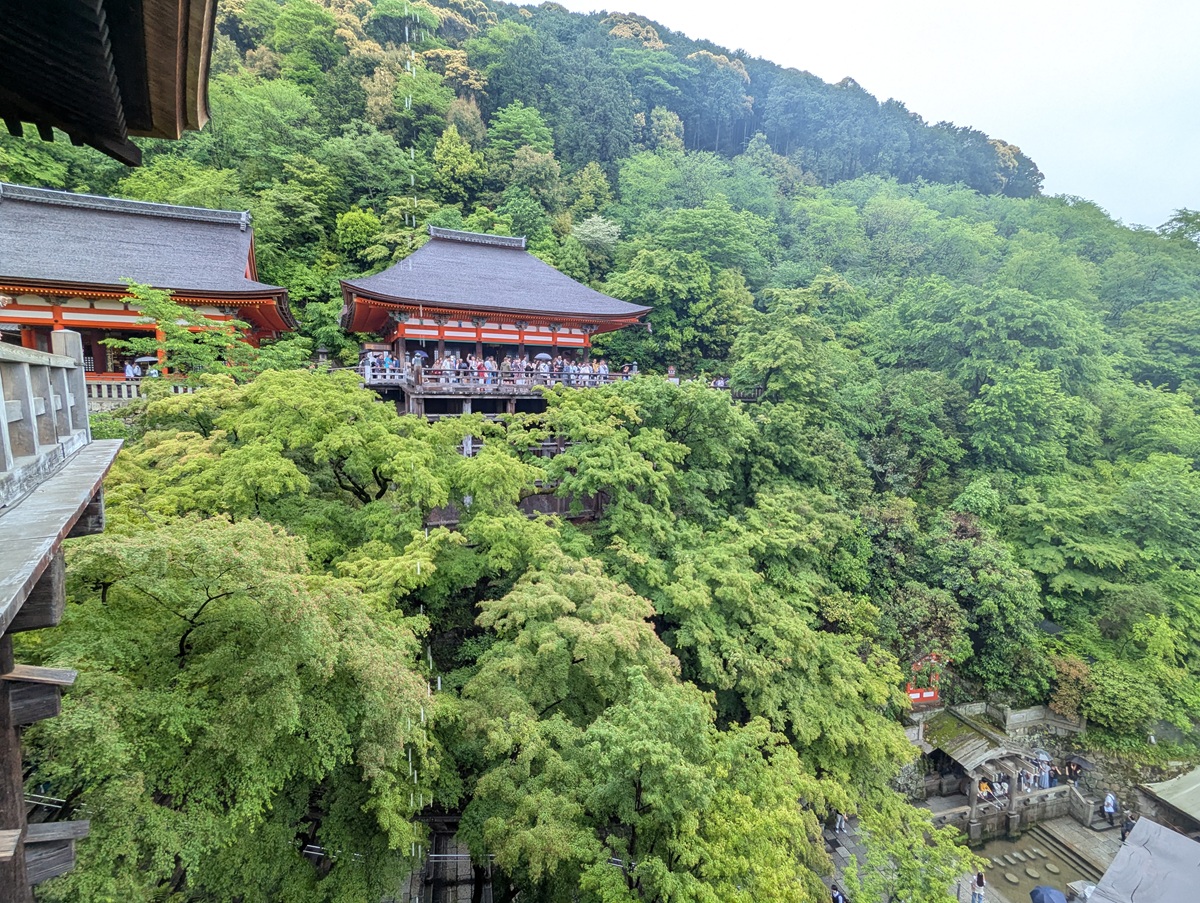
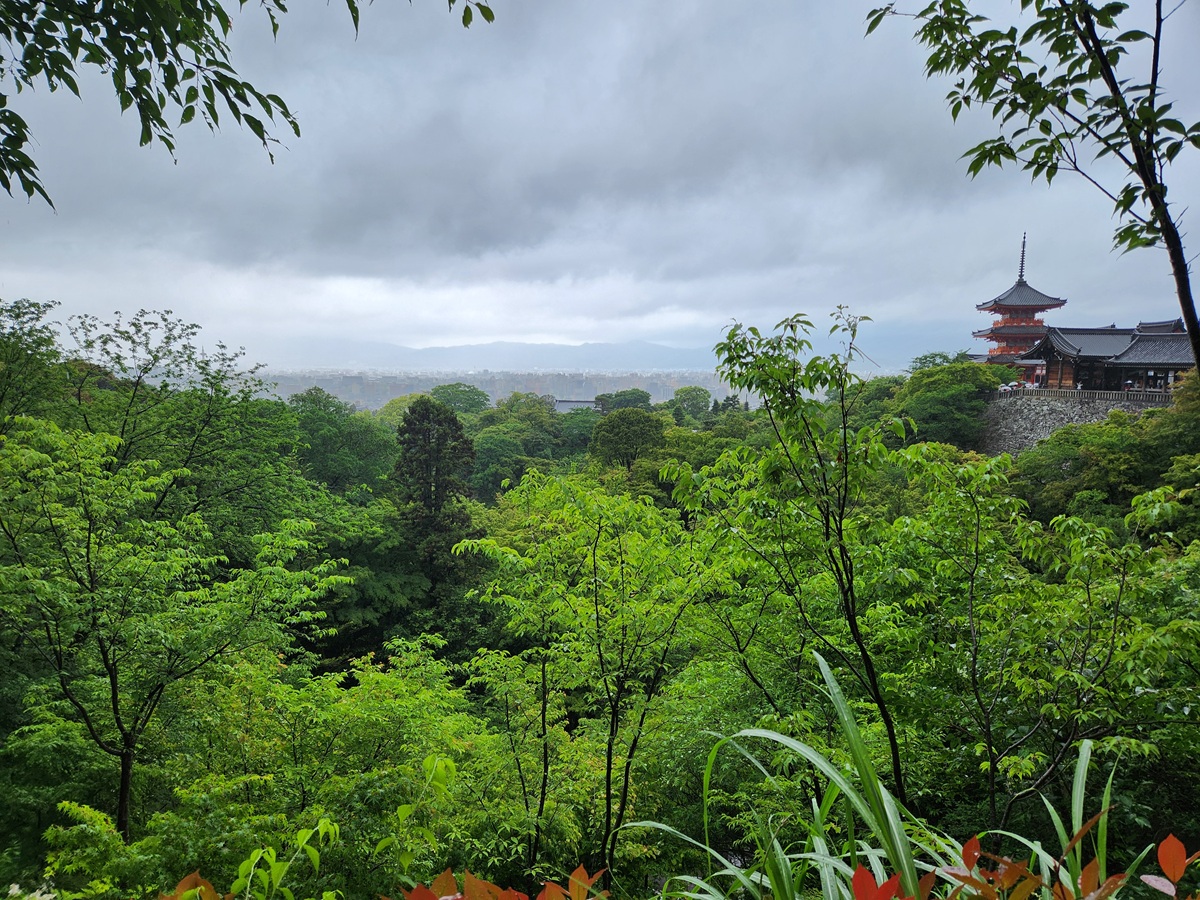
After lunch, we walked up to Kiyomizu-dera Temple halfway up Mt. Otowa. It was a crowded walk up Sannenzaka, a pedestrian street lined with souvenir shops.
Kiyomizu-dera Temple is a Buddhist temple dedicated to Kannon, the deity of mercy and compassion.
A visit to the temple starts at Nio mon, the main gate, and Sai-mon, the west gate that’s known for its views of the sunset.
Further along at Hon do, the main hall, you can get incredible views of the pagoda peeking between the trees. Hon do is an incredible wooden structure constructed in 1633 that stands on Mt. Otowa’s steep cliff.
You can get a better view of it from Okuno-in Hall, along with views of Kyoto below. The scenery all around Kiyomizu-dera Temple is absolutely stunning, even on a rainy day like we had.
Public Baths at Hotel Kuu Kyoto

The afternoon is a great time for a soak at the public baths at Hotel Kuu Kyoto.
It’s the perfect way to rest and relax after the long walk up the mountain to Kiyomizu-dera Temple.
Dinner at FamilyMart
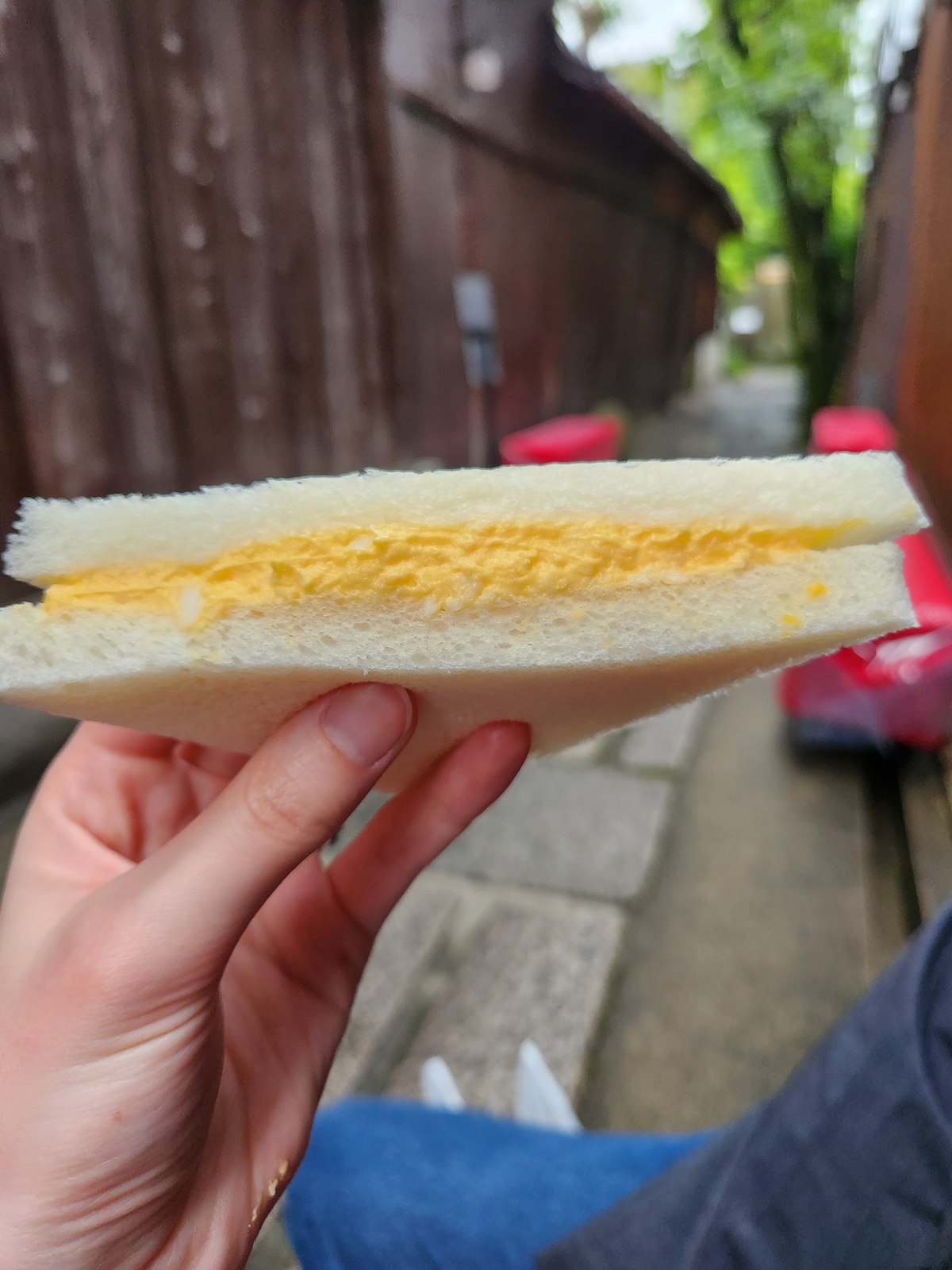
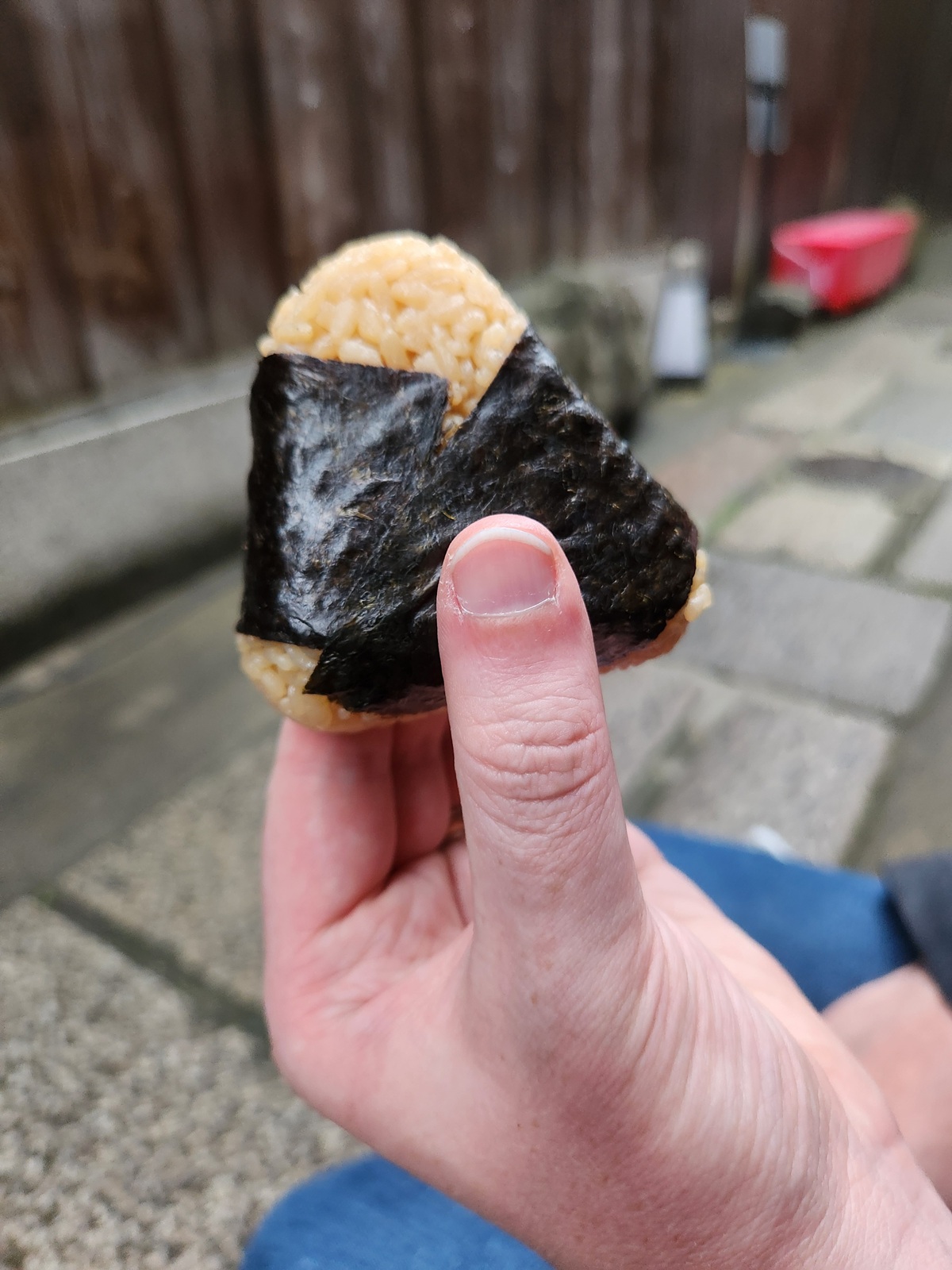
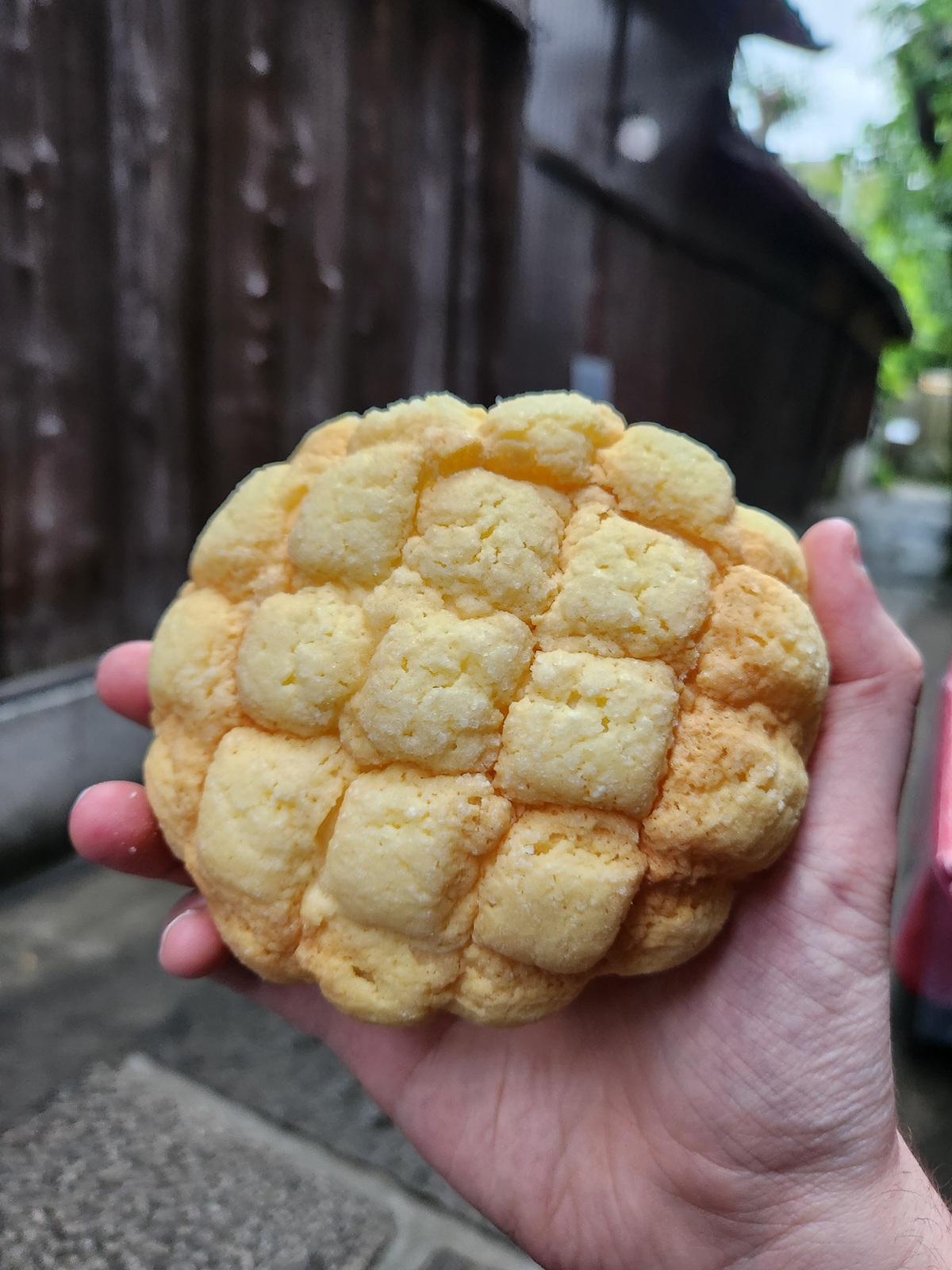
FamilyMart is a popular Japanese convenience store known for its delicious and convenient ready-to-eat food options.
And since we’d had a heavy ramen lunch, we were happy to have a lighter convenience store dinner.
The Fami-Chiki is a cult favorite (boneless fried chicken that’s hot and ready to eat). I was a big fan of their egg sandwich, made with a simple egg salad. We also got a pork onigiri and their famous melon bread. FamilyMart is also a great place to try out a bunch of different drinks.
Geisha Show


One of the highlights of our trip to Kyoto was meeting a Maiko (an apprentice geisha).
The experience included an English-speaking guide who explained the meaning and symbolism of the Maiko’s kimono and dance.
We were able to ask questions in a short Q&A session. Then Kevin got to play a traditional drinking game (ozashiki asobi) with the Maiko; the game they played is a reflex game called Konpira Fune Fune, and Kevin did really well!
Then we got to take pictures with the Maiko. (We were asked not to share any photos or videos online that show the geisha’s face, so I will keep those photos to myself.) The experience ended with the Maiko performing a short traditional dance for us.
You can read my full review of our geisha experience here.
There are a good number of geisha experiences offered in Kyoto. Doing just a show/meet-and-greet is typically the cheapest option. There are also show + Gion tour options, which I’d considered because it would give a good background on geishas and the geisha district before the show, but it wasn’t available on the day we wanted. And the most expensive options are a dinner with a geisha, some which also include a walking tour.
Book your Geisha show and experience in Kyoto here.
Day 8: Kyoto & Osaka
On day 8 of our Japan trip, we woke up early to hit some of the popular Kyoto spots before the crowds set in, and then we took a short afternoon trip to Osaka by train. This was our longest day since we were up so early!
Fushimi Inari Shrine & Senbon Torii (One Thousand Torii Gates)
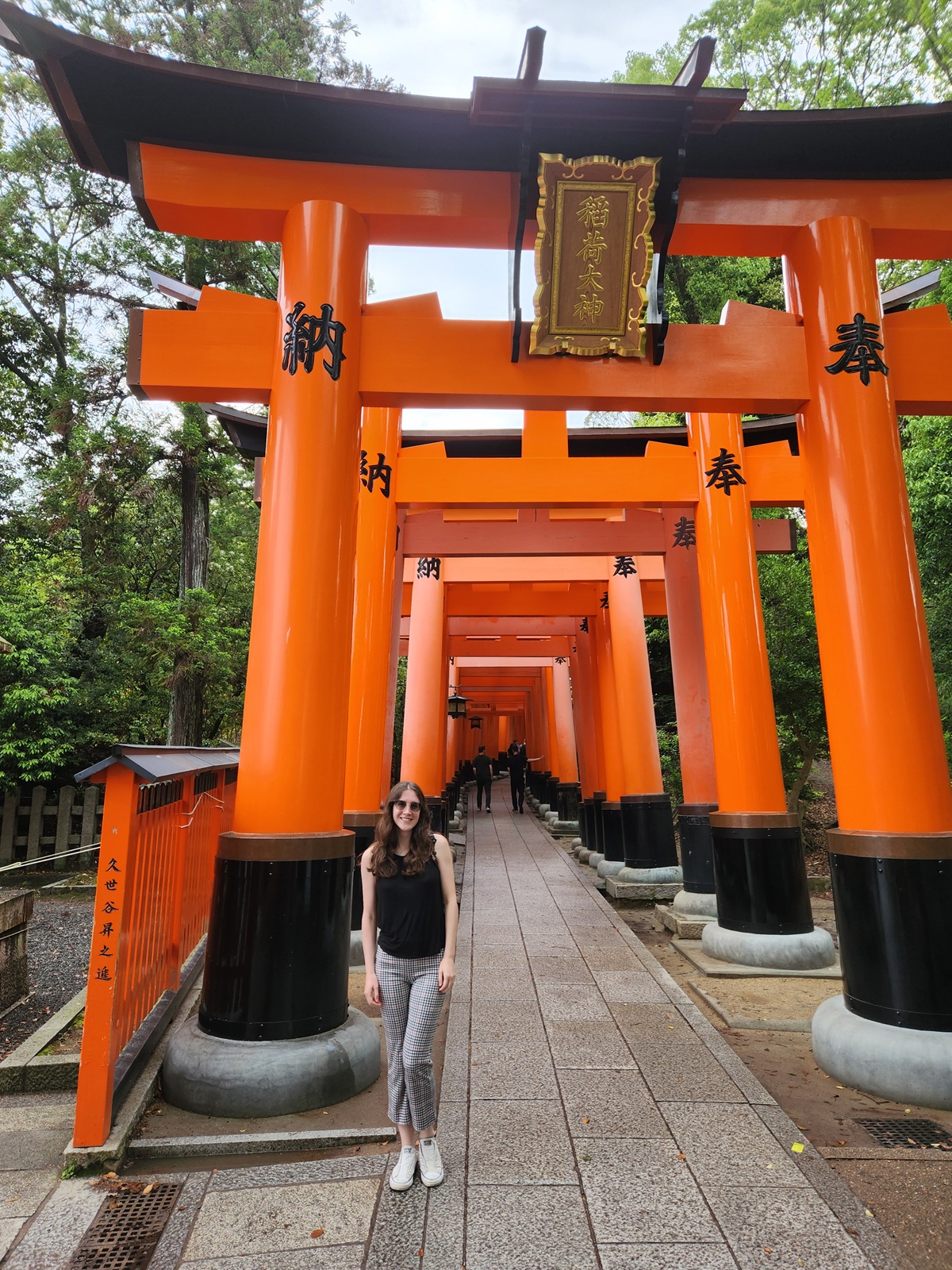


Fushimi Inari Shrine is an important Shinto shrine and is famous for its thousands of torii gates straddling the trails.
The shrine is dedicated to Inari, the Shinto god of rice. Foxes are thought to be Inari’s messengers, so you’ll see plenty of fox statues around this area.
Senbon Torii (“one thousand torii gates”) is the Instagrammable draw of the Fushimi Inari Shrine. Two rows of the orange torii gates donated by individuals and companies create a tunnel for your hike up the mountain. There are about 800 torii gates in the Senbon Torii and about 10,000 torii in total throughout the shrine.
The shrine is extremely popular, so in order to avoid the crowds, we arrived early in the morning. The shrine is accessible 24 hours a day, so if you’re a morning person or a night person, you can find a time to avoid the crowds.
We arrived around 6:15 a.m. and we certainly weren’t the earliest. But we also weren’t over-crowded and had plenty of opportunity to take pictures without others in the background, and without getting in the way of others.
It’s about a 30 minute hike to the halfway point up the mountain. Here, the torii gates start to thin out and so do the crowds. You’ll also get some great views over Kyoto here at the Yotsutsuji intersection.
From here, the trail splits into a circular route to the summit. Most people don’t go all the way to the summit, but I recommend it: it’s great exercise and there won’t be nearly as many people.
On the way back down, you can shop the local restaurants, sweet shops, and souvenir shops. These stalls usually open around 9 a.m. or 10 a.m., so depending on what time you start and how long you hike, you can visit them on your hike down.
It took us about 1 hour and 45 minutes total to hike the main trail to the summit and back. It could take longer if you explore more of the side paths or hike slower
Nanzen-ji Temple

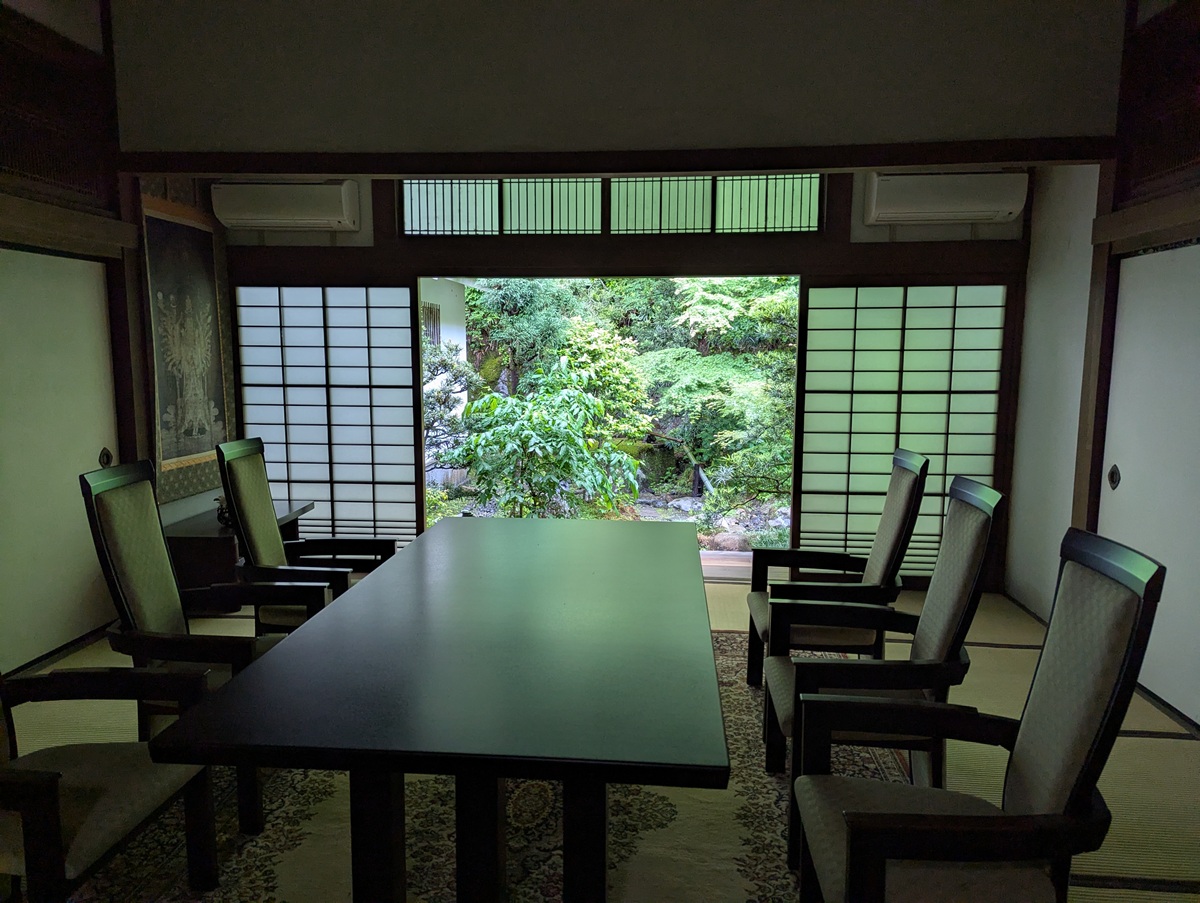
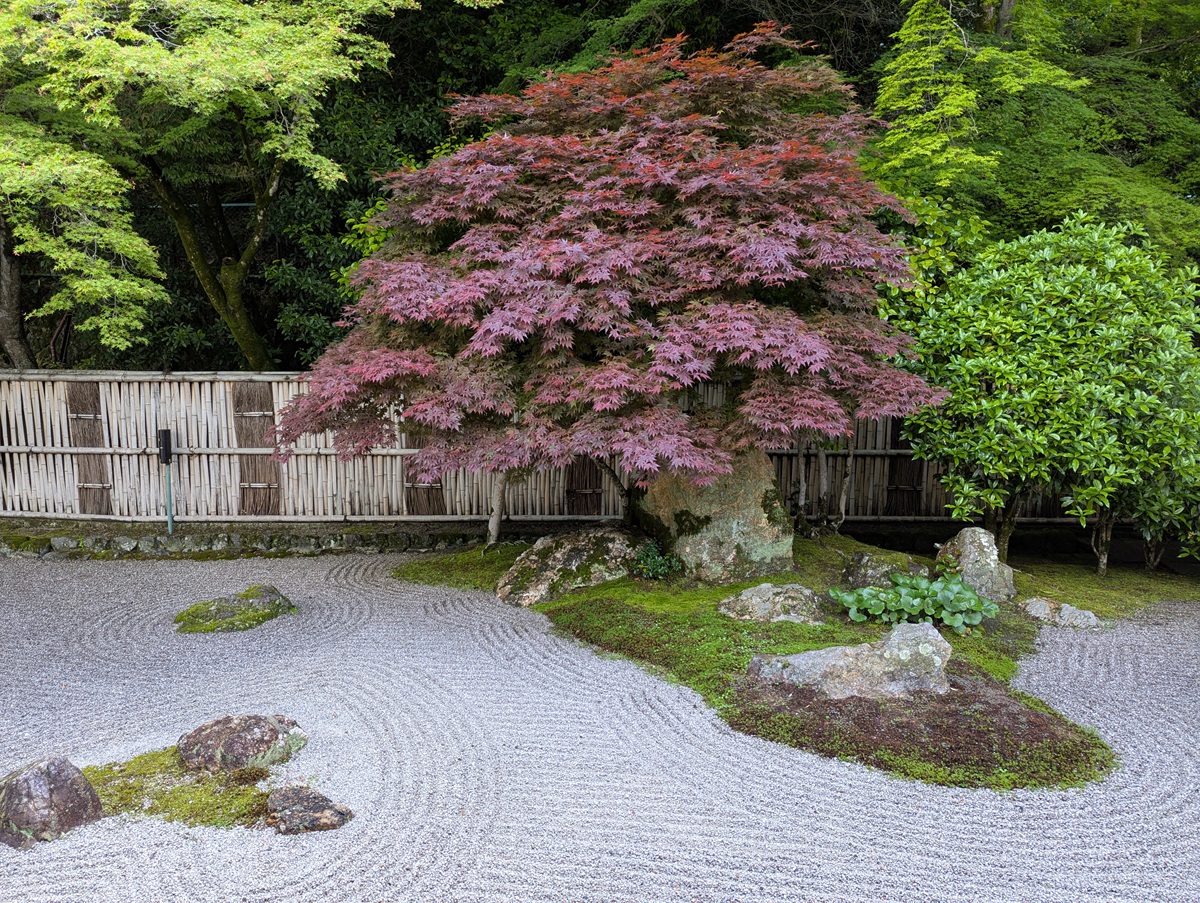

Nanzen-ji Temple is a Zen Buddhist temple that dates back to 1291. The main grounds of the temple are free to visit, while some of the important structures require an entry fee.
The Sanmon is the main gate of the temple. You can walk around the lower level for free, but if you want to see the views from the top it will require a small fee.
The Hōjō is the abbot’s quarters. The small fee here is worth it to see the beautiful golden screen paintings inside as well as the zen rock garden.
The Nanzen-in Temple requires another small fee, and it has another tranquil garden.
The Nanzen-ji Aqueduct carries irrigation water from the Lake Biwa Canal through the temple grounds to Kyoto City. There is no fee to see the aqueduct.
Nijō Castle
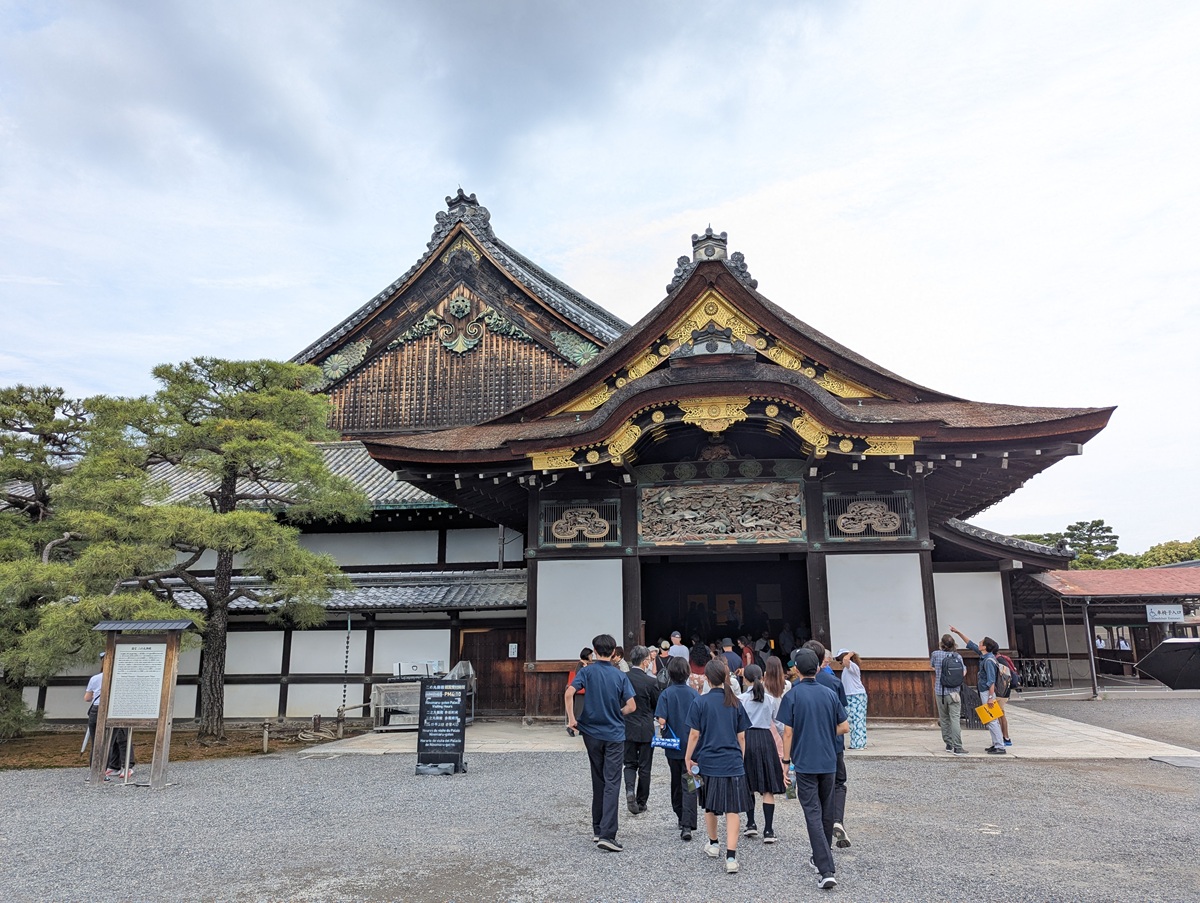
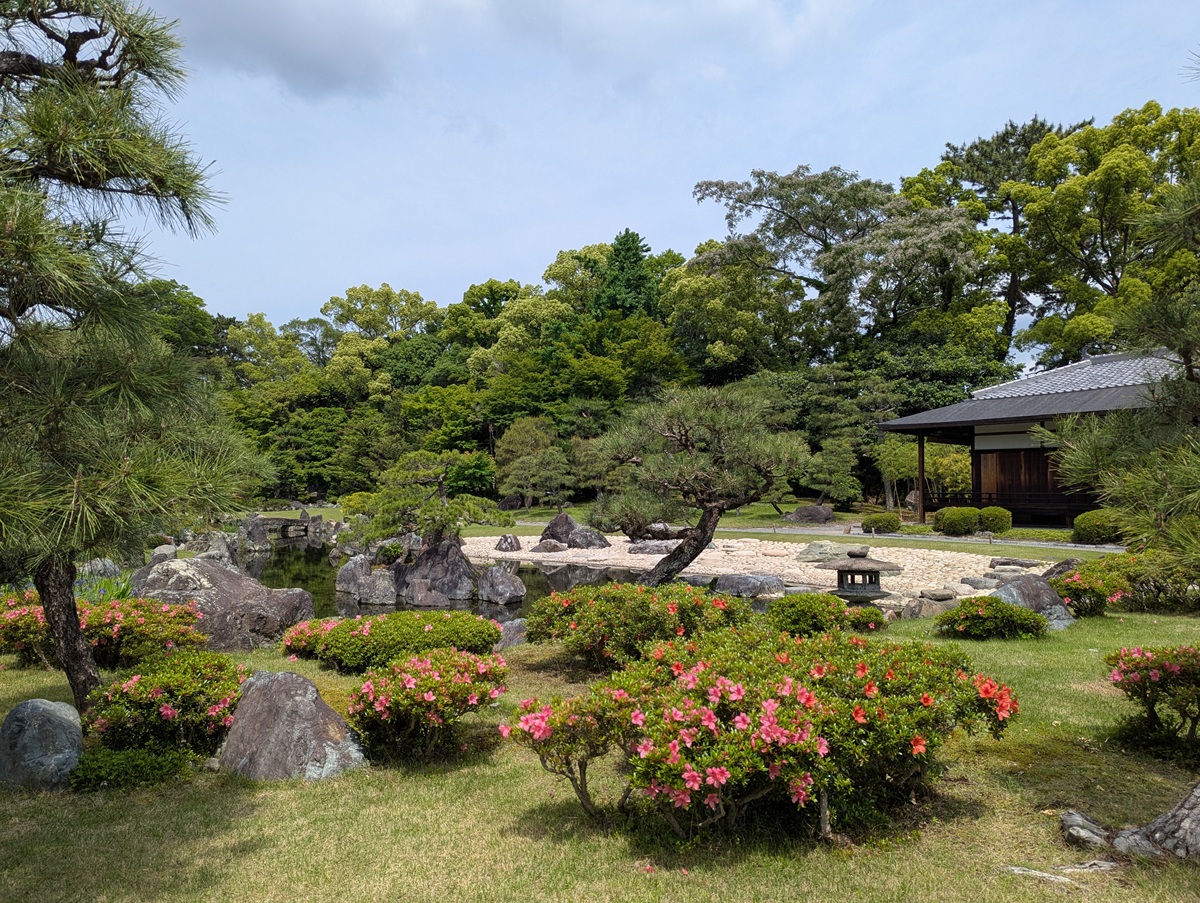


Nijō Castle was constructed in 1626, and what remains today are the fortification’s two moats, the Ninomaru-goten Palace, the ruins of the Honmaru-goten Palace, and several beautiful gardens.
There’s a lot of ground to cover (the castle is laid out over 68 acres), and there is separate admission for the castle grounds, the Ninomaru-goten Palace, the Honmaru-goten Palace (advanced reservations required), and the Painting Gallery. I recommend doing the castle grounds admission + Ninomaru-goten Palace.
The Ninomaru-goten Palace is made up of 6 connected buildings in the shoin-zukuri architectural style. It’s the only surviving example of a fortified palace complex. This was the Kyoto residence of the shōgun, so all the decorations were elaborate and highlighted in gold leaf in order to impress visitors.
While the Honmaru-goten Palace requires a separate entrance fee, you can still visit the Honmaru Garden. This is where you’ll find the base of the keep tower, which you can climb and get a nice view of the castle complex.
Lunch at Musashi Sushi
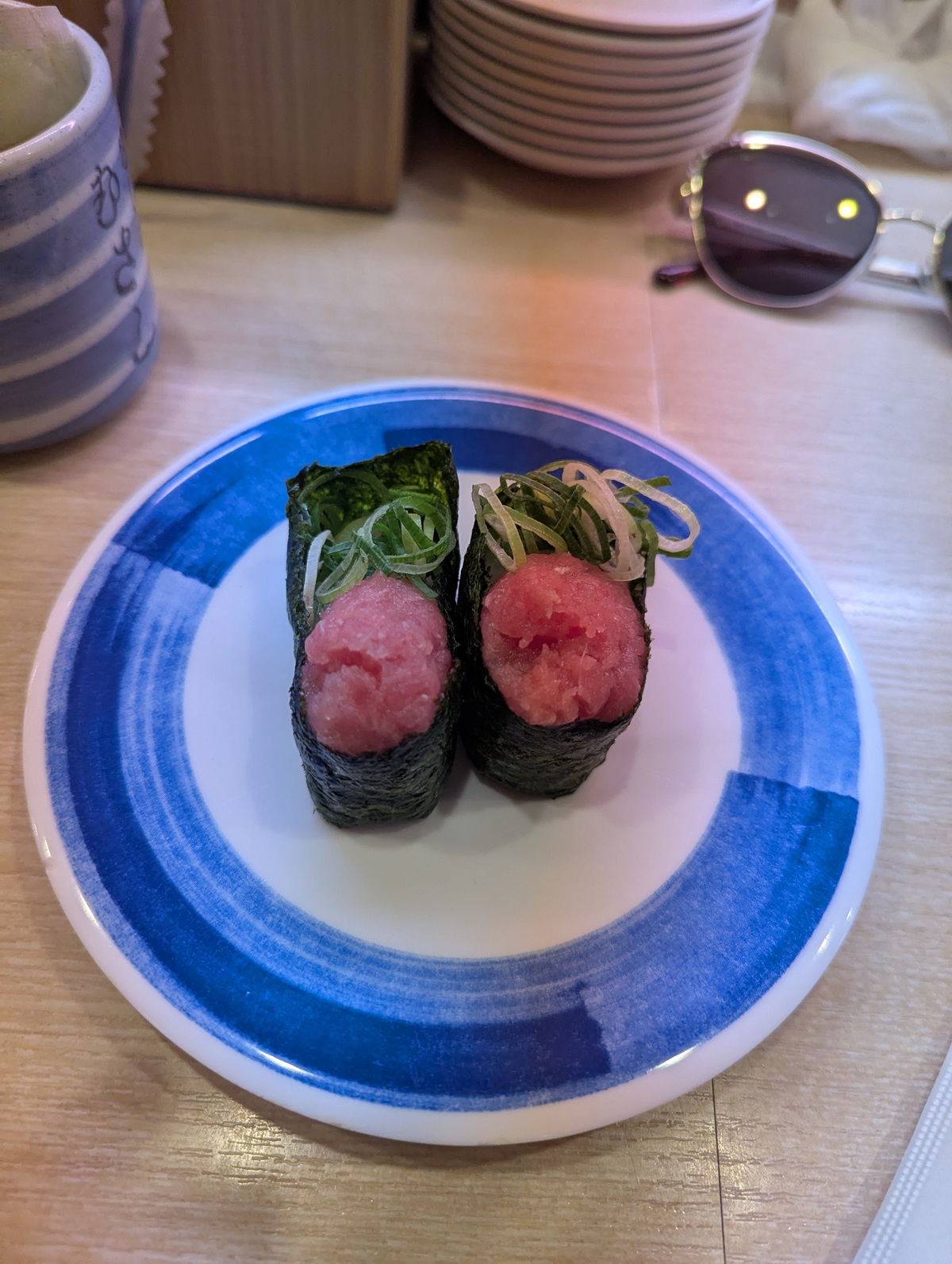
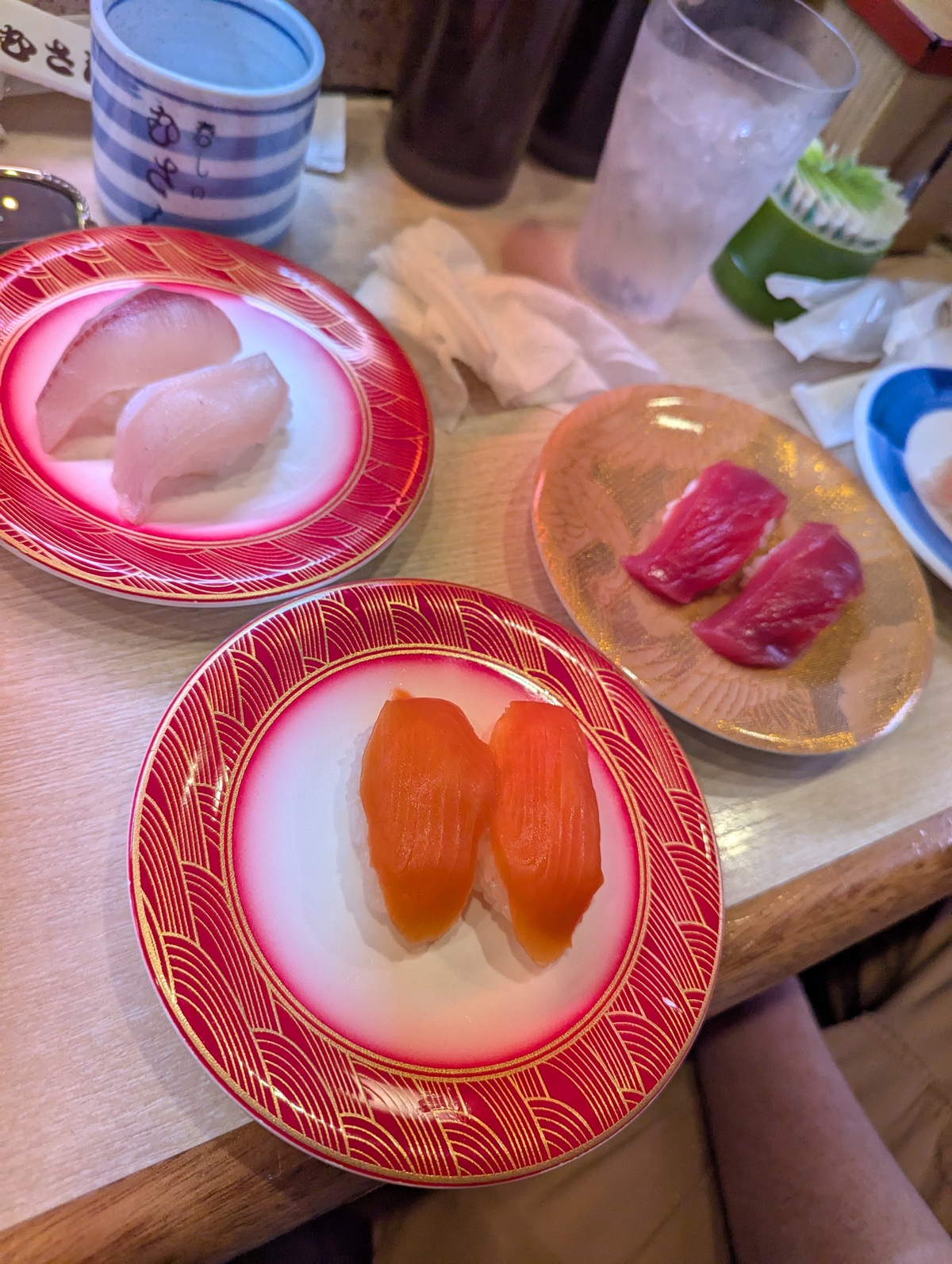
For lunch, we ate at Musashi Sushi, a conveyor belt sushi restaurant for nigiri, maki, and some rolls.
The sushi is plated, usually in pairs, on a colored plate. Each plate of that color or design is a set price ranging from about 150 yen to about 900 yen. When sushi you want to try comes by, you just grab it off the conveyor belt. You’ll set the plates to the side so they can count them up at the end of your visit.
Some highlights include their variety of tuna, sakura (raw horse meat), hamo oshizushi (a conger eel pressed sushi that’s a Kyoto specialty), mackerel, yellowtail, and salmon.
They also have hot green tea, complimentary, at each seat. This pairs great with the cold sushi.
Train to Osaka
Next, we were hopped on a train for an afternoon in Osaka!
If you needed a break from all that walking and went back to the hotel for a short nap (like we did) and are leaving from the hotel, you’ll head to Shichijō Station and take the Keihan Main Line Limited Express toward Yodoyabashi to Temmabashi Station, only about 45 minutes with 6 stops.
Osaka Castle


Our main attraction in Osaka was seeing Osaka Castle.
(Y’all know I’m thrilled with two castles in one day, it’s kind of my specialty!)(And for those keeping count, we’re up to three castles on the trip overall; a solid castle count.)
We entered the Osaka Castle Park through Ōte-mon Gate. There are a bunch of different monuments and gardens inside the park that you can visit as well, but we had limited time here so we made a beeline for the Main Tower that houses the Osaka Castle Museum.
Osaka Castle is 8 stories tall, and at the top you get incredible panoramic views of Osaka from the observation deck. If you want to go straight to the top and then work your way down, you can wait in the long line for the elevator.
But if you can handle walking, the quickest way in is to take the stairs. We ended up doing every other floor on the way up and the rest on the way back down, just to break up the climb a little.
The museum gives you a look at the castle history, items related to Tyotomi Hideyoshi who commissioned the castle, and battles involving the castle.
Get your Osaka Castle ticket here.
Dōtonbori Canal


Dōtonbori Canal is a colorful shopping district centered around the canal that was built in 1626. The area has long been an entertainment district, with theater companies and playhouses, and a place for shopping, restaurants, and teahouses.
Today, Dōtonbori is a lively place for restaurants, street food, and bars.
The streets are lined with huge lit-up signs and billboards. Keep an eye out for the Kani Douraku crab, a giant octopus, a clown, and more. Spot the Glico running man who has been advertising Glico candy since 1935.
Dinner at Zetteria
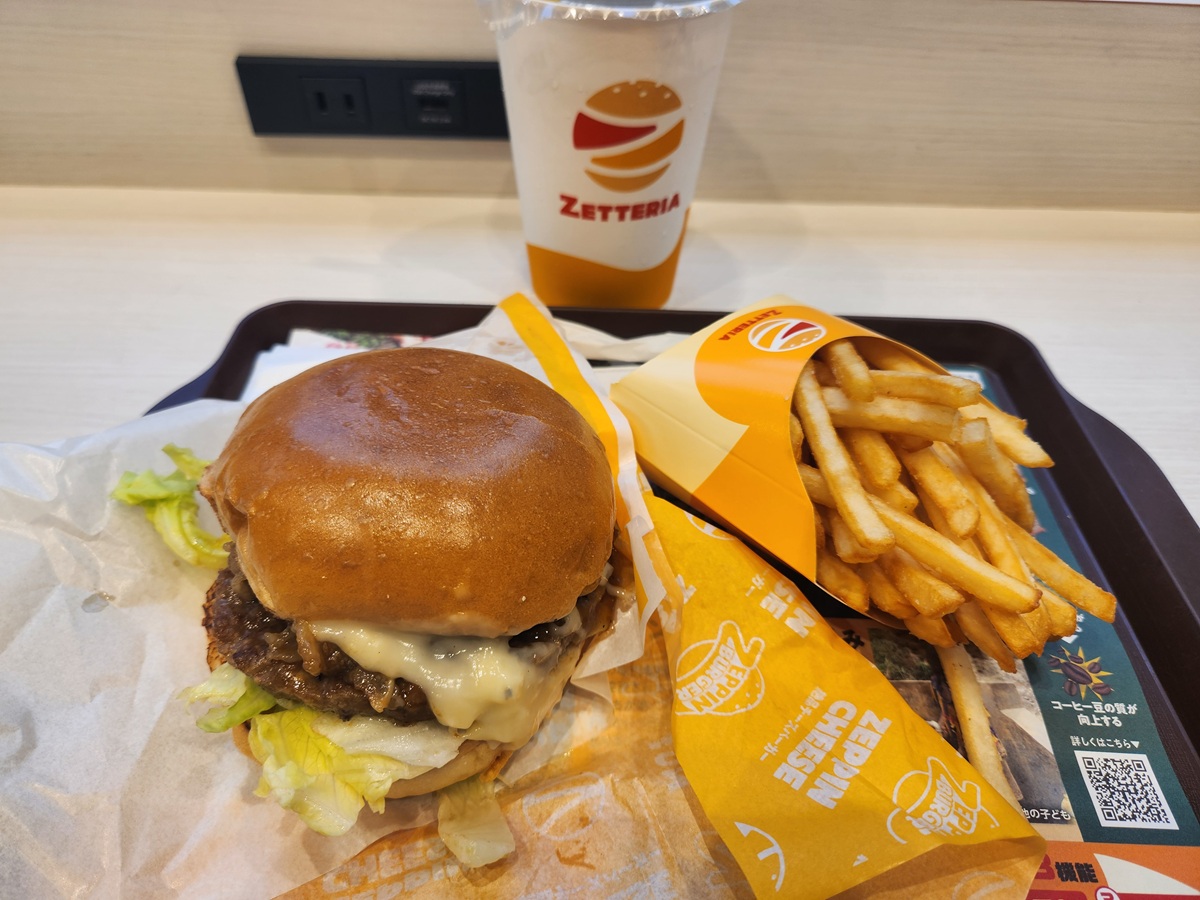
For dinner, we ate at Zetteria, a Japanese fast food burger chain. Their Dōtonbori location overlooks Ebisu Bridge with a great view of the canal and its iconic signage from the upper level dining rooms.
Their signature is the Zeppin (Ultimate) Burger. And true to Japanese form, they have unique burger creations you won’t find at a fast food restaurant in the states, like beef rib, hyuga natsu tartar chicken, and teriyaki beef. They also have seasonal specials.
We tried their classic Zeppin Cheeseburger, a seasonal version of the Zeppin Cheeseburger with Avocado, and the seasonal Wafu Gyu Karubi Burger (a Japanese-style beef rib burger with Okonomiyaki savory pancake as the bun).
Dessert at BOBA.T

BOBA.T bubble milk tea is the perfect place to get dessert.
I recommend their Brown Sugar BOBA.T Milk Tea with pearls, or their Brown Sugar Milk Foam.
Train to Kyoto
To get back to Kyoto from where we were near Dōtonbori, we took the Midosuji Line from Namba Station to Umeda Station, transferred to Osaka Station, and took the Special Rapid Train on the JR Kyoto Line from Osaka Station to Kyoto Station. This was about 45 minutes.
Optional: Return to Fushimi Inari Shrine & Senbon Torii


Another great time to visit Fushimi Inari Shrine and hike the Senbon Torii (One Thousand Torii Gates) is later at night.
Kevin and our friend chose to go back at 9 p.m. (yes, after we spent all day walking; I stayed at the hotel and went to the hot spring).
They were able to get some really great nighttime shots and see a night view of Kyoto from the mountain overlook. They even got to see some wild boars. Plus, there were much fewer people, and the weather was cooler.
Also, this is a good time to note that it’s always a good idea to get travel insurance before a big trip like this one, especially if you plan on being active and climbing to a mountaintop shrine twice in one day! SafetyWing’s Nomad Insurance Essential plan covers you for unexpected illness or injury while abroad (don’t worry, it’s not just for digital nomads; you can select your exact travel dates and still get all the same coverage).
Day 9: Ogoto Onsen
For day 9, we did a little bit of shopping in Kyoto before heading to Ogoto Onsen, a popular hot spring area that’s perfect for relaxing as we come to the end of our Japan trip.
Teramachi and Shinkyogoku Shopping Streets

Teramachi Shopping Street and Shinkyogoku Shopping Street are two covered shopping arcades that are at the heart of Kyoto’s main shopping district.
On Teramachi, you’ll find art galleries, bookshops, and clothing stores. This street dates back to the 16th century when temples were mandatorily moved here (the name Teramachi literally means “temple street”), and you can still find a lot of shops specializing in religious goods.
On Shinkyogoku, you’ll find a lot more souvenir shops.
Both streets offer restaurants, trendy shops, and a pedestrian friendly place to hang out.
Pokémon Center Kyoto


For Pokémon fans, a trip to the Pokémon Center Kyoto is a must.
This is a large store where you can find all kinds of Pokemon goodies, from plushies to accessories to cards to dishware to toys.
We picked up some of the PokéBears for me and some Eevie goodies for Kevin.
Lunch at McDonald’s

Yesterday, we tried out a Japanese fast food chain. Today, we tried out a Japanese version of an American fast food chain.
We debated trying a Burger King or Wendy’s, both of which seemed to have some interesting options we can’t get at home, but we ultimately decided on the classic: McDonald’s.
Some classic menu items at a Japanese McDonald’s include the Samurai Mac, a Teriyaki McBurger, an Egg Cheese Burger, and Edamame Corn as a side.
We went for the Chicken Fillet-O and a Cheese Cheese Double Cheeseburger. One of our friends had previously tried the Teriyaki McBurger and was unimpressed. We would have totally gone for the Samurai Mac if it had been on the menu, but unfortunately it wasn’t at the location we visited.
Train to Ogoto Onsen

After lunch, it was time to head to Ogoto Onsen, a popular hot springs area that’s easily accessible from Kyoto.
To get there, we took the Tokaido-Sanyo Line, which turns into the Kosei Line, from Kyoto Station to Ogotoonsen Station. This took about 20 minutes.
From Ogotoonsen Station, there is a local phone with numbers for the area resorts where we phoned our hotel, the Biwako Ryokusuitei, for a free shuttle to pick us up.
Check in to Biwako Ryokusuitei
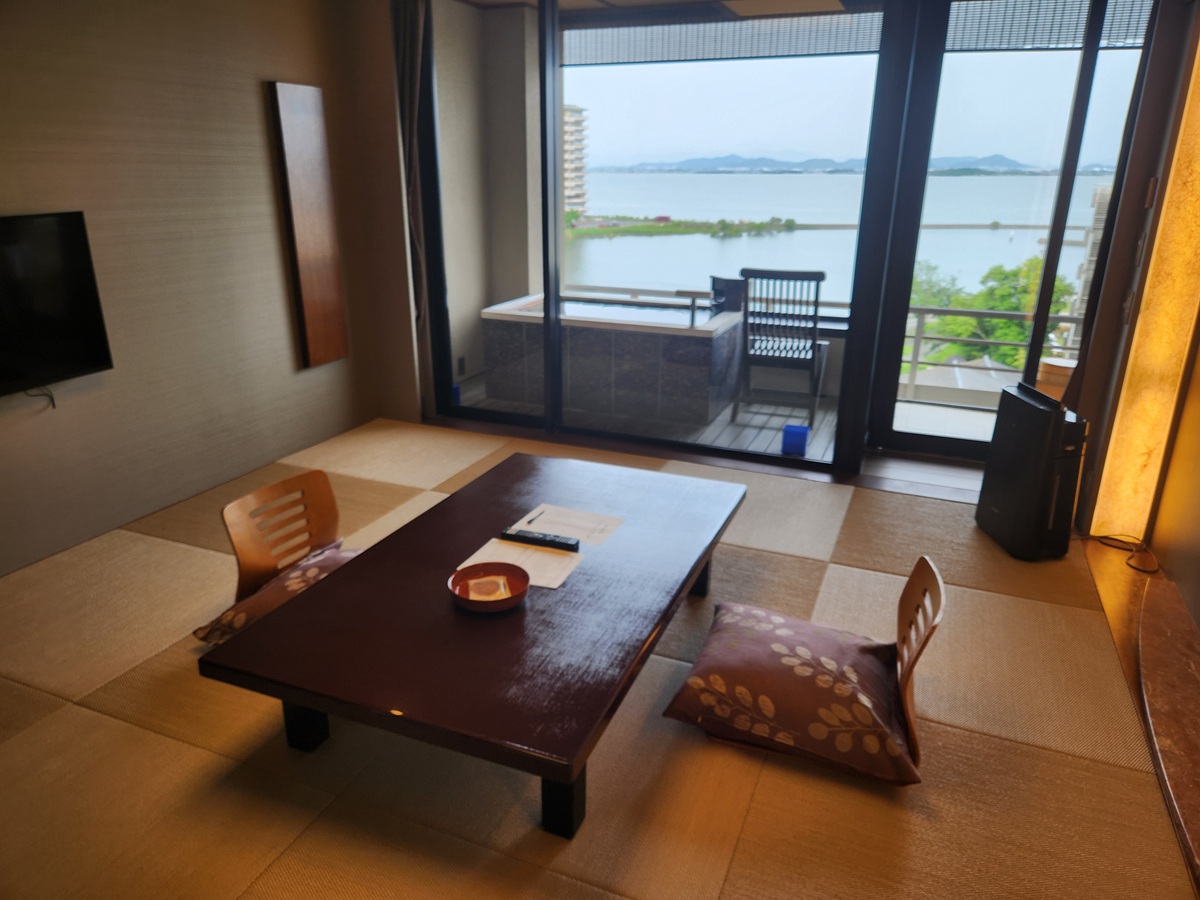
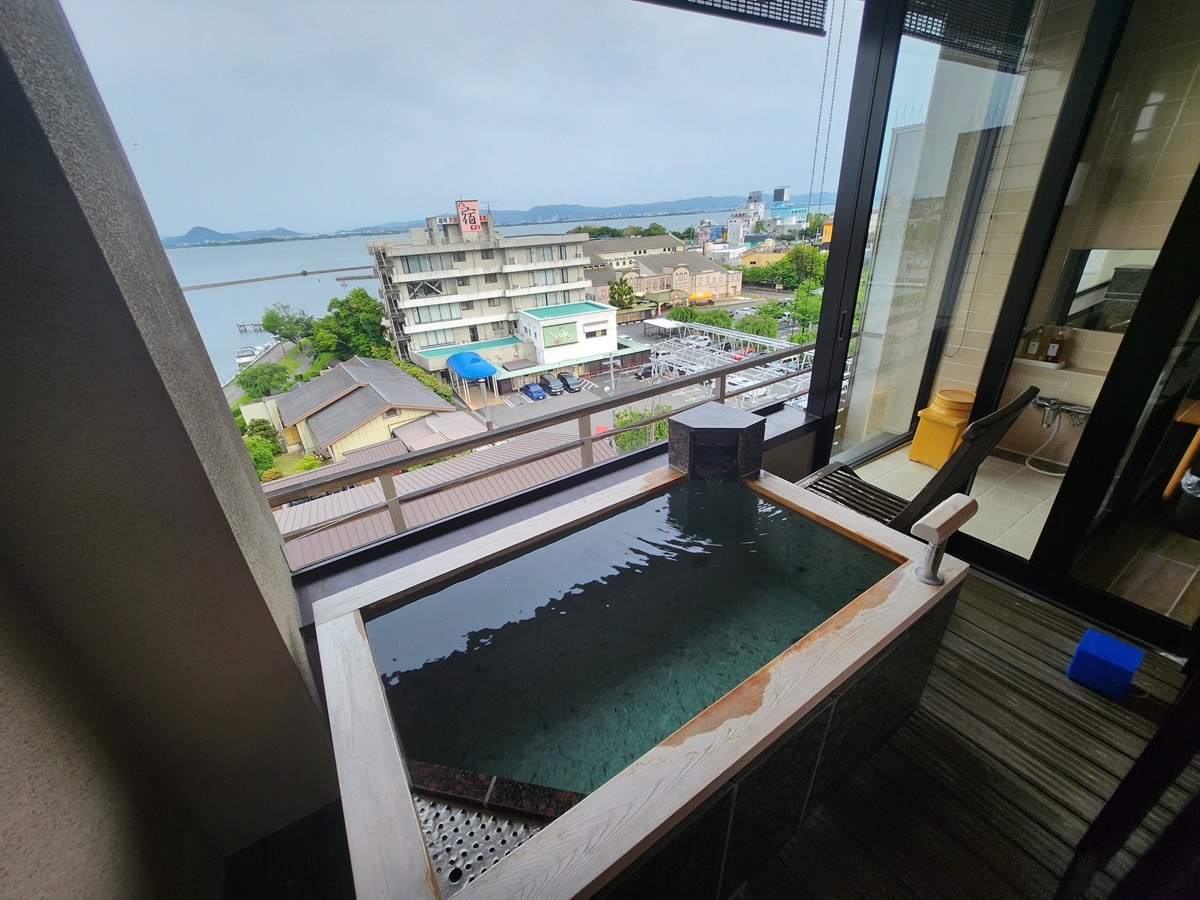


Biwako Ryokusuitei is a beautiful resort hotel on Lake Biwako with incredible lake views, traditional Japanese-style rooms, public indoor/outdoor hot-spring baths, and rooms with private balcony open-air baths.
The rest of day 9 is spent at the hotel, because this is the destination.
We got one of their standard Japanese-style rooms with an open-air bath. The room had tatami mats with a seating area with low tables and cushions. At night, they came in the room and swapped out the table for our two futons.
The room had a TV, free Wi-Fi, a mini fridge, and Yukata robes for us to wear around the property.
The open-air bath was fed by the hot springs. The shower was also glass-enclosed and facing out by the balcony. The room had spectacular views of the lake.
Once we were settled into our room, we donned our Yukata and headed downstairs for their happy hour on their deck and garden by the lakeside. We had free ice cream, wine, juice, and snacks.
Book your stay at Biwako Ryokusuitei here.
Dinner at Kaze no Ne


After our happy hour, we had dinner at one of the hotel restaurants, Kaze no Ne. This was a semi-private experience, with the tables separated by a roller screen.
We had a 5-course meal here that was incredible and so much fun because we had very little idea what we were eating.
The meal started with a sort of aperitif and appetizer, then we had some sashimi, then there was some sort of fish with everything still intact, then we had Omi beef shabu-shabu (a Japanese hot pot dish with sliced meat), and finally a variety of desserts and hot green tea.
Public Baths at Biwako Ryokusuitei

After dinner, we went to the public baths. The baths are separated by male and female baths.
The women’s bath has a large locker space and showers indoor with an indoor bath. Outside a multi-section open-air bath, a plunge pool that’s a more moderate temperature, a cold plunge pool, and a barrel sauna.
I enjoyed the outdoor bath the best, and I became quite fond of a dip in the cold plunge.
The men’s bath has all of the same baths, plus they have reclining chairs that sit in the outdoor bath. And I must say, I’m pretty jealous because I love a lounge chair that sits in the water.
After soaking in the baths, our group rejoined each other in the Minamo Terrace to soak our feet in the footbath and our hands in the hand bath there. Then we popped into the Library, a relaxing space where they offer refreshments like drinks and popsicles as well as lounge chairs overlooking the garden.
Have tattoos? Biwako Ryokusuitei caters to a more local crowd, so they’re a little more traditional about tattoos than our last hotel. The hotel can provide you with skin-colored stickers to cover your tattoos. They’re about the size of a hand, so if you have a lot of tattoos these may not cover them. You can also try to visit when the baths are empty; the TV in your room tells you about the traffic in the baths, but it wasn’t super accurate.
Evening in the Private Bath


We then headed back to our room to enjoy our own private bath on our balcony.
The open-air baths in the rooms are automatically fed with hot spring water, so you can use it whenever. The temperature is already set at a comfortable hot, but if it needs adjusted you can call the front desk.
Be sure to draw the privacy shades so no one can spy on your naked body while you get in! Once you’re in the bath, it’s easy enough to raise the shade so you can look out at the lake views.
Day 10: Tokyo
On day 10, it was time to check out of our luxury spa stay and hop back on a few trains to head to Tokyo. There’s only a little bit of sightseeing left to do before our Japan trip is over!
Trains to Tokyo
In the morning, maybe after a last soak in the private hot spring in your hotel room, it’s time to check out of the hotel.
We took the free shuttle back to the Ogotoonsen Station, took the same Kosei Line, which turns into the Tokaido-Sanyo Line, the 20 minutes to Kyoto Station.
Then we took the Shinkansen bullet train back to Tokyo. We again took the Hikari from Kyoto Station to Tokyo Station. If you want a chance to see Mt. Fuji on the ride, book seats on the left side of the train going from Kyoto to Tokyo.
From Tokyo Station, we headed to our next hotel to drop off our luggage and continue on exploring.
Lunch at Ikkakuya Ramen


For lunch, we ate at Ikkakuya Ramen, a nationwide ramen chain known for their tonkatsu ramen.
You order at a machine, and they have an English menu button.
We tried the Black Garlic Oil Ramen, the Red Lekei Ramen, the Abura-soba, the Suji-don, and gyoza.
Zōjō-ji


After lunch, we did a little walking around Shiba Park and Zōjō-ji Buddhist temple.
Zōjō-ji dates back to 1393 and its main gate is the oldest wooden building in Tokyo, dating from 1622.
It’s free to visit the temple complex, from the Sangedatsumon main gate to the Daibonsho big bell to the Daiden main hall. If you would like to visit their Treasure Exhibition Room, that requires an additional fee.
Check in to Shiba Park Hotel

For our final night in Tokyo, we stayed at the Shiba Park Hotel. We chose this hotel mostly because it was near Tokyo Tower, which was our main attraction for this last day.
This part of Tokyo is the Central Business District, so it’s pretty quiet and there aren’t a ton of tourists like at our Shinjuku hotel.
The rooms are comfortable and spacious compared to other Tokyo hotels. Plus, they have King-sized beds! We got upgraded to a Superior King Room, so our room was extra spacious.
You can read my full review of Shiba Park Hotel here if you want to learn more about our stay.
Book your stay at Shiba Park Hotel here.
Monkey Kart Go-Karts in the Street
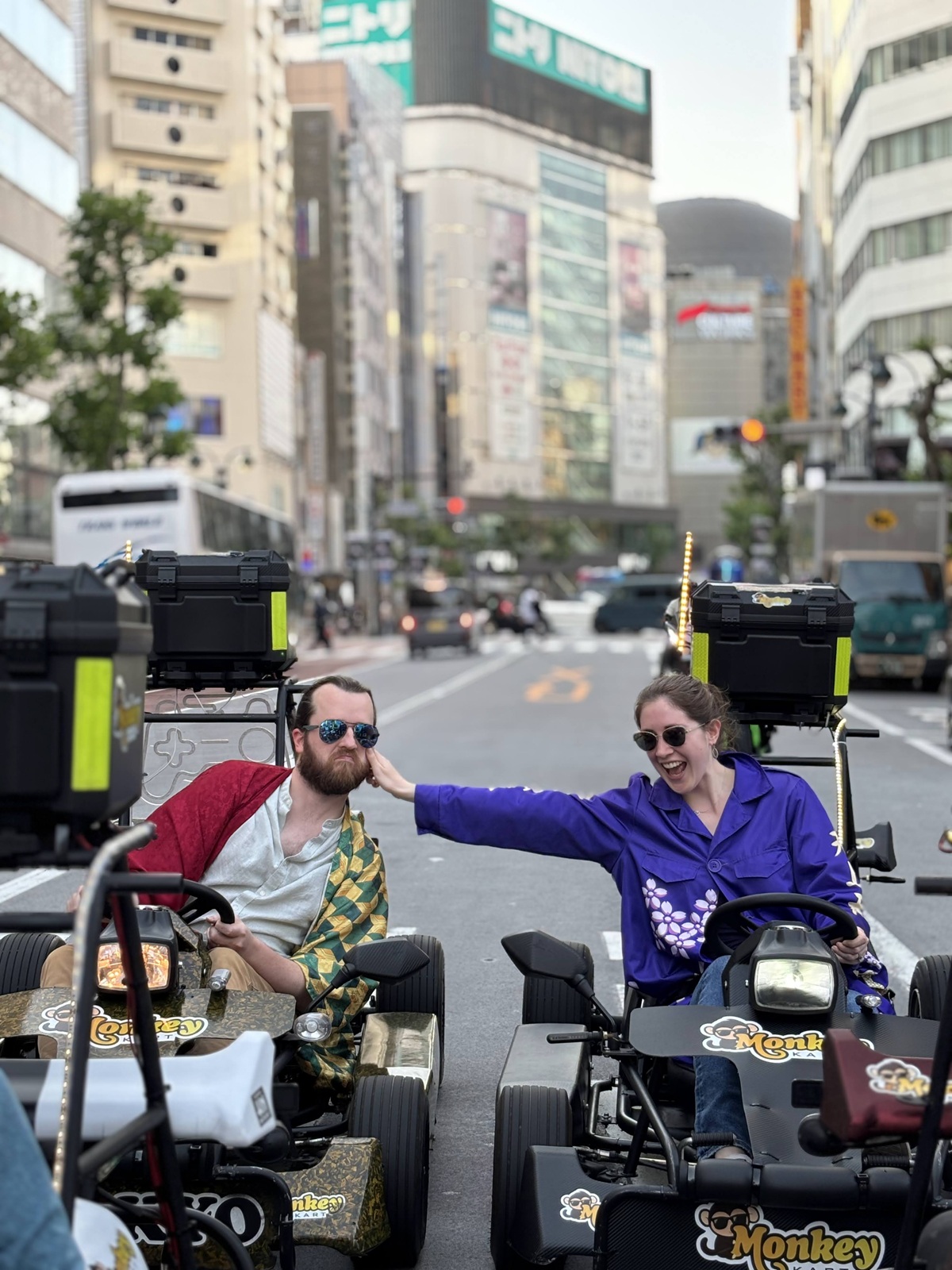


Our exciting afternoon tour was a go-kart experience in the streets of Tokyo. We went with this Monkey Kart Shinagawa location that goes through Shibuya Crossing and around Tokyo Tower.
It’s kind of like a Mario Kart experience, but legally they can’t call it that. But that’s the vibe. You can dress up in character outfits (I really wanted to do a CareBear onesie, but it was way too hot for that) or put on fun accessories for your ride.
Then you’re off racing through the streets of Tokyo. There’s even a couple spots where you can really get up to speed.
Note: This experience requires an International Driving Permit, which you can get pretty easily at a AAA office before your trip.
Monkey Kart also has tours in Asakusa and Shibuya. Then there are also a ton of other companies that do go-kart tours. So you have a lot to choose from.
Book your Monkey Kart go-karting experience here.
Snack at Gopanda Yaki

Gopanda Yaki (五ぱんだ焼き) at Gotanda Tokyu Square is an adorable sweets shop that sells taiyaki but in the shape of panda bears.
Their pandas come in their standard dough as well as colored dough, which they change the filling flavors of seasonally. They offer a box with 10 different filling flavors, so you know I had to try them all!
We had plain (no filling), chocolate, custard, red bean paste, and camembert cheese all in the standard dough. In the colored dough, we had strawberry in a pink, vanilla in a black, macadamia nut in an orange, Nishio matcha in a green, and kinako (roasted soybean) flakes in a yellow.
Dinner at Kabuki Roll
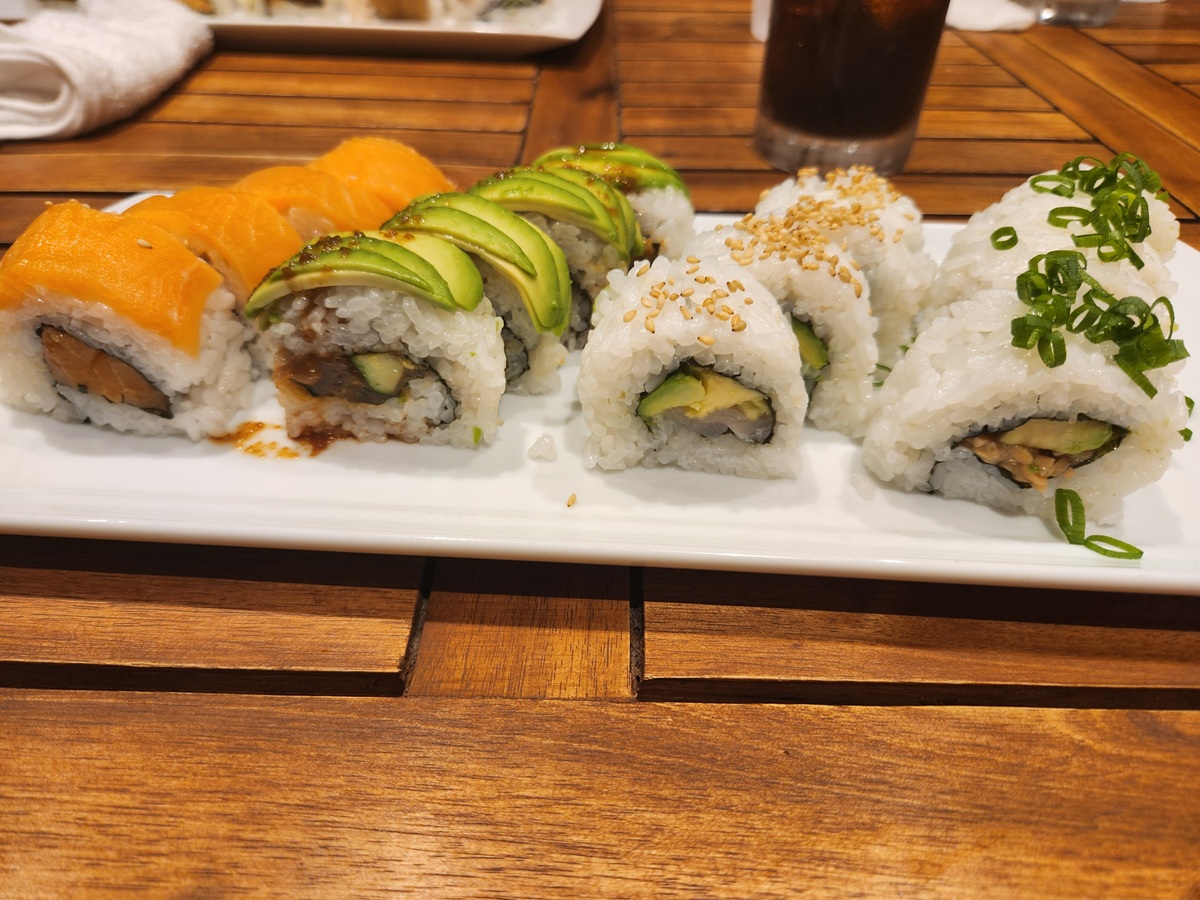
For dinner, we ate at Kabuki Roll. Typically, you’re not going to find American-style sushi rolls at a sushi restaurant in Japan. But Kabuki Roll has an entire menu of American-style rolls.
You’re going to find classics like a California Roll, Rainbow Roll, and a Philadelphia Roll. But you’re also going to get uniquely Japanese creations too like Natto (fermented soy beans); the Diavolo with teriyaki chicken, mozzarella, basil, tomato, chili sauce, and black pepper; and the spicy Death Roll.
We tried the Yellowtail Avocado, the Natto, the Spicy Tuna DX, and the Salmon Lover.
Tokyo Tower

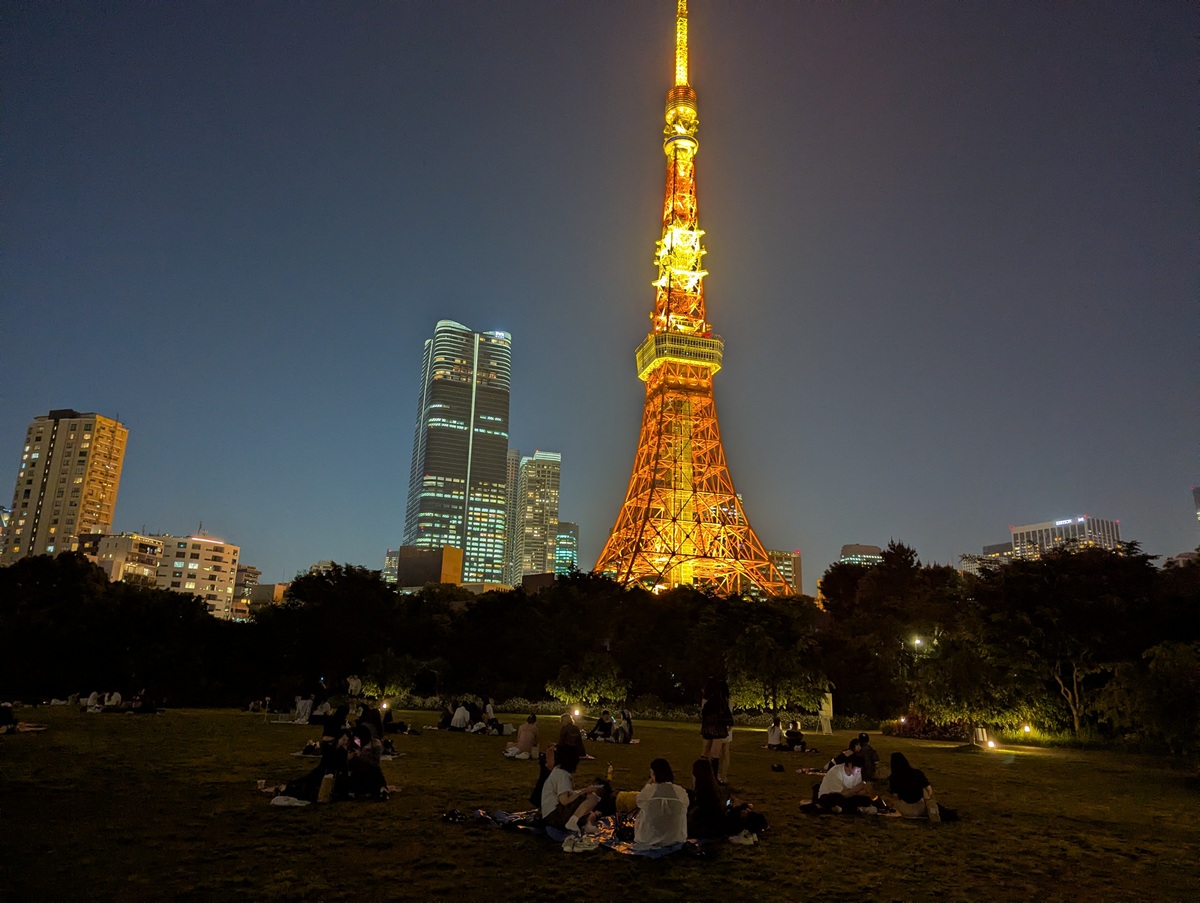


Tokyo Tower is an iconic orange-and-white radio tower that offers an observation deck for incredible views of the city. It’s like Japan’s Eiffel Tower: it’s shaped similarly, you can go up to the top, and they light it up at night.
We saved Tokyo Tower for a nighttime visit because they have a nice projection show inside the observation deck at night. Plus, viewing the city from up high at night is really magical.
The Main Deck reaches 490 feet (150 meters) and has two levels of observation decks. This is the standard ticket option, and most people will probably be happy enough with just this level.
The Top Deck is an upgraded ticket, and it reaches 819 feet (249.6 meters). This is a smaller observation deck with a mirrored, Instagrammable design. You also get some multi-media displays while you wait for the next elevator, a photo card (you get to keep the small version, or you can purchase a large version), and a welcome drink (it’s just a swallow of wine or tea).
I like the Top Deck because I love a view, and the higher the better, especially at night. But it is more than twice the price for a Top Deck ticket, and they’re doing a lot that isn’t really adding any value. So I fully think most people will be happy with just the Main Deck ticket.
Get your Tokyo Tower tickets here.
Or you can get discounted tickets to Tokyo Tower using The Tokyo Pass.
Day 11: Tokyo & Head Home
On our final day in Tokyo, we unfortunately didn’t have as much time for last-minute exploring as I had wanted; our flight got pushed up a few hours, so our lunch plans had to change. I’ll put both lunch options here for if you have an earlier flight or a later flight.
Lunch at Tully’s Coffee (quick option)

Tully’s Coffee is a coffee shop and cafe chain that has coffee, tea, and other drinks as well as a menu of cold and hot sandwiches, baked treats, hot dogs, pastas, and packaged sweets.
We had the Ham Cutlet Sandwich and a Variety Box (apologies for my one terrible photo of Kevin’s ham cutlet; I could have sworn I took a picture of my variety box, but apparently not).
My Variety Box included a domestic pork minced cutlet sandwich, a buttery mentaiko salad sandwich, a double egg sandwich with boiled egg and egg salad, and a tuna cheese sandwich.
Lunch at Tsukiji Outer Market (leisurely option)

Tsukiji Outer Market is a historic market that’s the most famous foodie area of Japan.
For almost 90 years, Tsukiji has been the marketplace for merchants selling fresh fish, seafood, vegetables, produce, and more for restaurants and retail stores. Today, there are a lot more restaurants and street food stalls that cater to tourists.
All around the market, you’ll find about 440 shops selling delicious street food, souvenir items, fresh fish and seafood, local produce, knives, meat, and desserts. There’s a huge selection of high-quality local food here.
Pop into any of the stalls and end your Japan trip with a truly local lunch from the Tsukiji Market.
Tsukiji Breakfast Tour: Another great option if you have the time would be to take this Classic Tsukiji Breakfast Tour with Arigato Travel. This 3 hour tour will give you a local look at the Tsukiji Market full of tastings and breakfast at a local restaurant. It ends just before noon, so you’ll be plenty full for heading to their airport to catch your flight.
Fly Home
After lunch, it was time for us to make our way to Haneda Airport to catch our flight home.
One fun thing about your flight home is that, because of the time change, you’ll likely land at your destination “before” you took off in Japan!
I hope you’ve enjoyed following along with this Japan 11 day itinerary for Tokyo and Kyoto, and I hope it helps you plan the perfect Japan vacation for yourself! Happy travels!
Japan 11 Day Itinerary Map
Ready to explore Japan? Use the map below to plan out your trip!
Want a downloadable map you can take with you on your trip? Get it here!
I hope you have an amazing time in Tokyo & Kyoto!

Ultimate Japan 11 Day Itinerary: Tokyo & Kyoto
Your Japan vacation — planned for you.
Don’t spend any more time stressing about planning your perfect vacation to Tokyo and Kyoto. Get this done-for-you, fully planned itinerary!
11 Days in Japan FAQ
Is 11 days long enough in Japan?
11 days is a great start to visiting Japan. This gives you enough time to explore the top sights in Tokyo and Kyoto, as well as take a day trip or two to some of Japan’s more hidden gems. For your first trip to Japan, 11 days is the perfect amount!
How much money do I need for 11 days in Japan?
For an 11-day trip to Japan (excluding your flights and accommodation that you’ve likely already pre-booked), you should budget about $70-$140 per day, or about $760-$1520 for the entire trip.
Do I need a visa to go to Japan?
US passport holders do not need a visa to visit Japan for 90 days or less. You can view a complete list of countries exempt from needing a visa here.
Is food expensive in Japan?
Food prices in Japan vary on a number of different factors. You can definitely find some cheap eats at street food stalls, convenience stores, conveyor belt sushi, ramen shops, and other budget restaurants. But food in cities like Tokyo and Kyoto typically is more expensive than food in smaller and less popular towns.
Save on Tokyo’s Top Attractions
Want to save big on Tokyo’s top attractions? With The Tokyo Pass you can save on entry to 50 popular attractions.
Visit bucket list attractions and discover the best Tokyo museums, gardens, and experiences. With this pass, you’ll have everything you need right on your phone, saving you both time and money.
Where to Stay in Tokyo
- Where We Stayed (Shinjuku): La’gent Hotel Shinjuku Kabukicho
- Where We Stayed (Minato City): Shiba Park Hotel
- Top Hotel: The Tokyo Station Hotel
- Great Value: Hotel Villa Fontaine Grand Haneda Airport
- Unique Stay: The Millennials Shibuya (capsule hotel)
Where to Stay in Kyoto
- Where We Stayed (Kyoto): Hotel KUU Kyoto
- Where We Stayed (Ogoto Onsen): Biwako Ryokusuitei
- Top Hotel: MIMARU SUITES Kyoto Shijo
- Great Value: Hotel Tou Nishinotoin Kyoto
- Unique Stay: Seikoro Ryokan
Top Tokyo & Kyoto Tours
Want to take some guided tours on your trip to Tokyo and Kyoto? Here are a few great tour options:
Top Tokyo Tours
- Best of Shibuya Daytime Food Tour
- Mt Fuji and Hakone 1-Day Bus Tour Return by Bullet Train
- 1-Day Tokyo Bus Tour
- Flagship 2-Hours Official Street Go-Kart Tour – Tokyo Bay Shop
Top Kyoto Tours
- Kyoto Luxury Sake, Whisky, and Cocktail Tour
- Perfect Kyoto 1-Day Bus Tour
- Fushimi Inari Hidden Hiking Tour
- Kyoto Night Foodie Tour
More Japan Travel Tips
Plan the best Japan trip ever with the help of these posts:
- 26 Fun Things to Do in Tokyo, Japan
- 15 Delicious Restaurants in Tokyo, Japan
- We Took a Hidden Gem Food Tour in Tokyo: This is What Surprised Us
- Shiba Park Hotel Review: Library Hotel in Tokyo
- La’gent Hotel Shinjuku Kabukicho Review: Tokyo Hotel for Couples
- Where to Stay in Tokyo for First-Timers: My Honest Guide to the Best Neighborhoods and Hotels
- 14 Free Things to Do in Tokyo, Japan on a Budget
- 19 Fun Things to Do in Kyoto, Japan
- 4 Days in Kyoto: The Perfect Itinerary for First-Timers
- Kyoto Ramen Noodle-Making Class Review: Is It Worth It?
- Kyoto Bamboo Forest Ghost Tour Review: Is It Worth It?
- I Booked a Geisha Experience in Kyoto — Here’s How It Went
- 4 Delicious Restaurants in Kyoto, Japan
- TokyoTreat Review: Is It Worth It?
- 10 Terrifying Haunted Castles Around the World You Can Visit
- 13 Abandoned Places Around the World You Can Visit
Ready to visit Japan? Plan your trip with these tips.
- Book your flight: Find the cheapest flights using Skyscanner, my favorite flight search engine.
- Find accommodation: You can find top hotels in Tokyo and top hotels in Kyoto using Booking.com.
- Pack for your vacation: Make sure you’ve packed everything you need by checking out my packing list resources.
Cheers!
Paige

Did you find this 11 days in Japan: Tokyo & Kyoto itinerary helpful? Let me know in the comments!